
Search Wisconsin Unclaimed Money
Wisconsin Unclaimed Money searches work best when the search starts with the right holder. Some records stay with a county treasurer under a local notice. Some belong to a clerk of courts office because they grew out of a case file, a fee, a fine, or a forfeiture. Some depend on probate because an estate or guardianship controls who can claim the money. Other property belongs with the Wisconsin Department of Revenue because a bank, insurer, utility, or business holder already reported it to the state. This site is built to help you sort those paths before you file a claim.
How Wisconsin Unclaimed Money Works
Wisconsin Unclaimed Money is not one single filing system. County-held money and state-held money follow different paths, and those paths matter. At the county level, Wis. Stat. 59.66 is the main local anchor because it supports county notices and local claim procedures for money that has gone unclaimed in county or municipal hands. That is why many county pages on this site focus on treasurer notices, public treasury lists, clerk of courts balances, or other local publication rules instead of pushing every user straight into the state database.
The statewide path is different. Wisconsin DOR manages property that has been reported by holders such as banks, insurers, utilities, and other businesses after a period of inactivity. The state framework is described in Wis. Stat. 177.01, 177.0501, and 177.0903. Those statutes explain the terms used in the unclaimed property system, the notice duties placed on holders, and the basic owner-claim process once the property reaches the administrator. The county and state systems connect, but they are not interchangeable.
Wisconsin Statutes Chapter 177 is the state framework behind the DOR claim process.
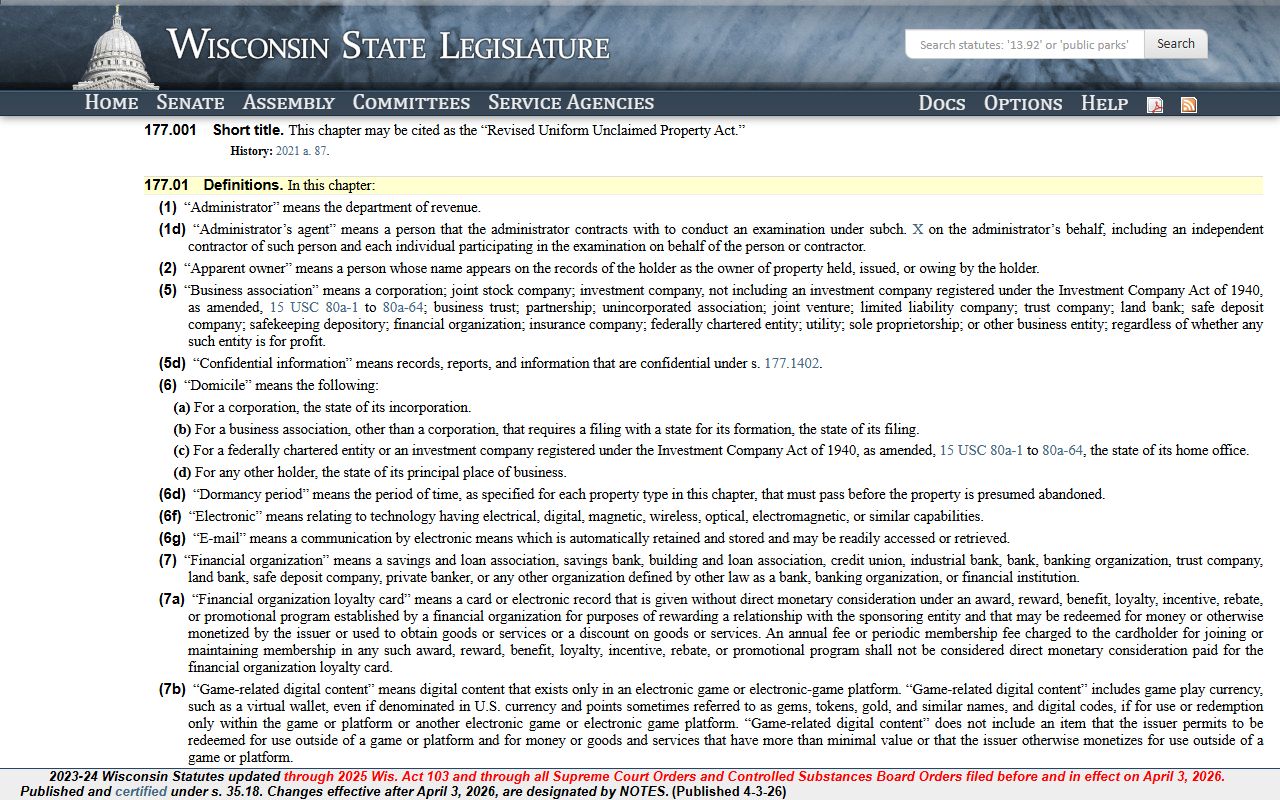
That image belongs here because the statewide claim path only makes sense after the county and state rules are separated clearly.
The practical rule is simple. If the money looks local, start local. If it looks private-holder or statewide, start with DOR. This site is organized around that rule so the search stays with the office that actually controls the record.
Wisconsin Unclaimed Money by County Office
A county treasurer is often the first office to check because local money problems frequently begin with taxes, county checks, parcel records, credits, or published county funds notices. That pattern shows up across many pages on this site. Some counties publish a dedicated unclaimed funds list. Some explain how tax installments move from a local municipal treasurer to the county treasurer later in the year. Some tie the search to property tax portals, parcel data, or real property lister records. When the page is treasurer-led, that is usually a signal that the county still controls the money or the underlying account trail.
Clerk of courts pages matter when the balance began in a case file. A court fee, a fine, a forfeiture, bail money, or another court-managed amount can look like general unclaimed money until the case record is checked. That is why many of the stronger county pages here pair treasurer information with clerk of courts information. The treasurer tells you whether the county published or holds the money. The clerk tells you whether the record began in court. Those are different questions, and the search works better when both offices are kept separate from the start.
Probate is the other important office path. If the owner is deceased, or if authority to claim depends on an estate, a guardianship, or another formal record, the register in probate may be the office that makes the claim possible. A probate page does not always hold the money, but it often holds the record that proves who may act. That is why estate-related pages matter in a Wisconsin Unclaimed Money search even when the claimant thinks the problem is only about a check or account balance.
Wisconsin Unclaimed Money and Tax Trails
Many Wisconsin Unclaimed Money searches are really tax-trail searches first. A missed installment, a delayed postmark, an address change, a parcel mismatch, or a payment that posted late can all look like dormant money when they are still part of a local tax record. Several counties on this site warn residents about postmark timing, county-versus-municipal payment splits, or online payment windows that close during the busiest tax season. Those details matter because they explain how money can appear lost while still sitting inside a county collection process.
That is why a tax page can be just as important as an unclaimed-funds page. If the issue began with a property tax bill, a delinquent payment, a lottery credit, an assessment, or an old parcel record, the county tax tools may solve the problem before the claimant needs a county notice or a state claim. In some counties, the treasurer page and the tax search page are the same local record environment. In others, the county notice, tax data, and probate or court pages work together. The point is not to force every balance into the word Unclaimed Money. It is to keep the search tied to the record that created the money trail in the first place.
When the tax trail stops being useful, that is the sign to move to a county publication list or to DOR. Starting with the tax trail first often saves a claimant from filing the wrong paperwork too early.
Wisconsin Unclaimed Money and Court or Probate Records
Court and probate records are often where a Wisconsin Unclaimed Money search becomes specific. A county page may tell you the treasurer published a notice, but the supporting record might still be in a court file or an estate file. That is common with clerk of courts funds, probate-related balances, or claims where the original owner is no longer living. The right office can change the entire claim path. A treasurer page may tell you the county is holding money. A clerk or probate page may tell you whether you have the authority to ask for it.
That difference matters in practical terms. If the money came from a traffic case, a civil action, a small claims matter, or a forfeiture, the clerk of courts office is often the quickest way to confirm the record before contacting the treasurer. If the money belongs to an estate, the probate office may be the only place that can clarify who may claim it. County pages that include all three paths are usually the strongest pages on the site because they prevent the search from collapsing into a generic name lookup.
Wisconsin Unclaimed Money is easiest to resolve when the office and the record type are matched early. Court first for court balances. Probate first for estate authority. Treasurer first for county-held funds and tax-related balances. State last when the local record trail ends.
Wisconsin DOR Unclaimed Money Search Help
The Wisconsin Department of Revenue is the statewide backup and, in many cases, the final holder. The DOR FAQ gives the broad overview. The unclaimed property home page is the main search entry point. How to claim property explains the filing steps once a match is found. Those pages are the right answer when the county says it does not hold the money or when the money clearly comes from a private holder rather than county government.
Wisconsin DOR Unclaimed Property Home is the statewide search entry point when the local trail has ended.
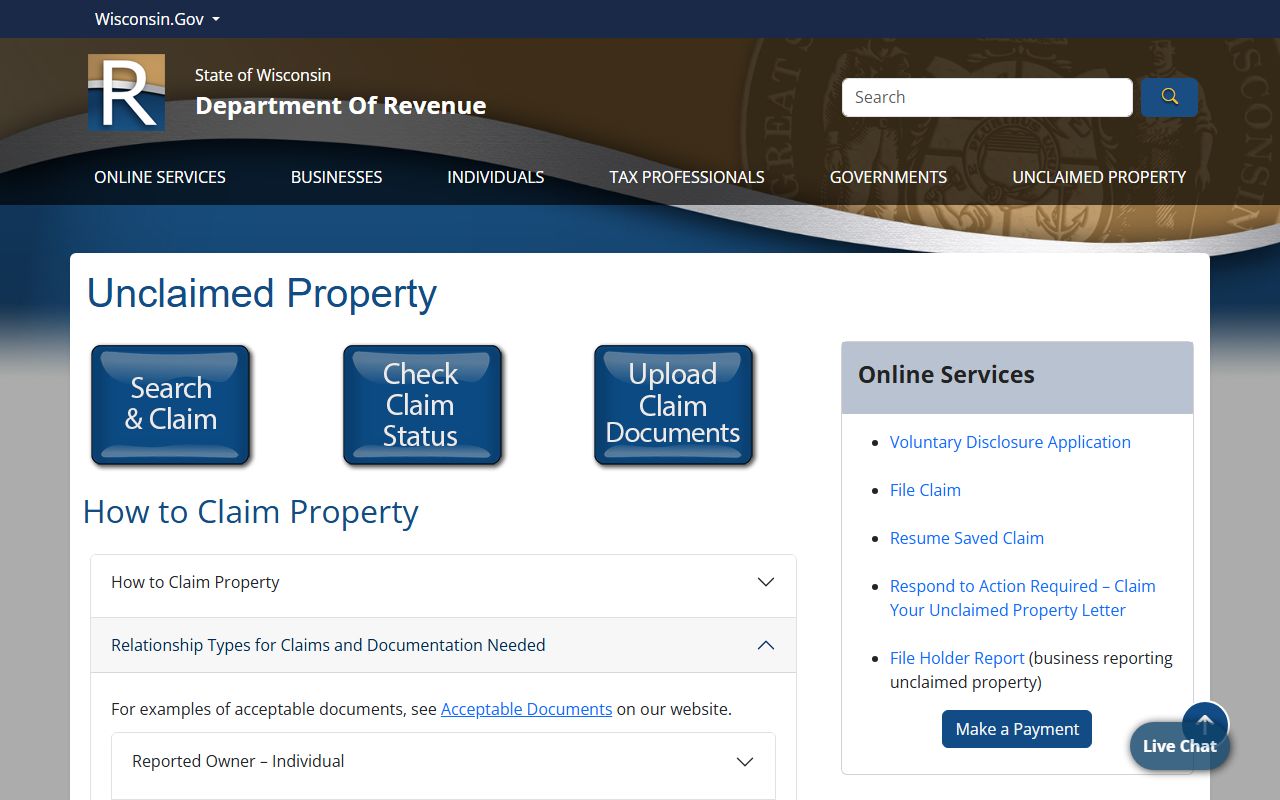
That image fits this section because it shows the actual state search environment users reach after a county office says the money is not local.
The state pages also explain what proof a claimant needs. Relationship types covers owners, heirs, guardians, personal representatives, and other roles. Acceptable documents explains the identification and support papers that may be required. After you file explains review timing and next steps after submission. If an in-person question becomes necessary, the DOR office locations page shows where state offices are located.
Wisconsin DOR relationship types shows who can file as the owner, heir, guardian, or personal representative.
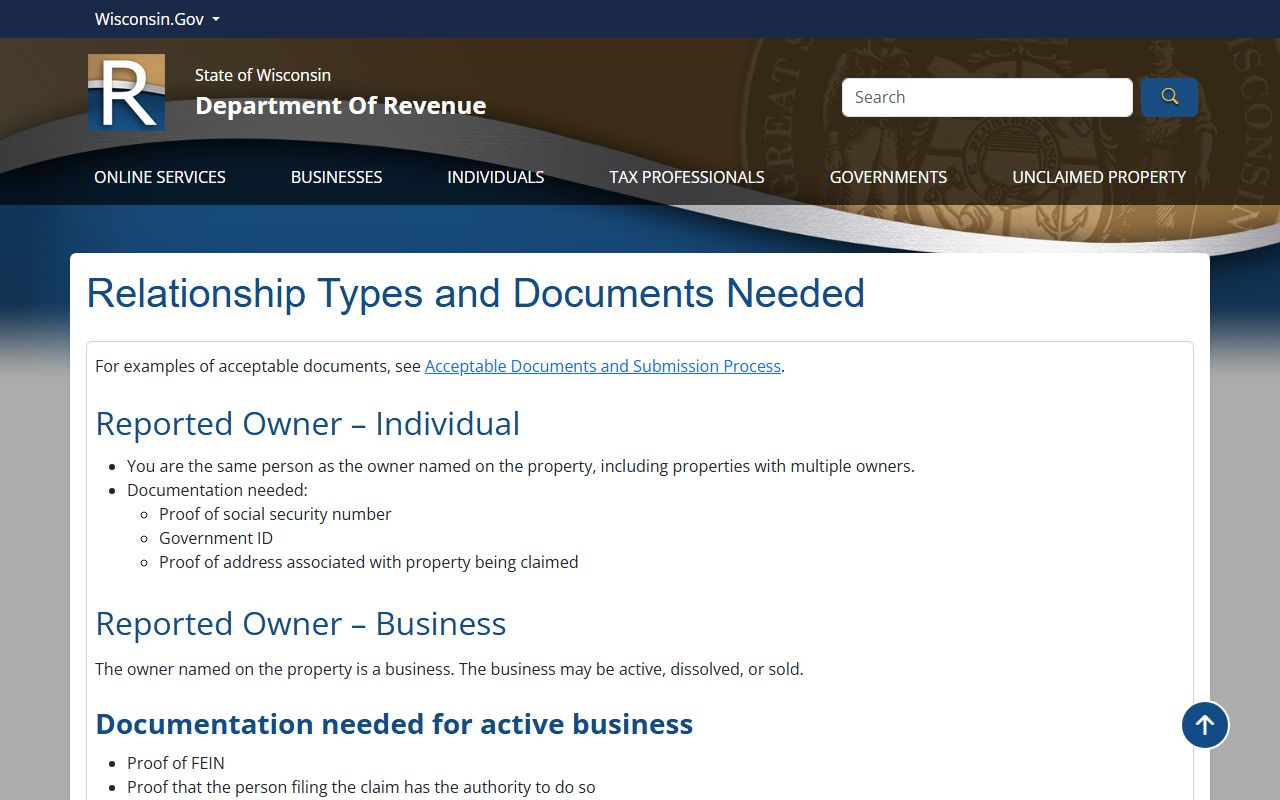
That image is useful here because the right claimant relationship often decides whether the state will approve the file.
The important thing is not to use the state database too soon when the money still looks local. DOR is the right tool when the local trail has ended, not when the local trail has not been checked yet.
Browse Wisconsin Unclaimed Money by County
The county directory is the strongest local research hub on the site because county pages are where treasurer notices, clerk of courts funds, probate records, and tax tools come together. If you know the county already, start there. If you only know the city, use the city directory first and then move to the county page once the place name is tied to the holder.
County pages are where the site is most specific. Some are publication-driven. Some are tax-search driven. Some are court-first because that is where the verified local research was strongest. The directory lets you move straight to the county that matches your record instead of guessing from a statewide page alone.
Browse Wisconsin Unclaimed Money by City
The city directory is useful when the place name is what you know first. A city page usually helps you connect that place name to the county office, county court, or county treasurer that actually controls the record. It is the bridge between a local address and the office that holds the money.
City pages do not replace county pages. They help you reach the county office faster. That is why the best search order for many users is city first, county second, DOR third if the holder turns out to be statewide.
Wisconsin Unclaimed Money Search Tips
The cleanest Wisconsin Unclaimed Money search starts with the holder, not just the name. If the clue is a parcel, a tax installment, a late postmark, or a county notice, start with the county treasurer and county tax tools. If the clue is a case number, a citation, a fine, or a forfeiture, start with the clerk of courts. If the owner is deceased or authority is the real issue, start with probate. If none of those fit, use DOR. That order keeps the search close to the record that created the money.
It also helps to keep the supporting facts together. A name by itself is often not enough. A parcel number, old address, check amount, case number, municipality, or date can make the county search much faster. Many pages on this site were built around exactly those local clues because they are what separate a real claim from a vague lead. Wisconsin Unclaimed Money searches become much easier when the claimant keeps the office, the amount, and the record type together from the start.
If the site points you from a city page to a county page, follow that path. If a county page points you to DOR, follow that next. The site is meant to narrow the holder one step at a time rather than force every user into one form. That is the most reliable way to finish a Wisconsin Unclaimed Money search without wasting time on the wrong office.