
Green Bay Unclaimed Money Records
Green Bay unclaimed money is not held in just one office. Some of it sits with the Brown County Treasurer, some city-side accounting questions run through the City of Green Bay Finance Division, and statewide property belongs in the Wisconsin Department of Revenue system. That means the first step is always to match the source to the holder. If you start with the Brown County list, you can check the county-held amounts that are actually published for local owners. If the record looks like a city payment or a city financial account, Green Bay Finance can help identify the trail. If it came from a bank, insurer, or utility, the DOR search is the correct path.
Green Bay Unclaimed Money Sources
Green Bay residents usually begin with Brown County because the county treasurer serves the Green Bay metropolitan area and surrounding communities. Brown County's current and cumulative unclaimed funds lists are the county's local map for this search, and the Research notes say the cumulative list is updated periodically, does not reflect money claimed after publication, and the latest list was published on May 1, 2024. The current list as of January 31, 2025 is also available on the county site, and the entries are organized alphabetically by last name. That is a useful detail when you are checking a familiar name or comparing several family members with similar surnames, and it reflects the local notice process in Wis. Stat. 59.66.
The first county image below comes from the Brown County Treasurer's unclaimed funds page and shows the office residents use when the local notice points to county-held money.
Brown County Treasurer unclaimed funds page is the best starting point for Green Bay residents who want to compare their name against the county list and confirm which amounts are still open.
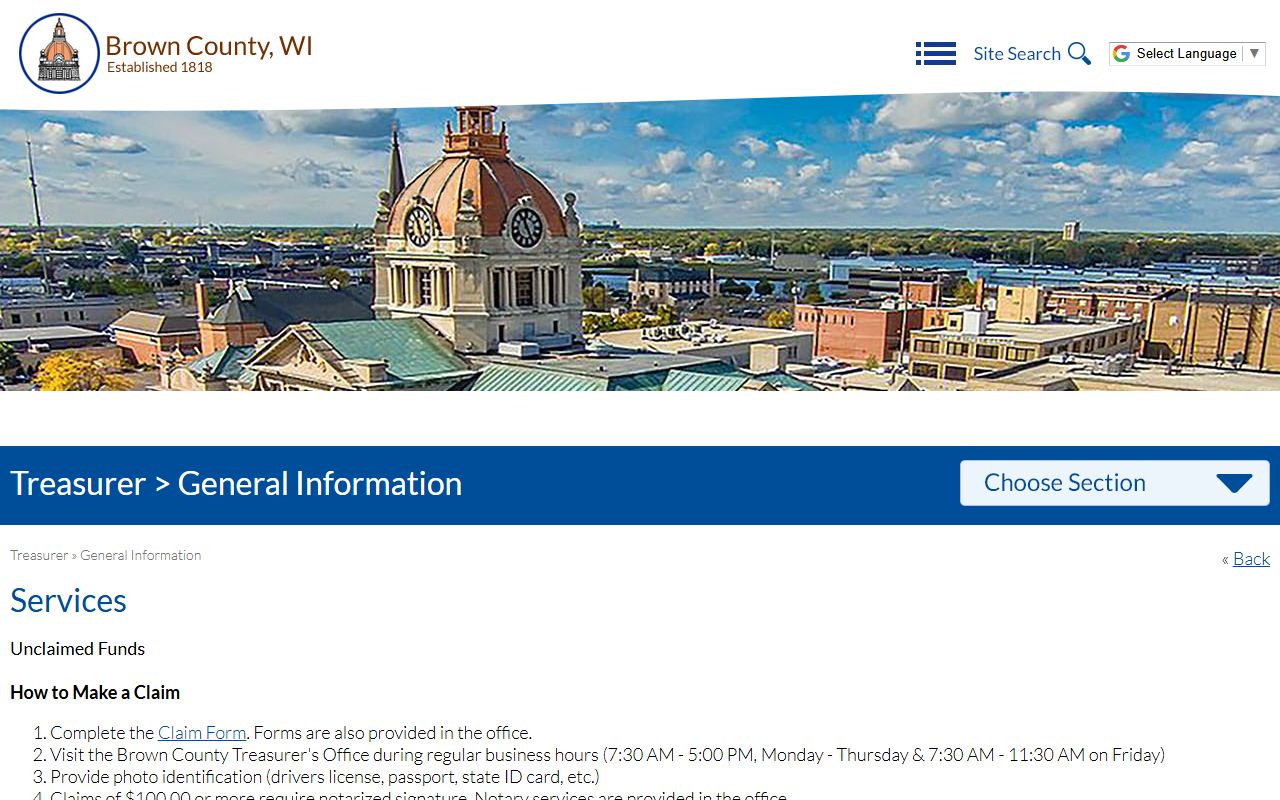
When a Green Bay name appears on the county publication, the Treasurer's office is the one that tells you how to move from the notice to the claim.
The second county image comes from the same Brown County source because the office's claim page is what turns a list match into a real request. Brown County asks for a claim form, photo identification, and a notarized signature for claims of one hundred dollars or more. The county also says notary services are available in the office, which keeps the claim process local and practical for Green Bay residents who can visit downtown during business hours.
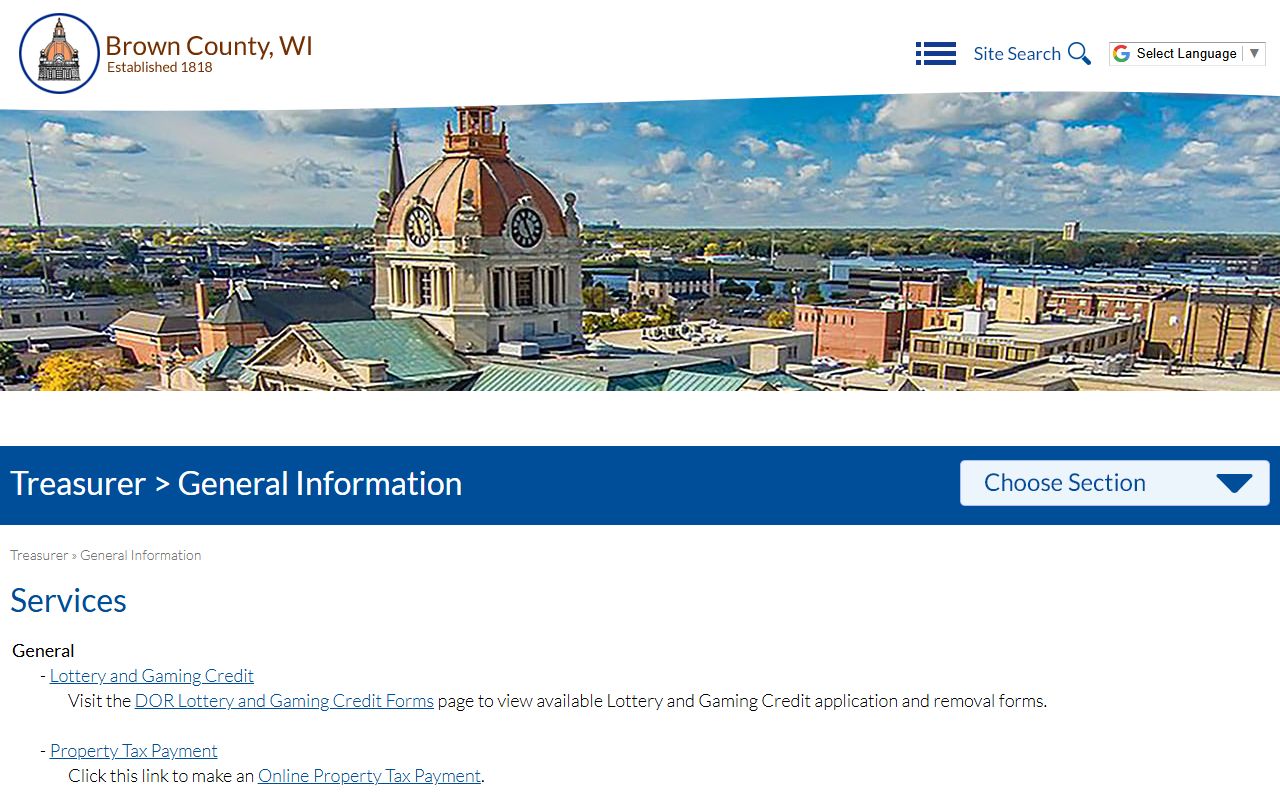
That page is especially helpful if you need to recover a county-held amount that showed up in the Brown County publication but has not yet been claimed.
Green Bay Unclaimed Money Claim
For Brown County-held money, the practical claim path starts at 305 E Walnut St #160 in Green Bay. The Treasurer's office lists the phone number as 920-448-4074 and says the public hours are 7:30 AM to 5:00 PM Monday through Thursday and 7:30 AM to 11:30 AM on Friday. The office wants a completed claim form, photo identification, and a notarized signature when the claim is $100 or more. That makes the Brown County process different from a generic search site because the office wants the exact claim packet before it reviews the money trail.
If the Brown County notice is for a family member, the estate and probate path can matter too. Wisconsin's local unclaimed funds rules are separate from the state DOR system, but when the owner is deceased the Register in Probate can help you understand the estate record and the court paperwork that proves who has authority to claim the money. That is one reason Green Bay residents should not stop at the county list when an heir claim is involved.
The city-side image below should be read with the official City of Green Bay Finance Division page, because that is the local office residents use when the money trail looks like a city accounting issue rather than a county-held notice.
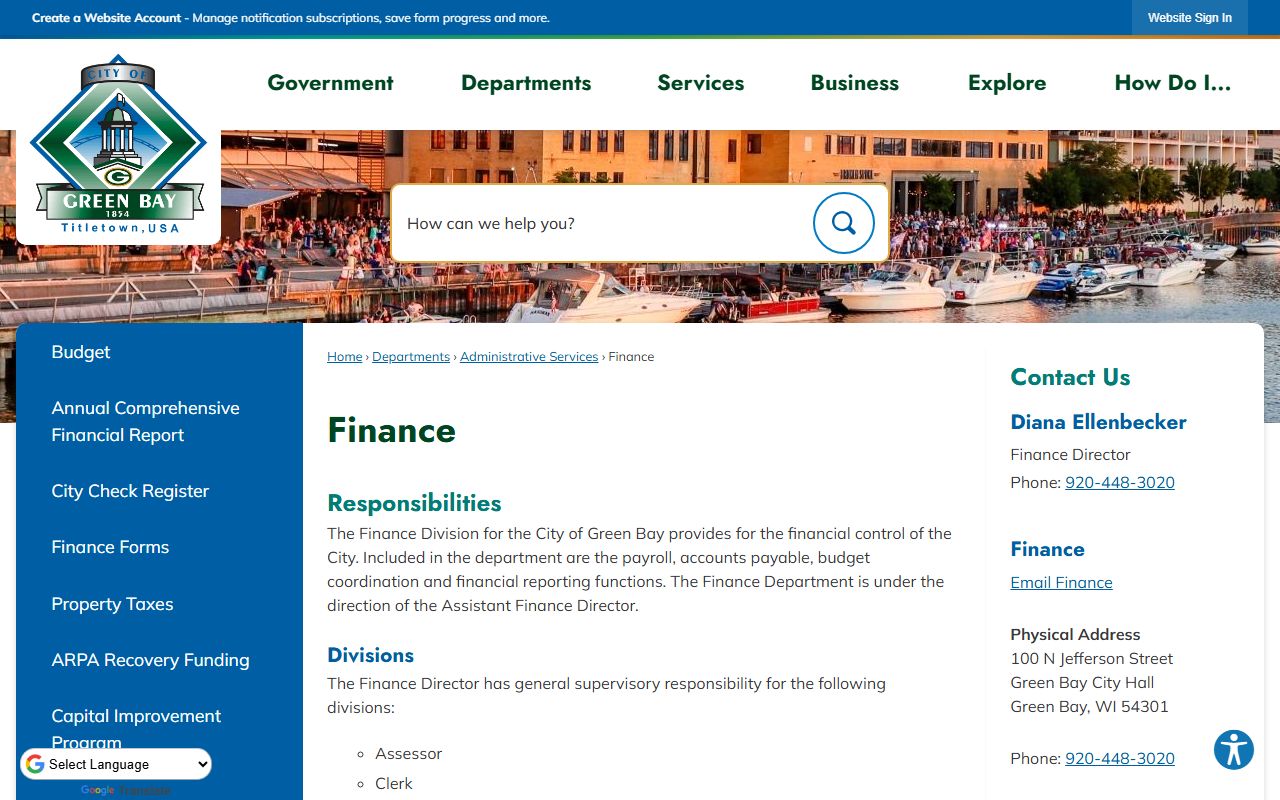
When the money looks like a city record rather than a county notice, the City of Green Bay Finance Division can help identify the account trail before you file the wrong kind of claim.
To keep the filing clean, the core items are straightforward:
- The Brown County claim form for the exact amount listed
- Photo identification that matches the claimant
- A notarized signature if the claim is $100 or more
- Any estate or authority documents if you are claiming for someone else
City Finance Records
The City of Green Bay Finance Division is not the same thing as the county treasurer, but it still matters in an unclaimed money search because it controls the city's financial records. The division handles financial control, accounts payable, budget coordination, and financial reporting. The research notes also say the finance director has supervisory responsibility for city finance operations. That makes the office useful when you are trying to determine whether a city-issued payment, accounting entry, or old municipal record is part of the trail.
The city finance page is the right place to start if your Green Bay question sounds more like a city accounting problem than a county-held unclaimed funds claim. It can help you identify the office that created the record, and that distinction matters because county-held funds still route through Brown County, while statewide property belongs with the Wisconsin DOR. The finance office's general contact line is 920-448-3020, and the email listed in the research is finance@greenbaywi.gov.
The City of Green Bay finance page below is the city-side reference that helps separate municipal accounting questions from Brown County claim records.
City of Green Bay Finance Division explains the city's financial control role and gives residents a place to start when the money trail appears to come from city records rather than the county list.
Brown County Court Records
Brown County court records can also sit behind a Green Bay Unclaimed Money search. Brown County Circuit Court handles court records, fines, fees, and forfeitures, and it manages the county's court case types. If the funds came from a jury matter, a court fee, or another case-linked payment, the court file can help explain why the money was never claimed. That is especially useful when a Green Bay resident sees a county notice but cannot tell whether the money came from the Treasurer, the Clerk of Circuit Court, or another local office.
The Brown County Register in Probate is the other local office worth checking when the owner is deceased or the claim has to be made by an heir or personal representative. That office helps with estates, wills filed for safekeeping, trusts, guardianships, protective placements, and open-records assistance. In practice, that means a Green Bay claimant may need the probate office to show who has authority to receive the money before the Treasurer releases the amount. County court and probate records are not the same as unclaimed funds, but they often explain why the funds are there in the first place.
The Brown County Circuit Court page below gives the official court context for Green Bay residents who need to connect a county payment or estate file to a local unclaimed money notice.
Brown County Circuit Court general information is helpful when a Green Bay claim is tied to a court fee, forfeiture, or probate record that needs to be matched to the owner.
The court path and the probate path are both worth checking before you file if the notice points to a deceased owner or a court-related payment.
Wisconsin Unclaimed Money Search
Some Green Bay money never touches the county treasurer at all. The Wisconsin Department of Revenue holds statewide unclaimed property from banks, insurance companies, utilities, and other business holders, and the DOR says there is no time limit to claim it. That makes the state search a necessary second step for many Green Bay residents, especially when the source is a private financial holder instead of Brown County or the City of Green Bay. The statewide system is also the place to look if the money resembles a bank balance, refund, dividend, or other account that was not tied to local government.
The DOR claim flow is built around documentation, so it is useful to know the official pages before you file. The DOR home page, claim instructions, FAQ page, and acceptable documents page explain the search, the relationship type, and the identity papers the state expects. If you need the legal anchor behind the claim path, Wis. Stat. 177.0903 covers owner claims and Wis. Stat. 177.01 defines the unclaimed property framework. Green Bay residents who check both the county and state paths usually get a clearer answer faster than people who search only one system.
Green Bay Unclaimed Money Tips
The simplest Green Bay strategy is to search in the same order the money usually moves. Start with Brown County's unclaimed funds list if the notice looks local. Move to City of Green Bay Finance if the record looks like a municipal accounting item. Use the Brown County Circuit Court or Register in Probate if a case or estate explains the claim. Finish with the Wisconsin DOR database if the source is statewide or private. That sequence avoids duplicate work and helps you reach the office that actually holds the money.
Brown County's current and cumulative lists are especially helpful because they show whether a name is still outstanding or was already claimed after publication. The county notes that the cumulative list does not reflect funds claimed after the publication date, so Green Bay residents should treat the publication date as part of the search, not just the name and amount. When a family has more than one possible match, that detail can keep one person from claiming another person's money by mistake.
Once you know the holder, the claim path is usually easy. County-held money goes through Brown County Treasurer, city-side records go through the City of Green Bay Finance Division, and statewide property goes through DOR. The only hard part is matching the source correctly, and Green Bay residents have enough official pages to do that without guessing.