
Search Oconto County Unclaimed Money
Oconto County Unclaimed Money searches work best when they start with the county treasury path. Oconto County publishes a treasurer page, an unclaimed funds page, a public treasury listing, and a property portal, so the local record trail is stronger than the state fallback alone. The treasurer office is led by Nikki Tolzman at 301 Washington Street in Oconto, and the county says the office manages property tax collections, delinquent taxes, and unclaimed funds. That gives residents a real first stop before they move to the Wisconsin Department of Revenue. It also keeps the search tied to the county record that actually handled the money.
Oconto County Unclaimed Money and Treasurer
The Oconto County Treasurer page is the main local office for county tax money and unclaimed funds work. The office is at 301 Washington Street, Oconto, WI 54153, and the phone number is 920-834-6813. That matters for Unclaimed Money because the county treasurer is the office that handles the tax collections and delinquent tax side of the record before a balance is turned over or paid back. If the clue is a county payment, a tax issue, or an older county check, this is the first office to check.
The treasurer page is shown at Oconto County Treasurer, which is the official county source for the office contact and the money trail. The page matters because it ties the county's tax work to the same office that handles unclaimed funds. That makes it easier to decide whether the resident needs a tax record, a county claim, or a state search. When the money started with the county, this is the best first filter.
The county's unclaimed funds page gives the claim path in more detail. Oconto County says it is the custodian of unclaimed funds that usually come from incorrect or incomplete addresses. The examples are broad and practical: program or service payments, jury duty payments, bail money, overpayments, and municipal payments. That matters because the money may not have come from a single office. It may have come from any county payment system that left the right person off the address line.
The unclaimed funds page is shown at Oconto County Unclaimed Funds. The county says the claimant must use a claim form and include photo ID. Claims of $100 or more require a notarized signature, and the County Clerk office provides free notary service. Verified claims are paid by check within four to six weeks. That is useful because it gives the resident a concrete county claim process instead of a vague lead. If the county already holds the money, the page tells the claimant exactly what to bring and where the file goes.
That is the core Oconto County Unclaimed Money process. It begins with the treasurer, then moves to the custodian page, then ends with a county check if the claim is verified. The office path is local, specific, and more useful than a generic database search when the county already published the instructions.
The treasurer and unclaimed funds pages also make the search practical for people who only remember a failed delivery or a small county payment. A missing check is often just a payment that never reached the right address. Oconto County tells residents how to prove that and how to finish the claim.
Oconto County Unclaimed Money Listing
The public treasury listing is the county's older unclaimed fund record. Oconto County says the listing is for funds older than one year and that it is published under Wis. Stat. § 59.66. That matters because the listing shows that the county is not guessing at the money. It is publishing the record on a legal schedule. A resident who sees a name or a check reference there knows the county treated the balance as a public treasury item rather than a private note.
The public treasury page is shown at Oconto County Public Treasury Unclaimed Funds Listing. If a claimant is checking a family name, a municipal payment, or an older county check, this page is the best place to see whether the balance has moved into the public treasury pool. It also helps distinguish between the claim that is still with the treasurer and the claim that has already been published. That difference matters because the document set can change once the item appears on the listing.
The property portal gives the search another local tool. The county property search at Oconto County property portal is useful when the claim clue is a parcel, a tax line, or a property record that needs to be matched to the county money trail. A resident may only remember a tax bill or an address change. The portal can help tie that clue to the county record before the claim is filed. That keeps the search from turning into a random lookup that does not match the county balance.
The state fallback still matters even with a strong county set. The Wisconsin Department of Revenue home page is the official backup if the county no longer holds the money. The DOR FAQ explains the general unclaimed property framework, the how-to-claim page shows the filing flow, the acceptable documents page explains what proof the state wants, and the after-you-file page explains what happens once the claim is in. Those links are the right backup if the county page shows a record but not the final holder.
Wisconsin law supports the county process too. Wis. Stat. § 177.01 defines the terms used in the state unclaimed property system, Wis. Stat. § 177.0501 addresses holder notice before property is reported, and Wis. Stat. § 177.0903 explains how an owner files a claim. In Oconto County, those statutes line up with the county's own publication under 59.66 and show why the office asks for proof before a check is issued.
For residents, the search order is simple. Start with the treasurer if the money is tax-related or county-held. Check the unclaimed funds page if the money was sent to the county with the wrong address. Use the public treasury listing if the item is older than one year. Use the property portal if the clue is a parcel or tax record. Then turn to DOR only if the county no longer holds the balance.
Oconto County Unclaimed Money Images
The treasurer page at Oconto County Treasurer shows the office that manages property tax collections, delinquent taxes, and unclaimed funds.
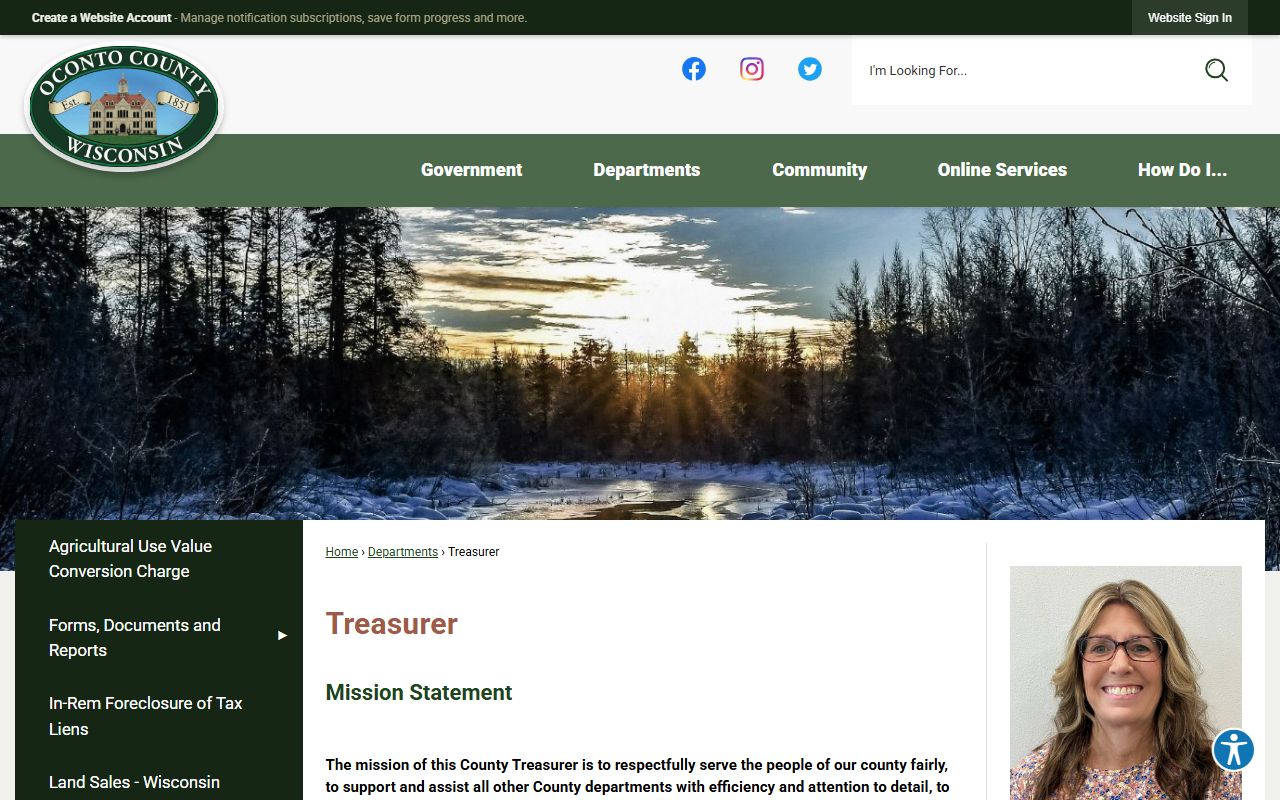
That page is the clearest starting point when the money trail begins with county taxes or a county payment.
The unclaimed funds page at Oconto County Unclaimed Funds shows the county claim instructions and the custodian role.
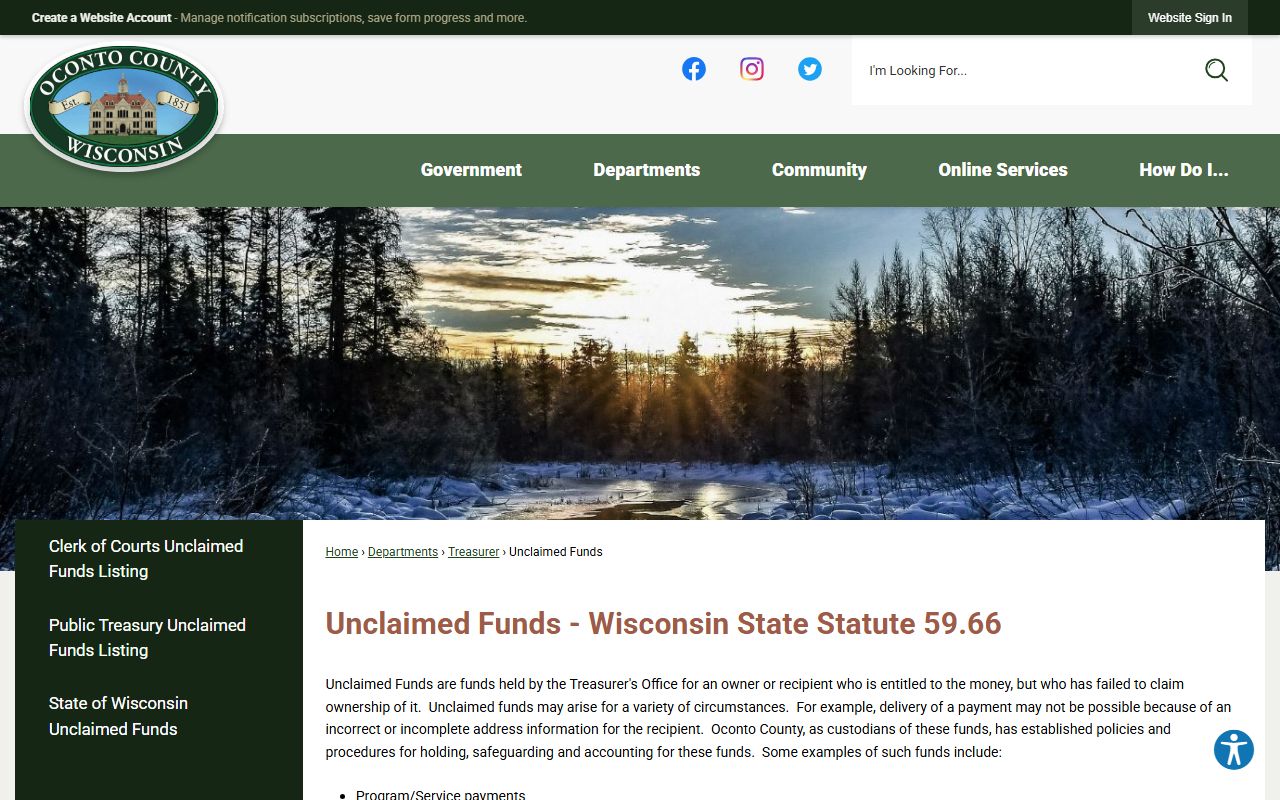
That page is the best county sign that a payment may already be waiting for a verified claimant.
The public treasury listing at Oconto County Public Treasury Unclaimed Funds Listing shows funds older than one year under Wis. Stat. 59.66.
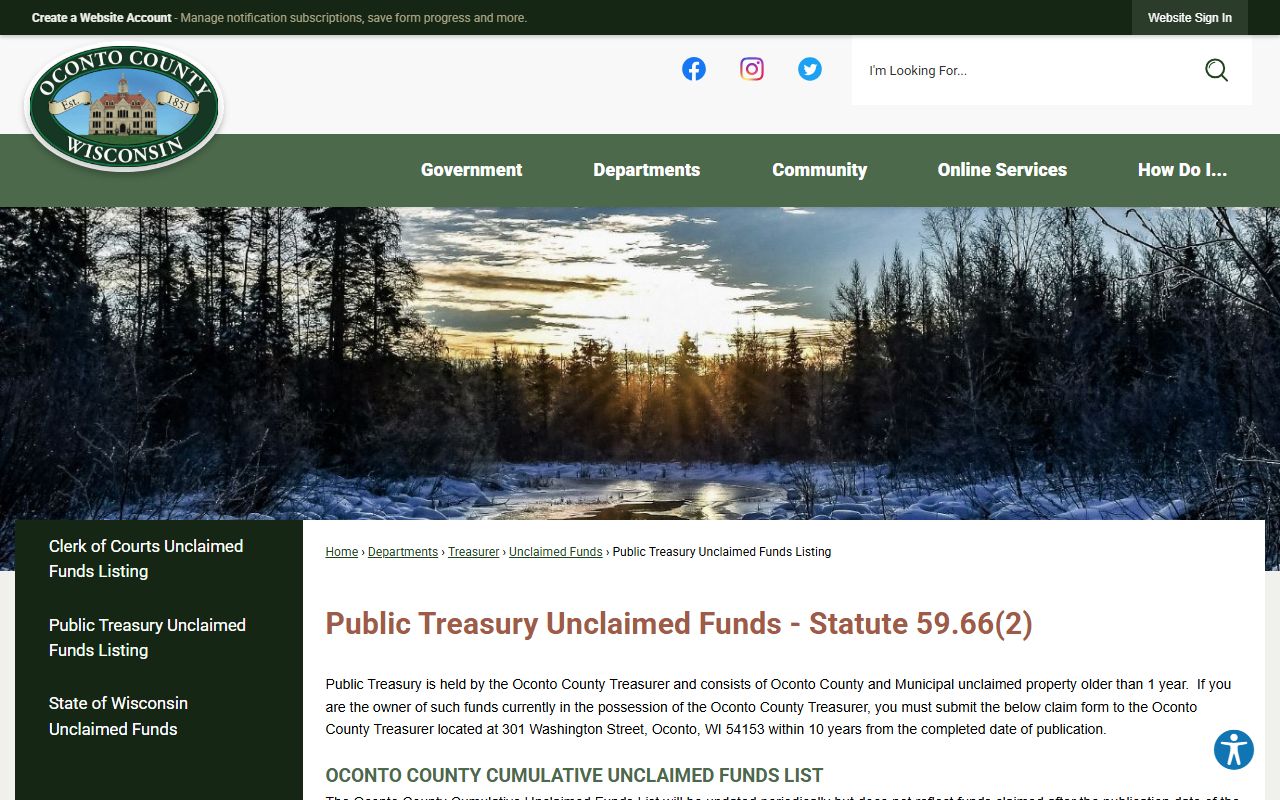
That page helps when the claimant is matching a name or old check to the county publication record.
The property portal at Oconto County property portal gives the local record lookup that can connect property details to the county money trail.
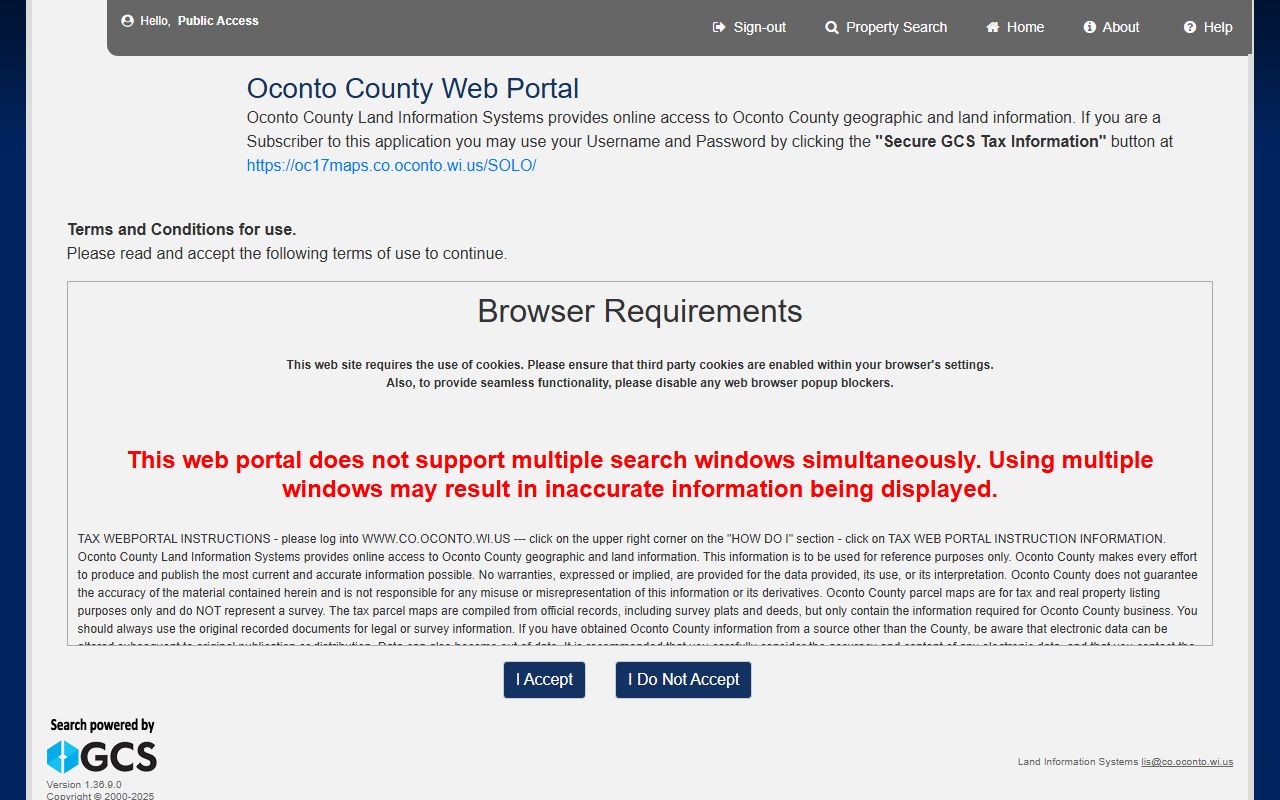
That portal is useful when the clue is a parcel, a tax line, or an address change rather than a direct check number.
Wisconsin Unclaimed Money Rules for Oconto County
The Wisconsin Department of Revenue is the statewide fallback if Oconto County no longer holds the money. The DOR FAQ gives the broad rules, the how-to-claim page explains the filing steps, and the relationship types page helps when the claimant is acting for an owner, heir, or business. Those pages matter because a county listing is not the same thing as a state claim.
If the claimant needs document guidance, the DOR acceptable documents page is the practical reference. It explains what can support the claim when the county notice is already in hand but the proof still needs to be lined up. The DOR after-you-file page is the last step in the state path and helps the claimant know what to expect after submission. That is the right backup if the county page shows the money but not the final payout.
Wis. Stat. § 59.66 ties the county publication to the state unclaimed property framework, while Wis. Stat. § 177.01, 177.0501, and 177.0903 explain how the state system defines the property, notifies holders, and processes owner claims. That legal trail is why Oconto County can publish local funds and still send some claims to the state database if the money is no longer in county custody.
For Oconto County residents, the search should stay local as long as the treasurer, the unclaimed funds page, the public treasury list, or the property portal can answer the question. If those pages do not resolve it, DOR becomes the next step. That order keeps the search practical and keeps the claimant on the right record path.
Note: Oconto County Unclaimed Money searches work best when the county pages are checked first, then DOR is used only for funds that are no longer held locally.