
Madison Unclaimed Money Records
Madison Unclaimed Money questions often start with the City of Madison Treasury, but the answer may end at Dane County or the Wisconsin Department of Revenue. That is because Madison has a city payment office, a county treasurer office that holds local unclaimed funds, and a state program for statewide abandoned property. A fast search depends on knowing which office last handled the money. If you are tracing a municipal bill, a parking payment, a county check, or a state-held account, the right office name saves a lot of time.
Madison Unclaimed Money and Treasury Office
The City of Madison Treasury is located in the City-County Building at 210 Martin Luther King Jr Blvd, Room 101. Office hours are Monday through Friday from 8:00 AM to 4:30 PM, and the office can be reached at treasury@cityofmadison.com. The separate City of Madison Treasurer page points to the same payment function. The treasury office handles property taxes, dog and cat licenses, municipal bill payments, parking tickets, and various licenses and permits. It is the city's payment desk, not the county's unclaimed funds office.
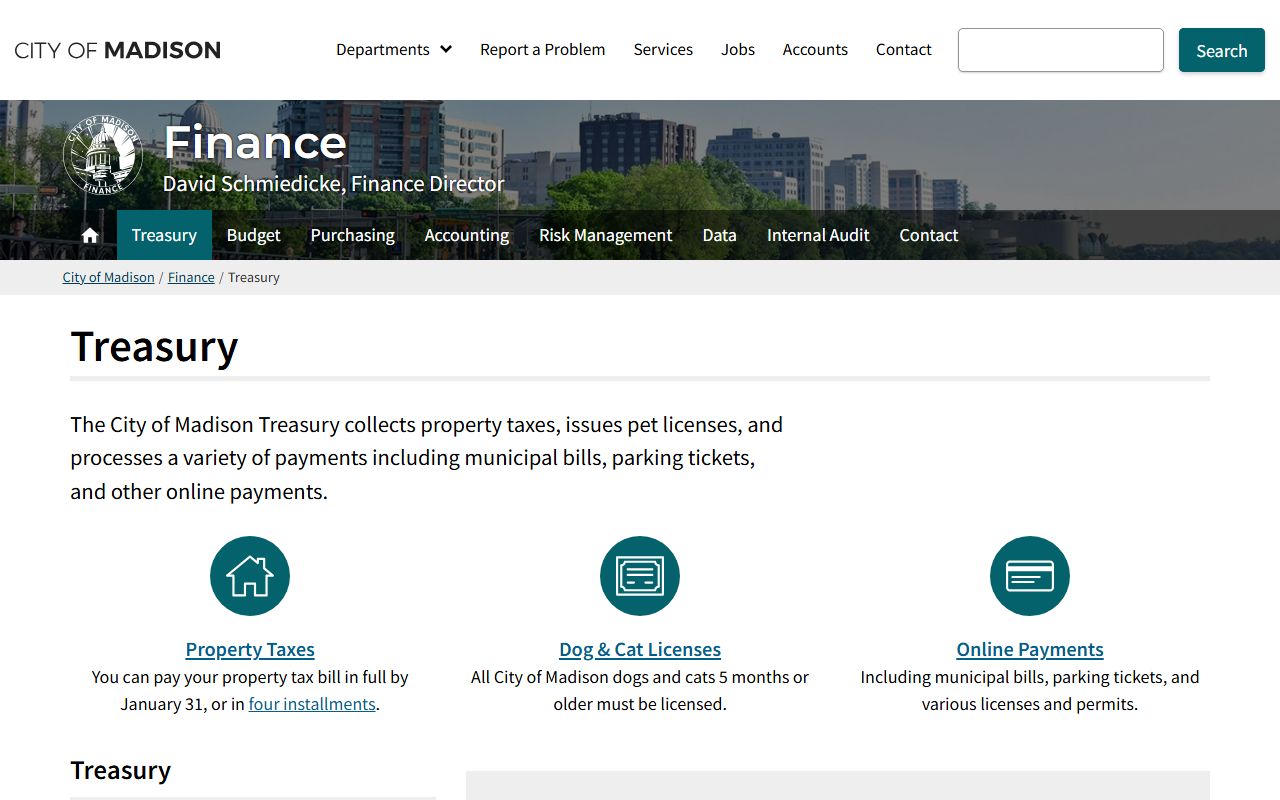
That distinction matters when a Madison resident thinks a lost payment might be an unclaimed funds issue. If the money is a city payment, the treasury office is the right place to ask about timing, receipts, or the payment method that was used. Property taxes can be paid in full by January 31 or through the four-installment schedule listed by the city, and tax payments postmarked on or before December 31 are processed as paid in that tax year. Those details often help explain where a payment trail began.
The treasury page also notes that property tax assistance is available for seniors and that online payment options exist for municipal bills, parking tickets, and certain licenses and permits. That makes the page useful even when you are not filing a claim. A missing receipt, a late-posted payment, or a question about a parking balance can all start with the city treasury before you move to a county or state unclaimed money search.
How Madison Unclaimed Money Claims Work
When the money is not a city payment, Dane County becomes important. Madison residents with local municipal or court funds use the Dane County Treasurer under Wis. Stat. § 59.66(2). The county publishes a notice with the names and last known addresses of owners of unclaimed money or securities, and the county can hold items worth less than $20 as well. To claim funds, the owner must appear in person at Room 114 in the City-County Building, 210 Martin Luther King Jr Blvd, Madison.
The Dane County unclaimed funds page says the office is open Monday through Friday from 8:00 AM to 4:00 PM and requires valid identity documents showing full name, current residential address, signature, and photo. The page is direct about the claim process because the county wants proof at the counter, not just a mailed statement. For a Madison resident, that usually means bringing the right ID before expecting a replacement check or an in-person review of the file.
If the money belongs to the state program instead, the Wisconsin Department of Revenue becomes the right search. The DOR FAQ explains that unclaimed property is generally a financial asset with no owner activity for at least one year, and the home page gives the search entry point. The county and state paths are separate on purpose. City Treasury handles city payments, Dane County holds local unclaimed funds, and DOR handles statewide property.
Madison Unclaimed Money and Finance Records
The City of Madison Finance Department is in Room 406 of the City-County Building at 210 Martin Luther King Jr Blvd, and the department can be reached at finance@cityofmadison.com. The finance office oversees budget work, accounting, financial statements, special assessments, and vendor resources. It also maintains a public records request center at cityofmadison.govqa.us. That makes the finance page useful when a payment question needs records support rather than a cashier window.
If you are checking an older city bill, a finance record, or a payment history that could explain why money went missing, the finance office is the better lead than the Treasury desk. The treasury page is about collection and payment posting. The finance page adds the internal record trail, which can matter when a refund, duplicate payment, or old charge needs to be matched to a specific account. That distinction keeps the search local and avoids mixing city billing with county unclaimed funds.
Madison residents often move between these offices in a single search. A parking ticket may lead to the treasury office, a city record request may go through finance, and a local unclaimed funds claim may still belong at Dane County. When the paper trail crosses office lines, the city pages give you a clean way to see which desk owns which piece of the record. That is usually faster than starting with the wrong office and getting bounced across departments.
Note: City Treasury handles Madison payments, Dane County holds local unclaimed funds, and the Wisconsin Department of Revenue handles statewide assets.
Wisconsin Unclaimed Money Rules for Madison
The state claim process ties the local offices together. The DOR relationship types page tells you whether you are filing as the owner, guardian, heir, personal representative, or another authorized claimant. The acceptable documents page shows the kinds of ID and proof that DOR accepts, including government ID, proof of address, and documents tied to the property or the owner relationship.
The statutes are part of that same path. Wis. Stat. § 177.01 defines the terms DOR uses, Wis. Stat. § 177.0501 governs the holder's notice before reporting, and Wis. Stat. § 177.0903 explains how a claimant files with the administrator. That legal structure is why the state claim file can look different from the county unclaimed funds counter claim. Each office works from the same law, but each office handles a different kind of money.
Once a DOR claim is filed, the after-you-file page explains the waiting period and follow-up. DOR typically needs up to 12 weeks to review a claim, and approved payments often go out within 7 to 10 days after approval. You can save a draft, keep your confirmation code, and return to finish the claim later if needed. That makes the state process more patient than the city desk, but it also gives you a clear route when the money is not a Madison bill at all.