
Dane County Unclaimed Money Records
Dane County Unclaimed Money searches usually begin with the county treasurer, then move to the Wisconsin Department of Revenue if the money belongs in the state system. That split matters because local county funds, court money, and statewide abandoned property follow different paths. Residents who know the office name but not the right process can still narrow the search fast by starting with the county notice list, checking the treasurer site, and then matching the claim type to the right records. The goal is simple: find the office that holds the money and the papers that prove it belongs to you.
Dane County Unclaimed Money and the Treasurer
The Dane County Treasurer home page is the best local starting point when you want a county office that already handles several money-related functions. The office receives property taxes, processes tax foreclosure sales, handles unclaimed funds, and disburses lottery tax credits. It also offers E-Bill, E-Receipt, and E-Statement tools, which can help you trace a payment trail before you ask about a missing check or refund.
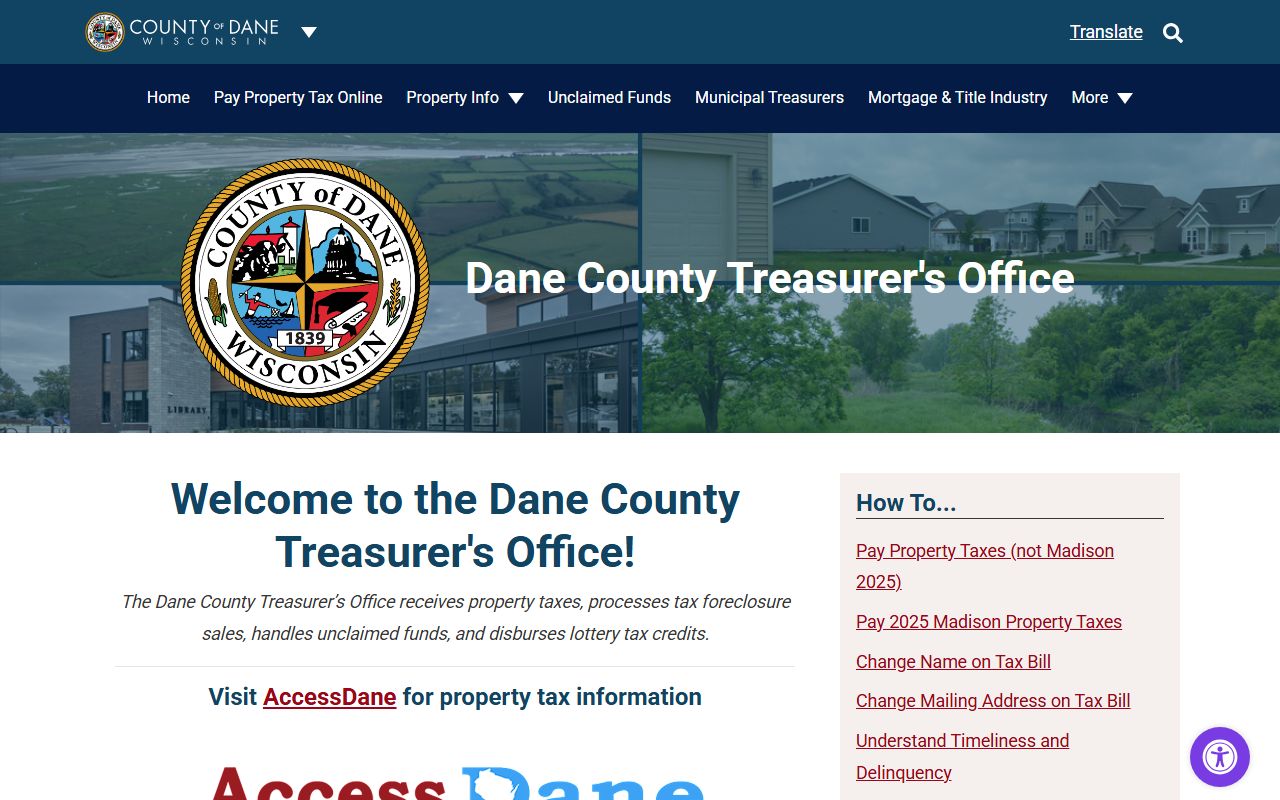
That homepage matters because it sits between tax work and unclaimed funds. If you are trying to match a county check, a tax credit, or a payment that never cleared, the treasurer's pages give you the first local context. The county also relies on USPS postmarks for timing, so mailing dates can matter when a payment or request arrived close to a deadline.
Dane County property tax records can also help explain why money moved through a local office in the first place. The property tax page links out to municipal contacts and parcel information, which is useful when you are tracking a refund, a credit, or a payment that was sent to the wrong collector. The county's public pages keep the process close to the records, which saves time when you already know the parcel or tax year and just need the missing piece.
How Dane County Unclaimed Money Claims Work
The Dane County unclaimed funds page explains that the county publishes an annual list under Wis. Stat. § 59.66(2). The local funds can include returned checks, never-cashed checks, or other money where the owner cannot be located. When a claim is approved, the county issues a replacement check, but the claimant still has to prove identity and entitlement first. That local rule keeps the county list separate from the statewide DOR database.
The county process is meant for the funds that Dane County itself is holding. If the money belongs to the state program instead, the Wisconsin Department of Revenue is the right place to start. The DOR unclaimed property home page explains the claim flow, while the how-to-claim page walks through the search and filing steps. You search by name or property ID, choose the correct relationship to each property, and keep the confirmation code if you save a draft. The code stays valid for 60 days, so it is worth recording right away.
That state claim path becomes clearer once you read the DOR FAQ. It explains that unclaimed property is any financial asset that has been inactive for a period of one year or more, and it confirms that DOR holds property indefinitely when no owner can be found. For a Dane County resident, that means a county check, a state-hold account, and a business refund are not the same search. The office name tells you which claim path to use.
Dane County Property Tax and Payment Records
The Dane County tax payment page explains how the county handles delinquent taxes and why current-year taxes usually stay with the local municipality. Dane County does accept current-year City of Madison taxes, but it does not take ACH, savings, or wire transfers. If you use a debit card, the payment is processed as credit. Those details matter when a payment issue is the reason a refund or overpayment later shows up in the unclaimed funds file.
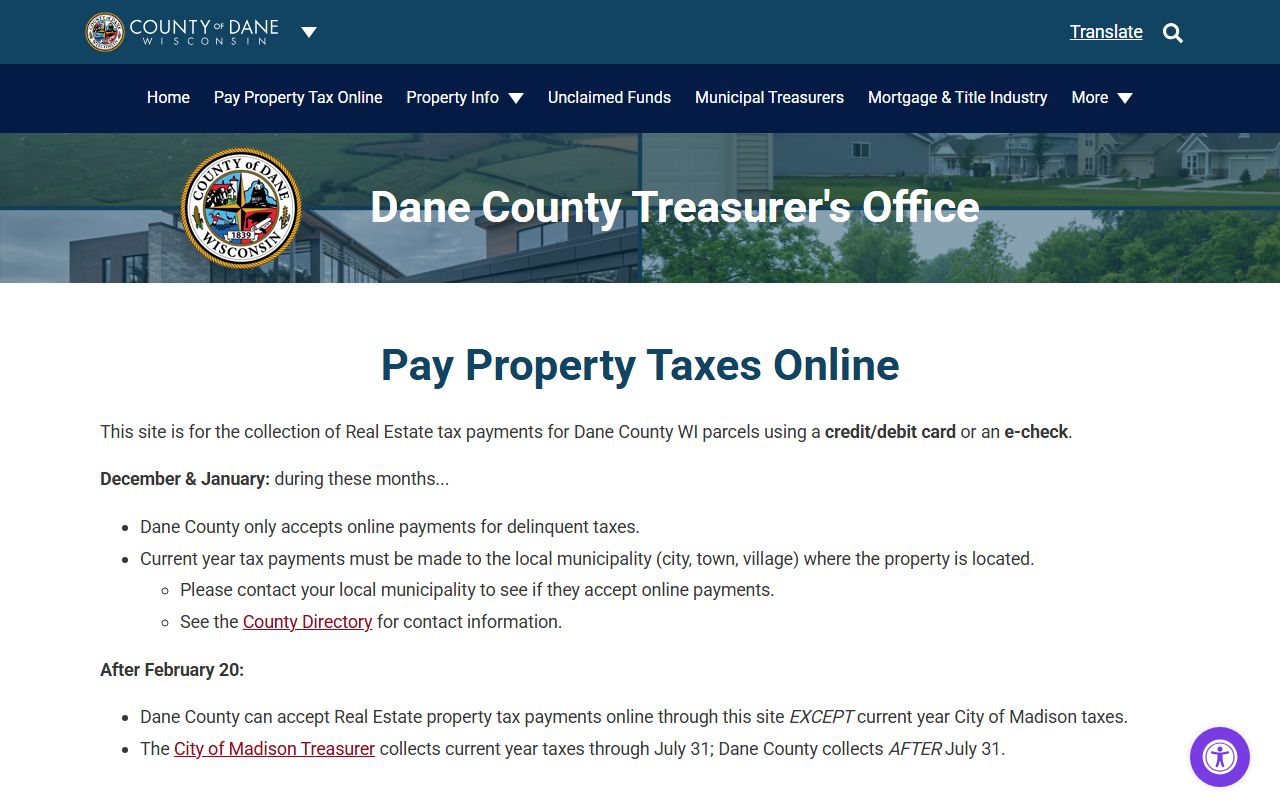
The county also explains that delinquent tax interest and costs can continue to build after February 1, when the unpaid principal begins to carry a 1.5 percent monthly charge. The office relies on USPS postmark timing, so a mailed payment is not treated the same as a late-arriving envelope. If you are checking whether a tax payment was posted, the treasurer page and the county property tax page work together. One explains where to pay, and the other explains how the tax parcel and municipal contact trail fits together.
The E-Bill, E-Receipt, and E-Statement tools on the treasurer site can help you line up a payment record before you move into a claim question. That is useful when a county check is missing because the mailing address changed or because a payment was never cashed. You can often see the tax side first, then use the unclaimed funds notice to confirm whether Dane County is holding money that belongs to you. The county pages keep the path local and tied to the parcel or payment history instead of forcing a blind search.
Wisconsin Unclaimed Money Rules for Dane County
The Wisconsin Department of Revenue sets the statewide claim rules that sit behind Dane County's local process. The DOR relationship types page explains who can claim as the reported owner, guardian, heir, or personal representative, and the acceptable documents page shows what proof usually travels with the claim. Government ID, proof of address, and proof of the connection to the property are the documents that show up most often in a clean file.
The statutes make the structure easier to understand. Wis. Stat. § 177.01 defines the administrator, owner, holder, and property terms that DOR uses. Wis. Stat. § 177.0501 describes the holder's notice duty before property is reported, and Wis. Stat. § 177.0903 explains how an owner files a claim on the form prescribed by the administrator. Those rules are not a separate local process. They are the reason county and state claims ask for different proof.
After you file, the DOR after-you-file page explains the rest of the timeline. DOR usually needs up to 12 weeks to review a claim, and approved payments are often issued within 7 to 10 days after approval. If you want direct deposit, the refund can move that way. Paper checks are also possible, and the claim can time out if the office needs more documents and they never arrive. That is why the county and state sites both stress proof, follow-up, and a clean mailing address.
Note: Dane County handles local unclaimed funds, while the Wisconsin Department of Revenue handles statewide unclaimed property, so the office that holds the money decides where the claim starts.