
Kenosha City Unclaimed Money Guide
Kenosha residents usually follow county offices, not a city desk, when they search for local Unclaimed Money. That can feel indirect at first, but it is how the record trail is set up in Kenosha County. County treasurer work, circuit court records, sheriff-held funds, and state dormant property all come into play depending on where the money started. This page keeps the local path simple. If you live in Kenosha and need to check a county refund, a court notice, or a statewide dormant asset, the right office is only a few steps away once you know which holder to ask.
Kenosha City Unclaimed Money and County Treasurer
The county treasurer is the local money office for Kenosha city residents who are trying to trace an unclaimed payment. Kenosha County's Goals and Objectives page shows that the treasurer's work covers unclaimed funds, property tax laws, annual settlements, and the stewardship of county money. That is important for city residents because the city does not hold a separate unclaimed funds system in the way the county does. If a city payment was issued, returned, or never matched to the right parcel or account, the county office is often the place that can tell you where it went next.
Kenosha County's Goals and Objectives page is useful because it makes the county treasurer role easy to see in one place. The page helps show how the office receipts and disburses money, maintains county banking accounts, and keeps the public money record organized. For a Kenosha resident, that means the search may start with a city question but finish with a county answer. If you are matching a refund, a tax line, or a county-held balance, the treasurer's responsibilities explain why the record lives where it does.
The city itself sits inside that county system, so it is normal for a Kenosha Unclaimed Money search to move from a city address to a county office. That does not make the search harder. It just means the right holder is likely already known if you follow the county path in order.
The county treasurer office at 1010 56th Street, Kenosha, WI 53140, is the practical stop when the money trail needs a person who can look at county records and explain them. General information is available at 262-653-2542, and the office is used to handling the public side of county money work. Residents often start with a phone call when they are trying to confirm whether a payment, tax item, or refund belongs on the county side before they make the drive.
Kenosha County Court and Sheriff Notices
City residents should also watch the county court and sheriff notices. The 2025 Kenosha County Circuit Court notice says the Treasurer is required under Wis. Stat. 59.66(2) to publish a list of names and last known addresses for money or security held by the Clerk of Kenosha County Circuit Court. Owners must appear in person with proper picture identification at Room 204 of the Kenosha County Courthouse, 912 56th Street, to claim those funds. The courthouse runs Monday through Friday from 8:00 AM to 5:00 PM, which gives residents a clear window for the in-person claim process.
The sheriff side follows the same county pattern. Kenosha County also publishes a sheriff-admin unclaimed funds notice, and the owner of record must appear in person with picture identification through the sheriff office process. That is a good reminder that not every county-held balance sits in the same office. Some records are court-side, some are sheriff-side, and the office that controls the money is the office that controls the claim. If you are looking from inside the city, the county notice is still the local notice that matters.
Those notices do more than announce money. They tell you where the funds are, who is holding them, and what proof the office expects. A city resident who reads the notice carefully can save a trip and bring the right ID the first time. That is especially helpful when the claimant is helping an heir, a family member, or another owner who cannot appear without support.
The sheriff notice matters for the same reason. If the record came out of the evidence room or another sheriff-held file, the claim still goes through the county process and still depends on picture identification. A city address does not change that. The office holding the money controls the release, which is why the notice itself is so important.
Kenosha City Goals and Objectives
Kenosha County's Goals and Objectives page is the city-side reminder that unclaimed funds are handled at the county level.
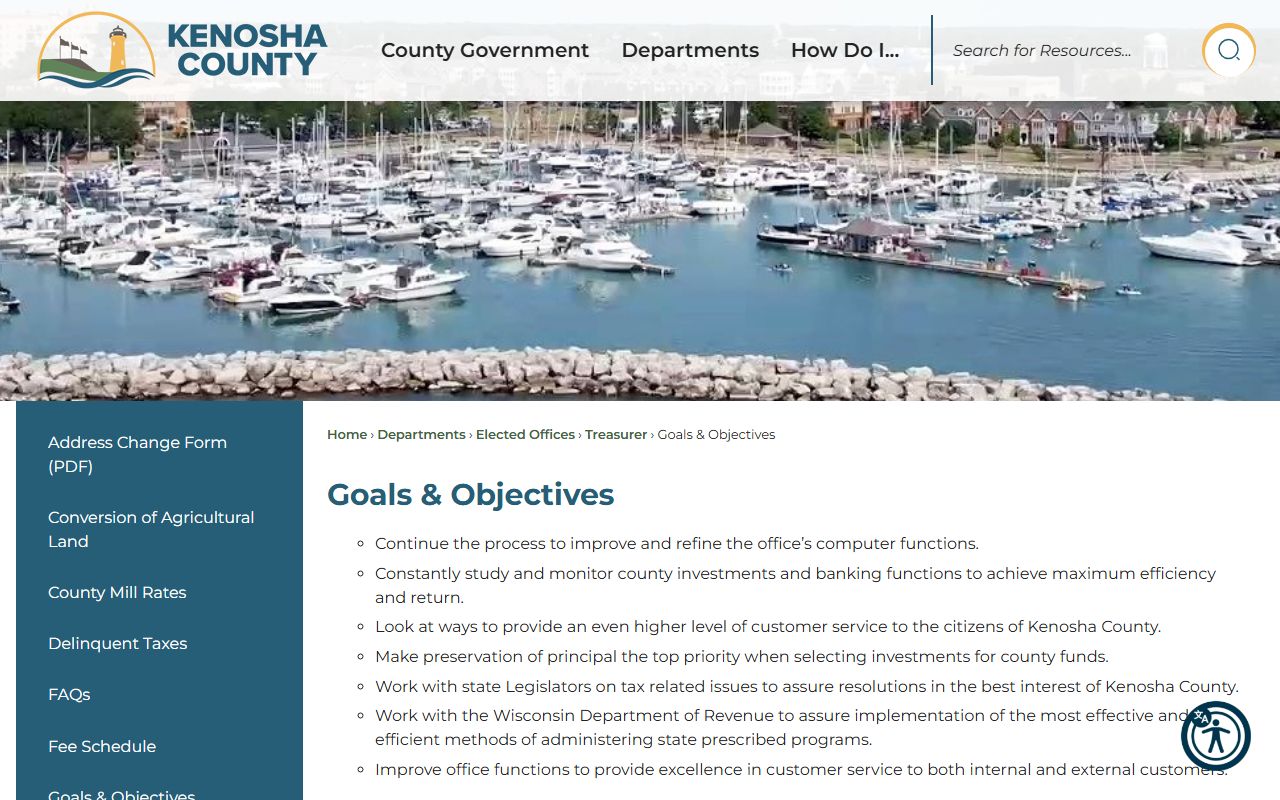
That county page helps city residents see the treasurer's role before they ever walk into the courthouse or contact the county office.
The same page is useful when the issue looks like a tax or settlement record rather than a loose check. Kenosha County describes the Treasurer's work in terms of cash handling, banking, tax law, and annual settlements, so a city resident can use the page to understand why the money may be sitting in county records rather than in a city ledger. That context helps you avoid starting with the wrong office.
Wisconsin Unclaimed Money Search Help
When the county offices do not resolve the record, the Wisconsin Department of Revenue is the statewide backstop for Unclaimed Money. The DOR system lets you search by name or property ID, add the property to a claim, save progress, and return later with the confirmation code. The process also asks you to pick the right relationship to the property and provide the documentation that proves you are entitled to it. That matters for city residents because statewide dormant property can look a lot like a lost city or county payment until the holder is identified.
The DOR unclaimed property home page is the best place to start when you want the full claim flow. From there, how to claim property covers the search and filing steps, acceptable documents explains what proof may be uploaded or mailed, and relationship types and documents needed explains how the claimant fits the property. If you need a quick refresher on what Wisconsin holds and how long it keeps it, the FAQ page at Wisconsin DOR unclaimed property FAQ is the cleanest summary.
For a Kenosha resident, the practical sequence is straightforward. Check the county treasurer when the issue looks local, check the courthouse or sheriff notice when the paper trail points to county-held funds, and use DOR when the money belongs to a statewide holder. That order keeps the search tied to the record instead of to guesses.
The state process also helps when you are holding more than one lead at once. A single claim can involve a prior address, a changed name, or an heir relationship, and DOR's forms are built to sort those facts before the claim is approved. The confirmation code, draft tool, and document upload steps are there to keep the claim moving without forcing you to start over every time you save progress.