
Taylor County Unclaimed Money Records
Taylor County Unclaimed Money searches start with the treasurer because that office receives county money from all sources, invests funds not needed right away, and handles the county check and settlement process. In Medford, the treasurer also ties tax work to the Real Property Description Department and the tax deed process, which means a missing payment can sit close to the records that explain it. If you know the office that created the money trail, the claim gets easier fast. That is why county records, tax bills, and court files all belong in the same search, but not in the same bucket.
Taylor County Unclaimed Money and Treasurer
The Taylor County Treasurer is elected for a four-year term and receives all monies from all sources belonging to the county. The office deposits county money, invests funds that are not needed immediately, cosigns and mails county checks, and disburses county payments. It also makes preliminary settlement with each taxing unit and then final settlement with the state and local treasurers. Those duties matter because the treasurer is not just a tax collector. It is the office that keeps the county money trail in order.
Taylor County Treasurer is the local page to use when the record starts with a county payment, a tax bill, or a county account. The office is at 224 South Second Street, Medford, WI 54451 in the Courthouse 2nd Floor, with phone 715-748-1466 and fax 715-748-1415. The office also offers Tax Bill Lookup and Tax Payments online, which makes it easier to connect a parcel to the right account before the claim goes any farther. For a county resident, that online lookup is often the quickest way to tell if the money is still local.
The treasurer also supervises the Real Property Description Department and handles the tax deed process. That means Taylor County Unclaimed Money searches often overlap with land records, parcel history, and the timing of tax settlements. A balance may look like a missing payment, but the county record can show whether it was already posted, moved into settlement, or tied to a tax deed path. That is the local context that turns a vague question into a real record search.
Taylor County Unclaimed Money Claims
Taylor County does not send every dormant balance to the state first. When the county holds the money, the treasurer is the office that controls release, and the supporting records usually stay local too. That matters because the claim path is not just about a name on a list. It is about matching the county record, the county account, and the proof that ties the owner to the money. If the office says the money is county-held, the state search is not the first stop.
The county treasurer's role in settlements helps explain why claims can be sensitive to timing. Preliminary settlement with taxing units, final settlement with the state and local treasurers, and the tax deed process all sit in the same office workflow. If a taxpayer or owner is trying to trace a check, refund, or county deposit, the treasurer can often tell whether the record is still open, already settled, or tied to another county process. That keeps the search grounded in Taylor County records rather than generic statewide assumptions.
If the money turns out not to be county-held, the Wisconsin Department of Revenue becomes the fallback. The county page and the state page work together, but the county office should be asked first when the money started with Taylor County government. That order saves time and keeps the claimant from filing paperwork in the wrong place.
Taylor County Unclaimed Money Images
The Wisconsin Department of Revenue unclaimed property home page is the official fallback when a county record does not resolve the money trail.
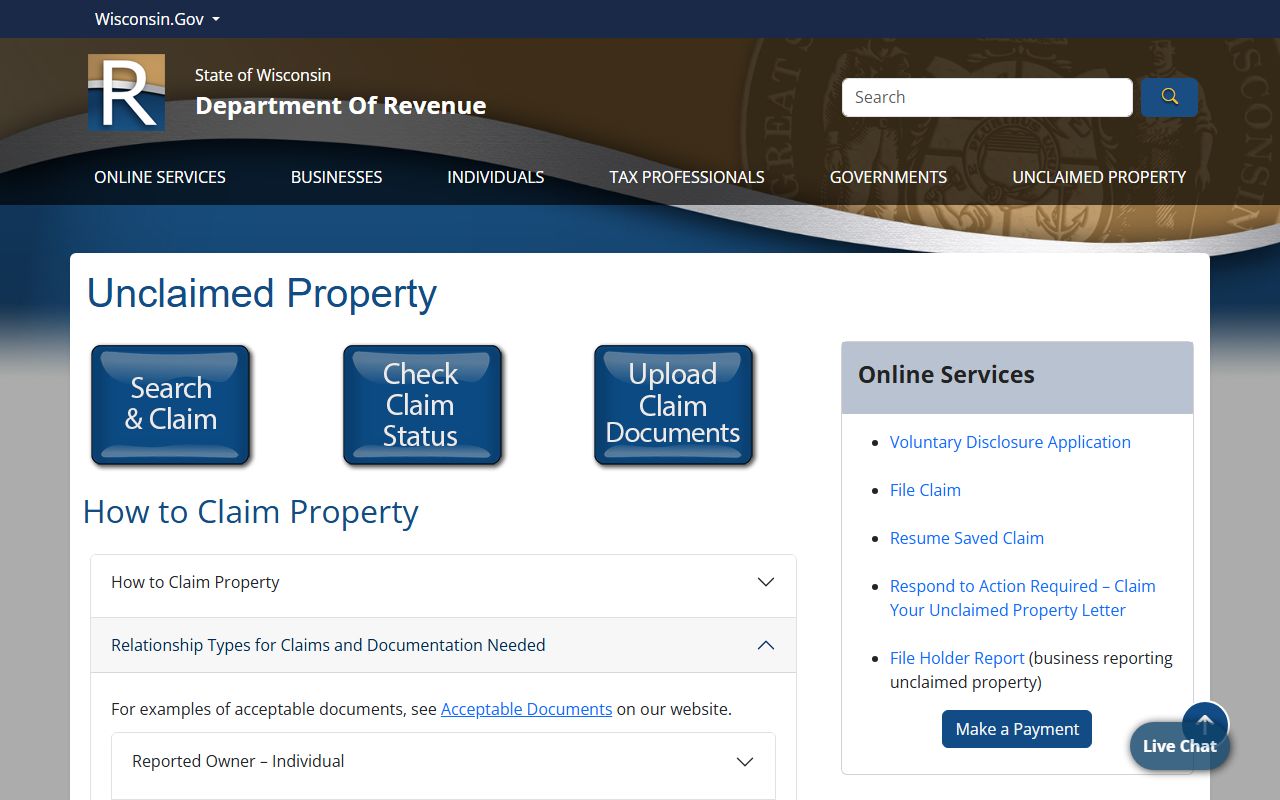
That state image keeps the page tied to the statewide search path while the county office remains the first local contact.
How to claim property is the next state page to read once Taylor County says the money is not county-held.
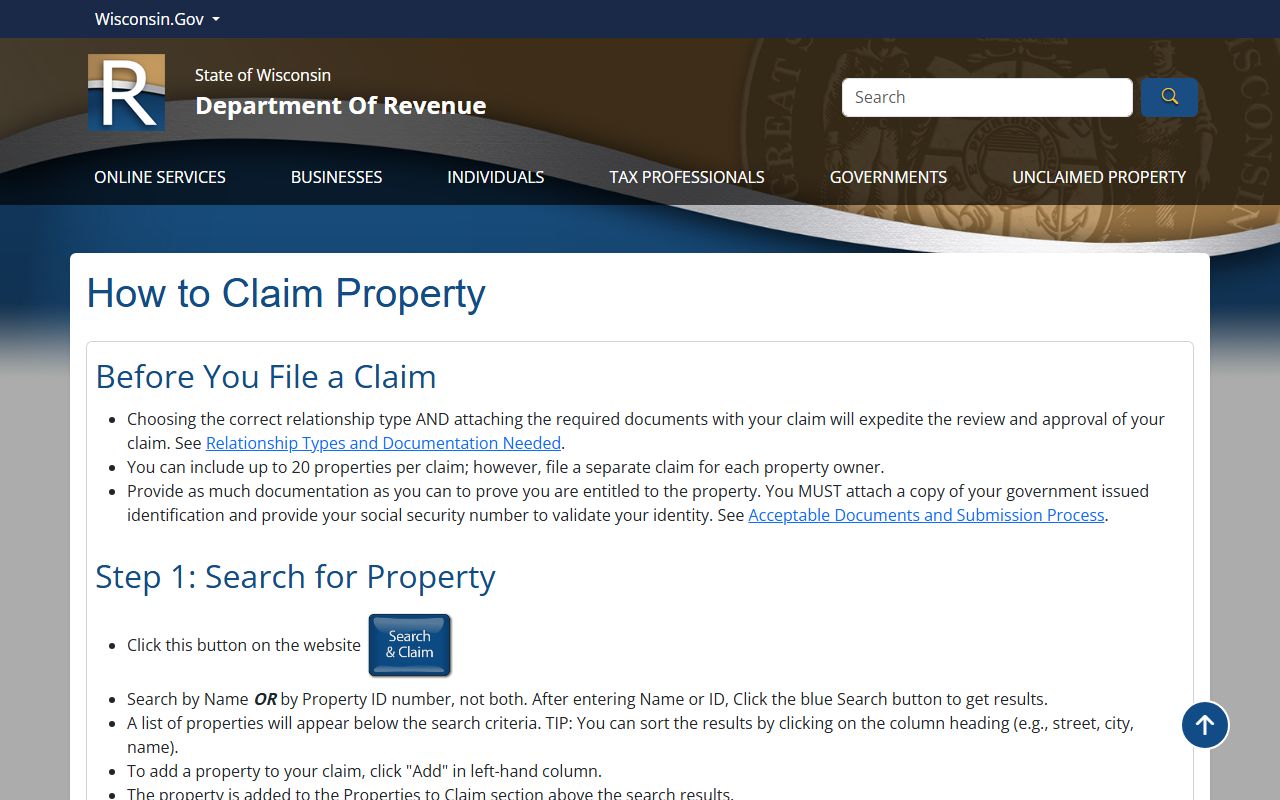
Use that guide when the search needs filing steps after the county check is done.
Acceptable documents explains the proof the state may request when identity or authority must be shown.
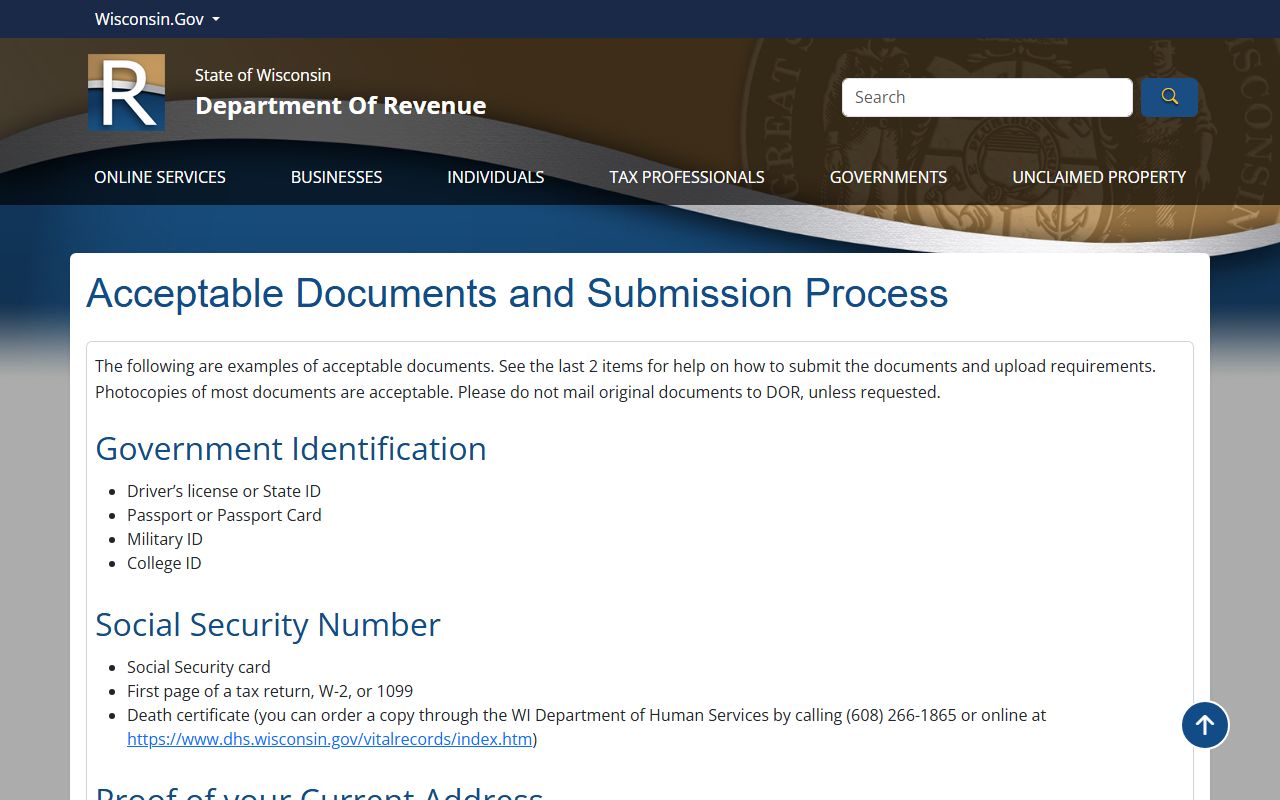
That page is useful in a county search too because proof questions often come up before a claim is approved.
Taylor County Clerk of Courts Records
The Taylor County Clerk of Courts office handles Small Claims procedures, family law forms and resources, Wisconsin Circuit Court Access lookup, local court rules, passport services, and law library references. Those details matter because some money problems are really court record problems. A fee, a case balance, or a small claims matter may sit with the clerk rather than the treasurer, even when the claimant first assumes the money belongs in a tax office.
Taylor County Clerk of Courts is the right page when a record starts with a case number, a civil matter, or a court notice. CCAP makes it possible to confirm basic case information online, while local court rules and the Wisconsin State Law Library references help a resident understand which documents belong in the file. If the money was created by a case, the clerk is usually the office that can point to the right paper trail faster than a generic search can.
The clerk office also offers passport services, which is a reminder that county buildings often handle more than one record type. For Taylor County Unclaimed Money searches, that matters because it keeps the claimant focused on the exact record. A court balance, a small claims payment, and a county tax refund are different problems. The clerk office helps sort one from another before the claim begins.
Taylor County Unclaimed Money and Property Tax Records
Property tax records are one of the quickest ways to trace a local balance. When Taylor County taxes are discussed, the treasurer's office is usually the office that knows whether a payment was posted, whether a tax deed file exists, or whether a parcel still has work left to do. Because the treasurer prepares settlements with taxing units and manages the real property description function, a tax question and an unclaimed money question often overlap. The same parcel record can answer both.
The county treasurer offers Tax Bill Lookup and Tax Payments online, which makes it easier to connect a parcel to the right office before a claim is filed. If the payment history shows an old check, a missing receipt, or a balance that never cleared, the treasurer can usually identify whether the problem is local, already settled, or part of the county's broader accounting process. That practical check is a better first move than guessing from a state database alone.
Medford residents should also remember that the treasurer serves as the real property lister and the supervisor of the Real Property Description Department. That makes Taylor County Unclaimed Money searches especially tied to land and tax documents. If a record is not obvious, the parcel history may still tell you exactly where the money belongs. The office is built to manage that paper trail, and it is the best local stop before the search moves farther away.
Wisconsin Unclaimed Money Search Help
The Wisconsin Department of Revenue is the statewide fallback when Taylor County Unclaimed Money is not the correct holder. The state search covers property that has been reported by banks, insurers, utilities, and other statewide holders after a period of inactivity. It is useful when the county office says the balance is not local or when the record clearly belongs to a business that already sent the money to Wisconsin DOR.
Wisconsin DOR unclaimed property FAQ explains the state claim system and confirms that Wisconsin generally holds unclaimed property indefinitely. If a claim reaches that point, the DOR home page is the main starting point, and relationship types and documents needed plus acceptable documents explain what proof may be required. That makes the state path orderly after the local office has been checked.
For Taylor County residents, the cleanest sequence is local first and state second. Start with the treasurer for county accounts and tax records, use the clerk for case-related money, and move to DOR only when the holder is clearly outside county government. That keeps the claim tied to the right office from the start.