
Sheboygan County Unclaimed Money Records
Sheboygan County Unclaimed Money searches usually begin with the county treasurer because the treasurer office is where the county keeps its tax history and its unclaimed-funds work together. That matters here because the same county office that collects postponed and delinquent payments also tracks property records and money that has not been claimed. If you already know a name, a parcel, or a tax year, the county can often tell you whether the problem is a payment issue, a county refund, or a fund that needs a formal claim. The fastest route is usually to start local, then move to the state system only if the county says it does not hold the money.
Sheboygan County Unclaimed Money and the Treasurer
The Sheboygan County Treasurer and Real Property Listing page is the best local anchor for a county search. The page explains that the County Treasurer is an elected public official whose duties are defined in Wis. Stat. 59.25. Those duties include receiving moneys belonging to the county, collecting second installment and delinquent payments for all 28 municipalities, paying out tax monies to municipalities during tax collection, paying out moneys to the State for taxes collected, and tracking and reporting unclaimed funds. The county treasurer office tied to the city tax pages is at 508 New York Avenue, Sheboygan, WI 53081, and the phone number used in the county tax trail is 920-459-3015.
That combination matters because Sheboygan County residents often cross from one office function to another without realizing it. A tax payment can start in a city office, move to the county treasurer after January 31, and then sit in a county record until it is posted, reconciled, or claimed. The treasurer office is also where parcel details stay organized. The real property listing keeps ownership, legal description, mailing address, acreage, school district, and special purpose district information in one place, which makes it easier to match the right record to the right owner.
Because no successful county-specific image was available, this fallback image links to the Wisconsin DOR Unclaimed Property home page, which is the right statewide next step when Sheboygan County does not hold the funds.
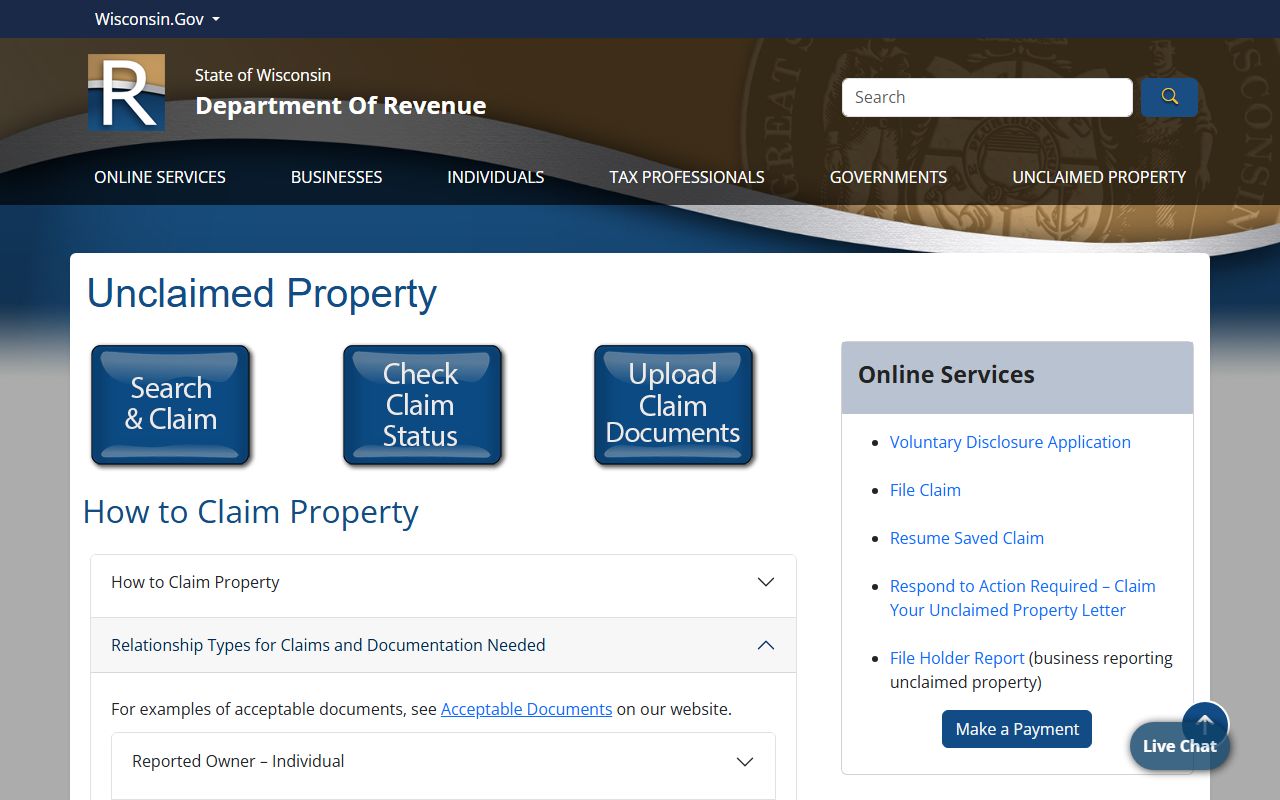
That state page is the fallback when Sheboygan County does not hold the funds or when the claim belongs to the statewide abandoned-property program.
The county office is also practical for people who want to understand where the payment trail should have gone before they start a claim. Because the treasurer handles county receipts and municipal tax settlement work, the office can help identify whether the missing money was ever county money in the first place. That is a useful distinction when a resident is looking at a refund, a never-cashed check, or a payment that seems to have landed in the wrong place.
Sheboygan County also sits in the middle of a lot of local tax movement. That means the treasurer office is not just a place to ask about one list of names. It is the office that sits behind the county's payment history, its property record trail, and its unclaimed-funds reporting. If you start there, you are already working from the right county record set, and the county contact line at 920-459-3015 keeps the search grounded in the office that city pages direct residents to after January 31.
The county's role under Wis. Stat. 59.25 is broader than a simple cashier window. The office keeps the county's money in order, moves tax proceeds where they belong, and keeps enough parcel detail in the system to make the next search easier. That is why the treasurer and real property listing page is the local starting point for a Sheboygan County Unclaimed Money search.
How Sheboygan County Unclaimed Money Claims Work
Once the county identifies money as unclaimed, the search turns into a proof problem. The Wisconsin Department of Revenue explains that unclaimed property is generally a financial asset with no owner activity for a period of one year or more, and the DOR home page gives the statewide search entry point. If the county says it does not hold the money, the DOR how-to-claim page is the next place to go because it shows how to search by name or property ID, add property to a claim, and submit the right documents.
The county and the state use different claim paths for a reason. Sheboygan County can tell you whether the money came from county tax activity, a municipal settlement, or another county-held source. DOR is the custodian for property reported into the state system. If a claim belongs with DOR, the claimant has to match the relationship to the property and prove the connection with documents that the state accepts. That is why the state pages matter even on a county page.
The DOR relationship types page and acceptable documents page explain how to file as the reported owner, heir, guardian, or personal representative and what proof usually follows the claim. Government ID, proof of address, and records showing authority can all be part of the file. The county process may be simpler, but the state process still depends on the same basic idea: the claimant has to prove the money belongs to them.
Sheboygan County residents also have to keep the local timing rules in mind. When a payment, refund, or tax credit goes missing, the reason is often tied to the way the county and municipalities transfer money. The county treasurer handles second installment and delinquent payments for all 28 municipalities, so the local office can explain whether a balance stayed local or moved onward. That is often the difference between a county claim and a DOR claim.
After a DOR claim is filed, the after-you-file page explains the review period and what happens next. DOR usually needs up to 12 weeks to review a claim, and approved payments are typically issued after approval. If the claim needs more information, the file can sit until the missing piece arrives. That is why accurate identity documents and a current mailing address matter before you send anything in.
For Sheboygan County residents, the cleanest rule is simple. Start with the county treasurer if the money looks local. Move to DOR if the county says the property belongs to the state. That keeps the search practical and avoids pushing the wrong office to make a decision it does not control.
Sheboygan County Tax Records and Property Info
The county real property listing is not just a data map. It is the piece that keeps a tax or ownership question tied to the correct parcel. When a tax bill, county settlement, or uncashed payment needs a better paper trail, the real property listing helps confirm who the county has on file and how the parcel is described. That is especially useful when the question is about a payment history that did not line up with the owner's current records.
Because the County Treasurer collects second installment and delinquent payments for all 28 municipalities, the county becomes the place where a lot of late-stage tax movement shows up. A resident who started with a city bill can end up at the county office after January 31. That does not always mean there is unclaimed money, but it does mean the county has the records that explain what happened next. If the money became a refund or uncashed check, the treasurer office is already where the paper trail lives.
The county's role in paying out tax monies to municipalities and to the state also matters. It means the treasurer office sits between local collection and final settlement, which is exactly where missing money often gets noticed. A resident who is trying to find a payment should think in terms of the full cycle: where the money was first paid, where it should have been sent, and whether the county still has it in a record that can be claimed or corrected.
That is why the county page links the treasurer and the real property listing together. One side keeps the money moving, and the other side keeps the land and owner data clean. When those records line up, it is easier to tell whether a tax issue is just a posting delay or a true unclaimed-funds issue. The county office can be the bridge between the two.
For Sheboygan County homeowners and property holders, this is also the place to confirm whether a payment got applied to the right year. If a recent tax payment is missing or a county balance has not updated, the treasurer office is the place to ask before assuming the money vanished. Sometimes the answer is simply that the county is still processing it. Other times, the record becomes an unclaimed-funds matter and needs a more formal claim.
The county site matters because it gives the local context before the state claim begins. A good Sheboygan County Unclaimed Money search is not just about finding a name. It is about checking the property trail, the tax trail, and the county's own settlement role so the claim starts in the right place.
Wisconsin Unclaimed Money Rules for Sheboygan County
The state rules explain why the county and DOR use different forms of proof. Under Wis. Stat. § 177.01, DOR defines the key terms that control the unclaimed property system, including owner, holder, and property. Wis. Stat. § 177.0501 deals with the holder's notice duty before property is reported, and Wis. Stat. § 177.0903 explains how a claimant files a claim on the form prescribed by the administrator.
That legal structure is what keeps a county-held claim from turning into a statewide claim by accident. Sheboygan County can hold and report unclaimed funds, but once the property is in the state system, DOR controls the search and claim process. The county treasurer's job is to keep the county records accurate enough that the owner can tell which side of the line the money is on. Once that is clear, the state forms and documents are much easier to complete.
The claim process also depends on the way the owner proves identity. DOR's acceptable documents guidance is useful because it shows the kinds of ID and address proof that can travel with a claim. If the owner is claiming on behalf of an estate, a trust, or a business, the relationship type has to match the paperwork. That is why the state pages are worth using even when the search begins in Sheboygan County.
After you file, the DOR after-you-file guidance explains the timing and the follow-up. The state usually needs a review window before approval, and it may ask for more information if the file is incomplete. That is normal. The important part is to keep the claim tied to the right owner and to the right county or state office from the start.
For Sheboygan County residents, the practical rule does not change. Start local, verify the county trail, and only then move to DOR if the county does not hold the money. That keeps the search grounded in the office that actually has the record.