
Shawano County Unclaimed Money Records
Shawano County Unclaimed Money searches usually start with the county treasurer because that office handles the local tax and money trail from the first statement to the county title stage. That makes the county page useful even when the record began as a tax payment, a county fine, or an older check that was never claimed. Shawano County also uses the treasurer office for tax deed work, lottery credits, and county funds, so one office can explain a lot of the local path. If the county route does not resolve the balance, the Wisconsin Department of Revenue remains the statewide fallback for property that has already moved out of local custody.
Shawano County Unclaimed Money and Treasurer
The Shawano County Treasurer is the best local starting point because the office administers the whole taxation process from tax statement mailing to county title taking. The county says the treasurer generates receipts and accounts for all monies received, invests surplus funds, maintains tax deed inventory, maintains county-owned property inventory, administers the lottery credit program, and contributes to the land records team. That means the office is not just a tax counter. It is the county money office that keeps the local record trail in one place.
The treasurer is Emily Kazik, and the office is at Shawano County Courthouse, 1st Floor, 311 N. Main St., Shawano, WI 54166. The phone number is 715-526-9130, the fax number is 715-524-5157, and the office hours are Monday through Friday from 8:00 a.m. to 4:30 p.m. Those details matter because a claimant who knows the office, the phone, and the address can move faster than someone trying to search by memory alone. The county page also notes that the payment drop box is in the parking lot next to the courthouse and that a drive-up drop box is available for after-hour and weekend payments.
Shawano County Treasurer main page is also where residents can confirm that county property taxes and county fines are accepted by check or money order, not cash. Payments should be marked with the payer's name, address, phone number, and type of payment. That keeps the county file clean and helps the office tie a payment to the right record if a question comes up later. The office also makes payment envelopes available in the Clerk of Court's office and the County Treasurer's office.
The county treasurer page is shown at the official Shawano County Treasurer page, which is the clearest local source for the office that manages the county money trail.
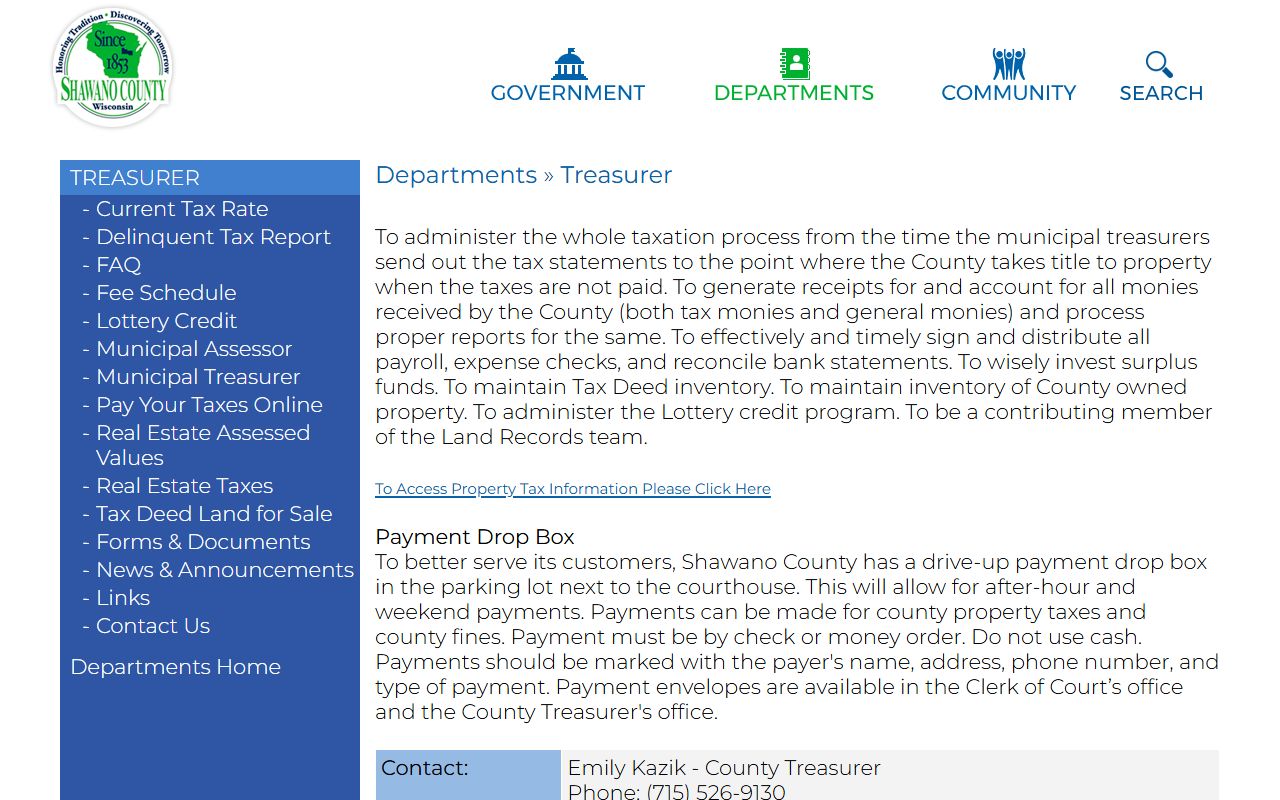
That page gives Shawano County residents the office contact, the payment rules, and the county department context that a local claim usually needs before it can move forward.
Shawano County's treasurer work matters for unclaimed money because it sits beside the county's other financial duties. A tax statement that was mailed, a county fine that was paid late, or a county check that was never cashed can all start in the same office. When the county knows the office and the amount, the search is already halfway organized.
County Office and Payment Timing
The payment timing rules help Shawano County residents separate a real unclaimed money problem from a simple tax timing issue. The treasurer administers the taxation process, keeps receipts for all monies, and handles county property tax and county fine payments. That office also invests surplus county funds and manages records tied to tax deeds and county-owned property. If a payment missed the window or a record was posted to the wrong place, the treasurer's records are the county trail that can show why.
The county page also makes the payment rules clear. County property taxes and county fines are accepted by check or money order only, and cash is not accepted. That matters because a claimant who is checking a money trail needs to know whether a payment was actually received or whether the office never had a cash transaction at all. The county also says payments should be marked with the payer's name, address, phone number, and payment type, which helps explain why some old items can still be matched to a person years later.
For residents who are trying to match a tax or payment detail to a county record, the county treasurer office is the best place to start. The office tracks receipts, reconciles bank statements, processes county disbursements, and keeps county money in order. That recordkeeping is what lets a claimant ask whether a missing payment is really an unclaimed balance, a county payment issue, or a tax deed matter. A clean office trail usually shortens the search.
The county treasurer page also pairs well with the state program when a local search does not resolve the balance. The Wisconsin Department of Revenue Unclaimed Property home page is the statewide backup for financial property that is no longer with the county. That is where Shawano residents go when the county office says the money belongs to the state system instead of the local one.
The county home page is shown at the Wisconsin DOR unclaimed property home page, which is the state search entry point if the county records do not close the case.
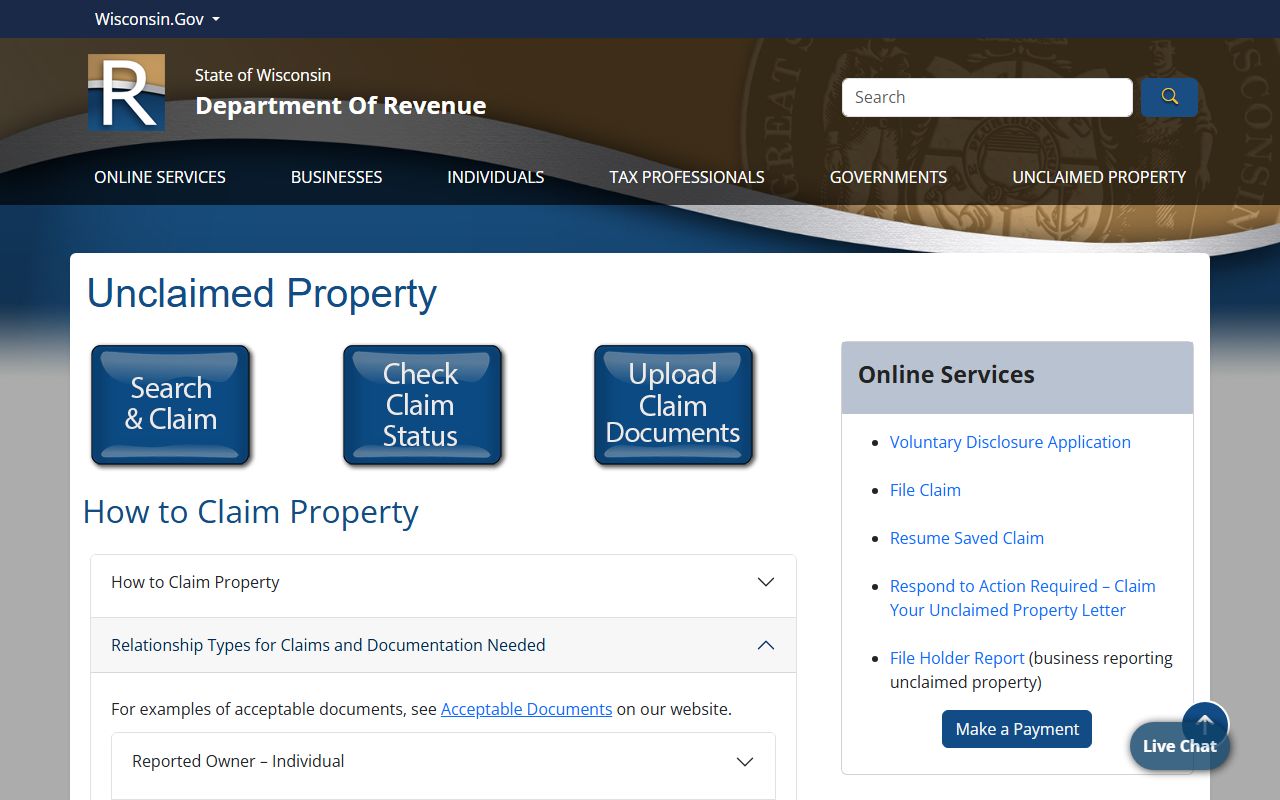
That state page gives the county search a second lane, especially when the money is no longer in a county department and has been turned over to Wisconsin's central system.
Wisconsin Unclaimed Money Search Help
When the county trail is not enough, the Wisconsin Department of Revenue gives Shawano County residents the broader claim structure. The DOR FAQ explains that unclaimed property is generally a financial asset with no owner activity for at least one year, and it says the state keeps the property available for the rightful owner to claim. That makes DOR the right place to check when a bank, insurer, utility, or other statewide holder has already remitted the property to the state.
The filing pages show how the claim works once a match appears. The DOR how-to-claim page explains the search and filing flow, the relationship types page shows whether a claimant is the owner, heir, guardian, or personal representative, and the acceptable documents page shows the proof that can support the claim. Those pages are helpful when the county office has already pointed the resident to the state file instead of the local list.
The legal structure comes from the statutes. Wis. Stat. § 177.01 defines the key terms in the unclaimed property system, Wis. Stat. § 177.0501 explains the holder's notice duty before property is reported, and Wis. Stat. § 177.0903 explains how an owner files a claim with the administrator. The DOR after-you-file page explains the review period and the follow-up process after the claim is submitted.
For Shawano County residents, the practical order stays simple. Use the county treasurer first when the money appears to be local. Use DOR when the county says the money has moved to the state system. That keeps the search tied to the office that actually holds the funds and avoids turning a local record question into a generic internet search.
The county treasurer office already gives you the local access point, and DOR gives you the statewide backstop. Between those two, a Shawano resident can usually determine whether the money is still local, already published, or already with the state.
That sequence matters because it keeps the claimant from skipping the office that actually controls the record. In Shawano County, the money path is usually clear once the office name and the payment type are matched together.
The state claim path is also what keeps an older lead alive. If the county does not have the money, the DOR system still might.
The county and state steps work together, but they are not interchangeable. Shawano residents should use the local office first and the state backup second.
That is the cleanest way to search Shawano County Unclaimed Money without wasting time on the wrong file.
When the office, the amount, and the payment type line up, the claim process usually becomes a paperwork task rather than a hunt.
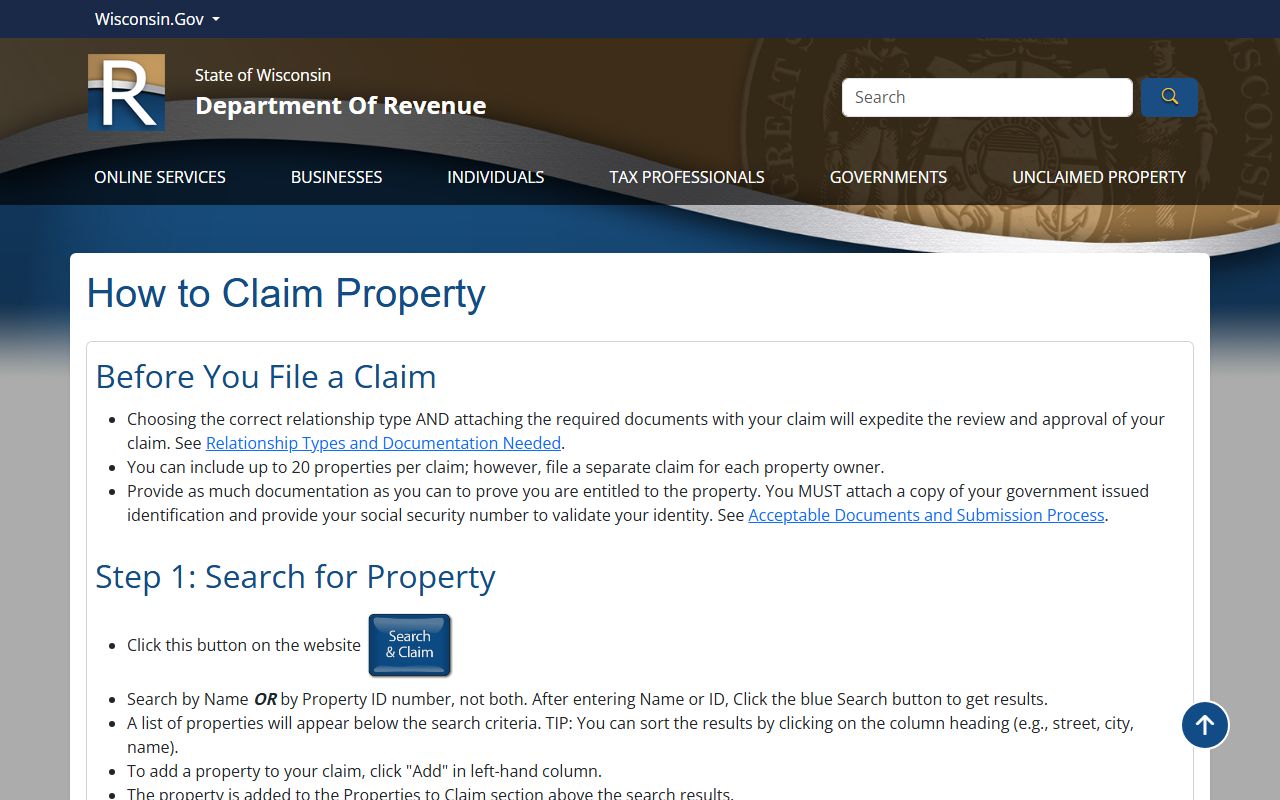
That how-to page gives Shawano residents the next step if the local record trail ends at the county office and the money has already moved into the state system.
Note: Shawano County's strongest local lead is the treasurer office, and the state page is the fallback only after the county record trail is checked.
Local Access and Verification
Shawano County residents can use the treasurer office as the main local access point because the office manages receipts, payments, and the county's money trail. That includes tax deed inventory, county-owned property inventory, lottery credits, and the general flow of county funds. The office is also the place where payment envelopes are available, which is useful if a resident wants to mail a check or understand how the county wants the payment labeled. Those small details matter when a record is old and the person searching is trying to reconnect a check, a notice, or a statement with a live office.
The county also gives residents a practical reason to keep the office contact handy. Emily Kazik and the treasurer staff can answer questions during normal business hours, and the courthouse address keeps the search local. If the issue turns out to be a county fine, a tax payment, or a tax deed item instead of an unclaimed balance, the same office can still point the resident in the right direction. That keeps the local search from becoming fragmented.
For residents who still need proof, the county office and the state office both expect the claim to match the record. The county wants the payment labeled correctly. DOR wants the claim file tied to the right owner or heir. In both systems, the important thing is not just the amount. It is the connection between the amount and the person asking for it.
That is the basic rule for Shawano County Unclaimed Money. Start local, verify the office, then move to DOR only if the county no longer has the money. The path is simple once the offices are kept in order.