
Racine County Unclaimed Money Lookup
Racine County Unclaimed Money usually lives in county records, county notices, or a court file before it ever reaches the state database. That means the first job is not just searching a name. It is matching the right holder to the right office. Racine County ties unclaimed funds to its treasurer department, while court-held and sheriff-held items follow the notice and proof rules that the county publishes. This page brings the county money office, tax guidance, foreclosure context, and state search tools into one place so you can move from a broad search to the exact record without wasting time.
Racine County Unclaimed Money and Treasurer
The Racine County Treasurer's Office is the main county contact for Racine County Unclaimed Money. The office handles property taxes, tax inquiry, lottery and gaming credit, homestead credit, FAQ, news, public sale of properties taken in tax foreclosure, unclaimed funds, veteran's property tax credit, change mailing address for tax bill purposes, and municipal contact information. That range matters because county money work is not limited to one type of payment. A refund, a tax credit issue, or a court or municipal balance can all be part of the same office's record trail.
Racine County Treasurer is where residents can confirm the county's current property tax functions and unclaimed funds guidance. The office is also the point of contact when the county holds money on behalf of municipalities and courts. Wisconsin Stat. 59.66 is the rule that keeps the county notice process tied to rightful owners, not to a generic public list with no next step. In practice, that means the treasurer is the office that turns a broad county notice into a real claim path.
For residents, the value of the treasurer page is not just the list of duties. It is the way the page connects tax work, mailing address changes, and unclaimed funds in the same place. If a payment was sent to the wrong office or a tax record looks incomplete, the treasurer page can show whether the issue belongs in the county system or has to move elsewhere.
Property Taxes and Racine County Records
Racine County's property tax guidance is useful even when the starting question is really about Unclaimed Money. The county explains that 2024 taxes for City of Racine properties are payable to the Racine City Treasurer through July 31, 2025, and that residents should not pay Racine County for those city taxes or the payment may stall. The same page says ACI Payments, formerly Official Payments, can be used for real estate property tax payments to the county by credit card, debit card, or electronic check, with third-party fees applying. You need a 15-digit parcel ID number or tax key number, and the jurisdiction code for Racine County is 5835.
Racine County property taxes also notes that property tax search is available through Ascent Land Records. That matters because a missed payment, a duplicate payment, or a returned check often shows up first as a records problem rather than a money problem. If the county can tell you how the parcel is indexed, the money trail becomes much easier to follow. A homeowner who is trying to separate a tax posting issue from a real unclaimed funds issue can use the tax page to sort out that first question.
For city properties, the distinction between the city treasurer and the county treasurer is important. Current city taxes stay with the city treasurer through the city window, then later payments and county-side records move according to the county's rules. That is the practical difference between a payment that is still being receipted and a payment that has moved into the county record cycle. If you are trying to recover money or prove that it was paid, the tax page is part of the unclaimed funds search, not separate from it.
Racine County Unclaimed Money Notices
Racine County maintains unclaimed funds lists for money held by county departments on behalf of municipalities and courts. Wisconsin Stat. 59.66 makes the county treasurer's notice important because it identifies the owner and the last known address, then gives the rightful owner a way to recover the money. The county's published instructions say claimants should follow county procedures, which typically involve a claim form, photo identification, and the in-person or notarized mail process required by the notice. That is why the notice itself matters just as much as the list.
Racine County unclaimed funds is the county page to check when you want the current claim instructions. The page sits under the County Treasurer department and confirms that the county publishes lists of unclaimed funds held by different county departments. For a claimant, that means the department holding the money, not the page title alone, determines the next move. A court balance, a municipal refund, or another county-held item can all require different proof even when they are all described as unclaimed funds.
The county's 59.66 process also fits the real-world problem of misdirected checks. A payment can be mailed, returned, and later appear on a county list without ever being lost in the larger sense. The notice is the county's way of saying, "We have the money, and here is how you prove it is yours." That is the point where a careful claimant stops guessing and starts assembling the record.
Racine County Unclaimed Money appears on the county treasurer's list of local services.
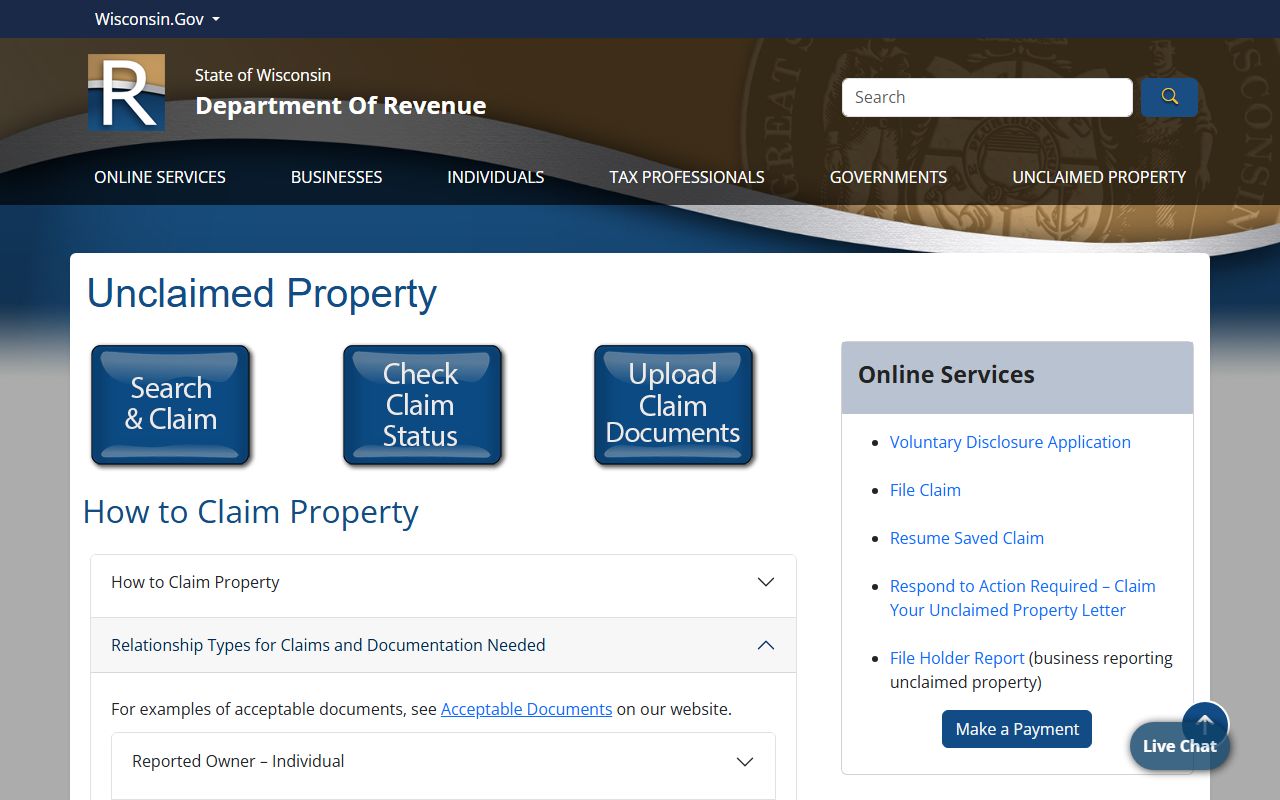
The state image works as a fallback reference here because the county process still leads back to Wisconsin DOR for statewide assets when the local notice does not match the money you are chasing.
Foreclosure Sales and Tax Records
Racine County's tax foreclosure sales page is not the same thing as unclaimed funds, but it sits close enough to the county money system that it belongs in the search. The Treasurer's Office holds public sales of properties taken in tax foreclosure throughout the year, and the county uses three sale types: sealed bid, subsequent sealed bid, and over-the-counter. Interested buyers can join an email list for upcoming sales and property notices, and the Sheriff's Sale website provides more foreclosure proceeding information. That is useful context when a tax debt, a delinquent parcel, or a returned payment is part of the same file history.
Public sale of properties taken in tax foreclosure helps explain how tax problems can grow into a larger county record. A foreclosure sale is not unclaimed money, but it often follows the same tax trail that created the record in the first place. If you are reviewing a county notice, a property tax account, or a payment error, the foreclosure page can tell you whether the account has moved from a simple tax question into a formal county process.
That matters for claim work because the county's finance and collection records are connected. A person who sees a foreclosure notice alongside an unclaimed funds notice should not treat them as unrelated. Both pages sit inside the same county money system, and both can help show whether a parcel, a refund, or a court balance has already been processed in a way that changes where the claim goes next.
Wisconsin Unclaimed Money Search Help
The Wisconsin Department of Revenue is the statewide backstop for Racine County Unclaimed Money when the money belongs to a bank, insurer, business, or other holder that remits dormant property to the state. The DOR home page walks you through the search and claim flow, including the save-draft step, the confirmation code, and the need to choose the correct relationship to the property. It also reminds claimants that not all records are handled the same way, so the right documents matter as much as the right name.
The Wisconsin DOR unclaimed property home page is the starting point for statewide property. If you need the filing steps, how to claim property explains the claim flow. If you need supporting proof, acceptable documents explains what can be used, and relationship types and documents needed explains how to show your connection to the property. The FAQ page at Wisconsin DOR unclaimed property FAQ is also helpful because it explains that the state holds unclaimed property indefinitely, so an old lead still has value.
For Racine County residents, the practical sequence is simple. Check the county treasurer for county-held funds, use the property tax page when the issue looks like a payment or parcel problem, and move to DOR when the asset is statewide. That keeps the search aligned to the office that actually controls the money.