
Search Jackson County Unclaimed Money
Jackson County Unclaimed Money searches work best when the county money trail is separated from the court trail and the probate trail. The treasurer handles county funds, tax collections, and tax deed notice work. The clerk of courts keeps the written court record and the financial side of a case. The probate office handles estates, guardianships, and juvenile matters that can change who has the right to claim money. That gives residents a real local path before they turn to the Wisconsin Department of Revenue. If the clue is a tax bill, a case payment, or an estate file, the right office can be matched quickly.
Jackson County Unclaimed Money and Treasurer
The Jackson County Treasurer is the first local office to check when the money looks tax-related or county-held. The office receives and deposits county funds, invests county monies, maintains transactions, posts municipal tax collections, maintains tax settlements, collects postponed and delinquent taxes, and notifies owners of pending acquisition by tax deed. That is a strong fit for Unclaimed Money because county money often starts as a tax payment, a settlement, or a balance that was never fully matched to the right owner.
The treasurer page is shown at Jackson County Treasurer, which is the county source for the tax and county money trail. It also notes the after-hours drop box at the Sheriff's Department, 30 North 3rd Street, and online payments with fees. Those details matter because a claimant may have made a payment after office hours or through a fee-based online channel and later lost track of where the record went. The treasurer page gives that money a local office to attach to before the search moves on.
That office is especially useful when the clue is a property tax or a delinquent account. If the county has already sent a tax deed notice, the claim is no longer just about a missing check. It is about a record that has moved through county collection steps. The treasurer page tells the resident which stage the record reached and whether the balance was still in county hands.
Jackson County residents should use the treasurer page first when the money is tied to land or tax work. It is the local holder of the money trail, and it gives the search a concrete start instead of a guess. That is the best way to keep an Unclaimed Money search focused.
For a county with active tax and collection functions, the treasurer page is more than a contact point. It is the office that explains how a county balance can remain unclaimed after the payment cycle is over.
Jackson County Court Records
The Clerk of Courts is the next office to check when Jackson County Unclaimed Money comes from a court file. The county says the office creates, maintains, and preserves the written court record, and it also handles collections, court financial management, records management, enforcement of court-ordered financial obligations, and jury management. The office also provides small claims guidance. That is important because many court payments begin as fees, fines, bail, or ordered payments that later need to be traced back to the file.
The clerk page is shown at Jackson County Clerk of Courts. The county research set also makes clear that the office does not give legal advice. That boundary matters. A resident can use the page to understand the record, the payment side, and the file status, but not to get legal advice about whether a claim should be filed. The page covers appeals, civil, criminal, family, forfeitures, incarcerated persons, small claims, and traffic records, which gives the search a broad court base.
For Jackson County residents, the clerk office is often the right place when the money came from a ticket, a hearing, or a case that ended with a payment. The clerk keeps the written record that explains the payment, while the treasurer holds the county money side. That split is why court payments can be hard to trace if a claimant starts in the wrong office. A good record search names the office before it names the form.
The clerk office also helps when the payment was made but the case is no longer active. A court-ordered obligation can still leave a paper trail after the hearing is over. The clerk page is the county source that preserves that trail. If a resident remembers the case type but not the exact payment history, this is the office that makes the next step possible.
That is why Jackson County court records belong near the top of any county money search. They explain the record before the claim tries to explain the money.
Jackson County Unclaimed Money and Probate
The Register in Probate / Juvenile office is the third major local path for Jackson County Unclaimed Money. The county says the office coordinates probate court duties and administrative functions, and it handles formal probate, wills for safekeeping, guardianships, conservatorships, protective placements, commitment records, and adoptions. It also notes that juvenile records are confidential and closed. That matters because a claimant may be an heir, a guardian, or a representative rather than the original owner of the money.
The probate page is shown at Jackson County Register in Probate and Juvenile. The page also gives probate guidance for estates above and below $50,000. That detail is important because the right probate path can depend on the size of the estate. A small estate may use a different route than a larger one, and the claimant needs to know that before filing. The office gives the record context that tells the family whether the file is open, closed, or protected.
Probate matters are often where the authority question gets answered. If the original owner is deceased, the estate file may show who may claim the money. If the claim involves guardianship or a protective placement, the probate office may be the only county source that can explain who may act on the record. That makes the office especially important when the claimant is not the same person named on the original balance.
Jackson County also uses juvenile records in a confidential way, which is another reason the probate office matters. Not every record can be treated like a public lookup. Knowing that ahead of time keeps the claimant from expecting a simple public search when the file is restricted. The office boundary is part of the claim path.
For Jackson County residents, probate is the office that keeps family authority tied to the record. When the money belongs to an estate or a protected person, that record is often the difference between a stalled search and a valid claim.
Jackson County Unclaimed Money Images
A county-level image from the Jackson County Clerk of Courts page gives the best local visual anchor because it matches the court record side of the search.
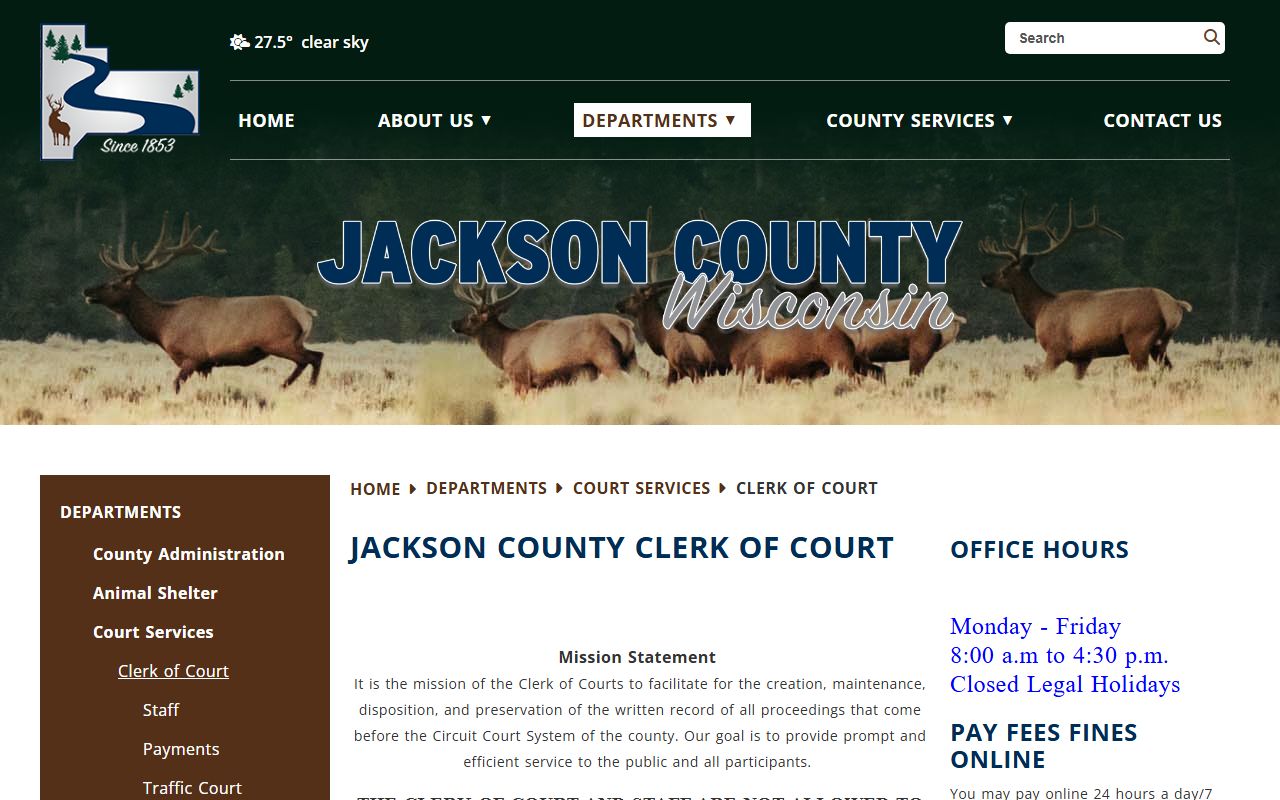
That page is useful when the money starts in a case file, a fee, or a court-ordered payment.
For a state fallback, the Wisconsin DOR home page at Wisconsin DOR Unclaimed Property is the official backup when the county trail does not hold the money.
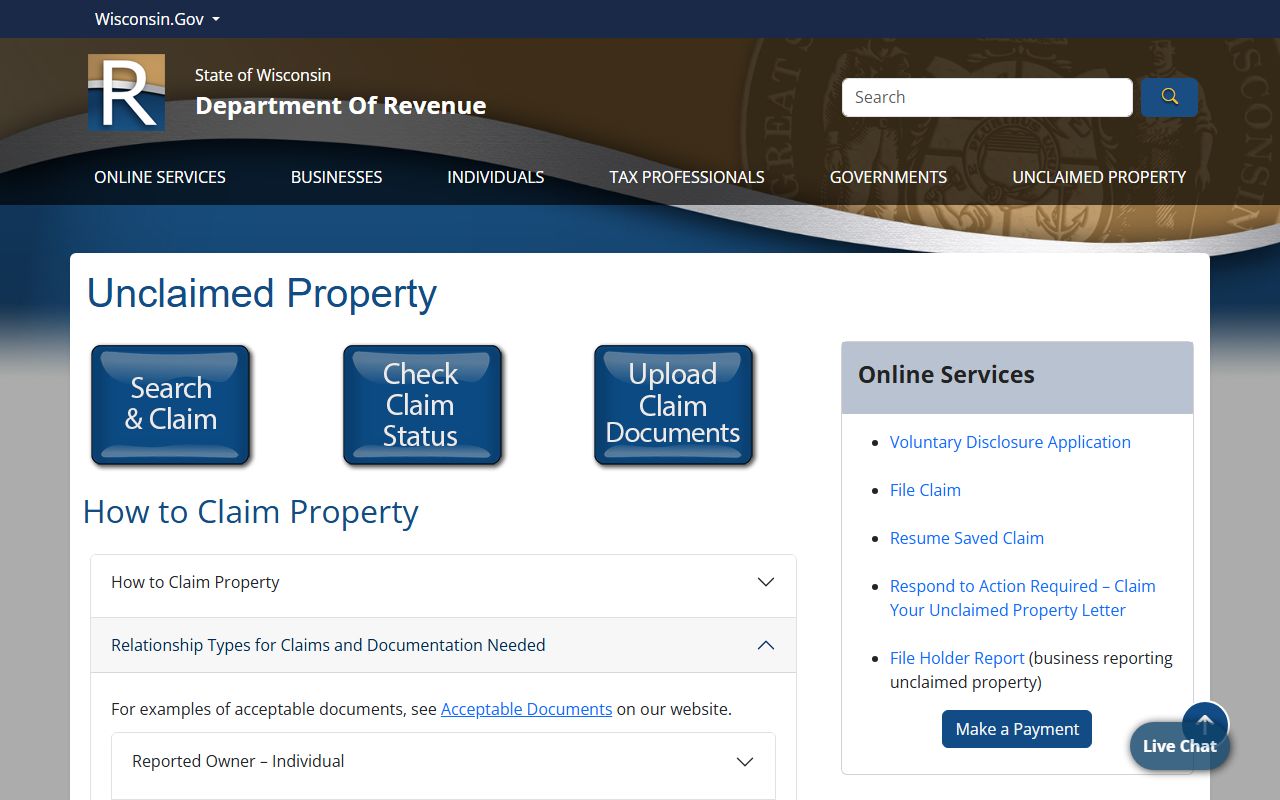
That page helps when the county office shows the record path but not the final holder.
The DOR after-you-file page at Wisconsin DOR after you file is the next practical image and link when the claim has already been submitted.
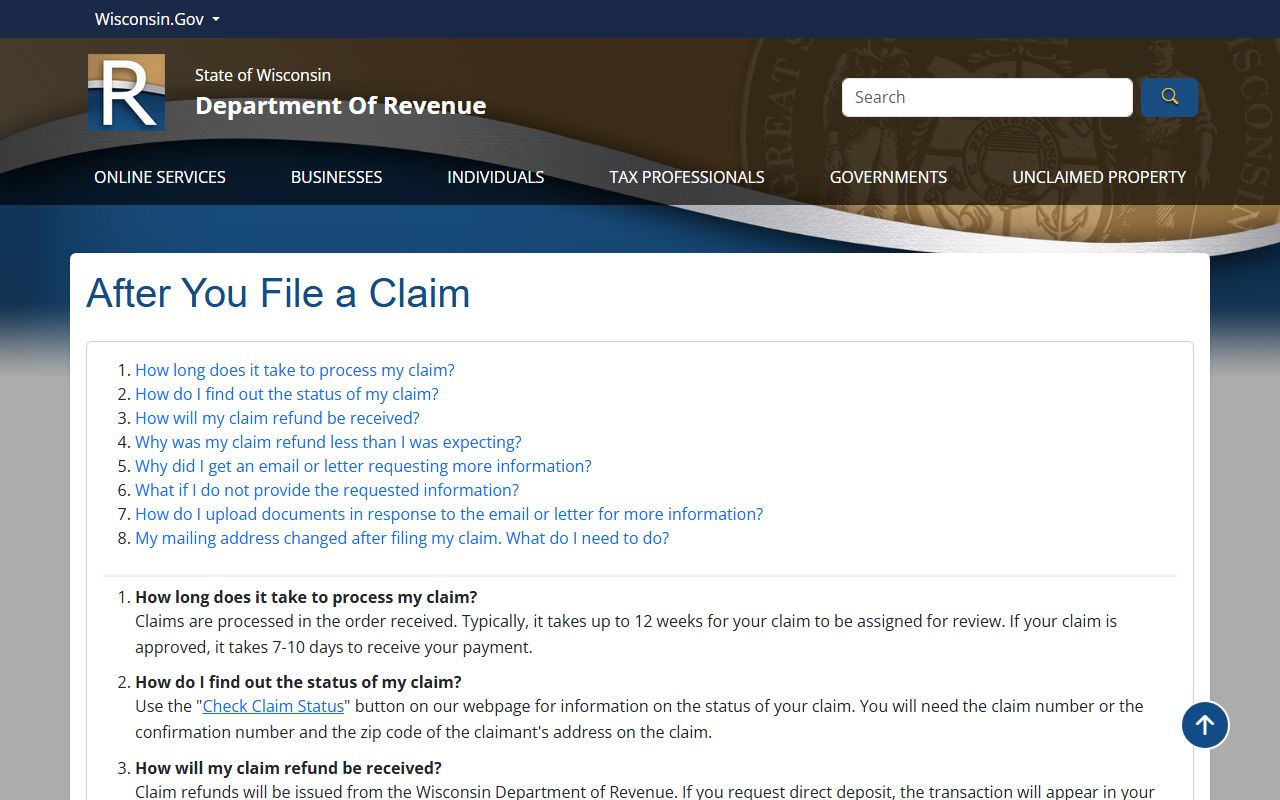
That page explains what happens after submission and why more proof may still be needed.
Wisconsin Unclaimed Money Rules for Jackson County
The Wisconsin Department of Revenue gives Jackson County residents the statewide rules that apply when local offices are not enough. The DOR FAQ explains the basic idea of unclaimed property and the way dormant assets are handled. The how-to-claim page explains the filing path, and the relationship types page shows who can claim on behalf of an owner, heir, or business. Those pages matter because Jackson County claims can come from tax, court, or probate records, and each record type may need different proof.
The DOR acceptable documents page is the next step when the claimant has the record but still needs proof guidance. That page helps match the claim to the documents that can be accepted. The county office may explain where the money came from, but the state page explains what has to go with the claim. That distinction matters in a county with several possible money trails.
Wisconsin law is the legal frame. Wis. Stat. § 177.01 defines the key terms used in the unclaimed property system, Wis. Stat. § 177.0501 covers the holder's notice duty before property is reported, and Wis. Stat. § 177.0903 explains how an owner files a claim. Those sections explain why the county and the state both ask for the right owner and the right relationship before money is released.
For Jackson County, the search order is clear. Start with the treasurer if the money looks tax-related. Use the clerk of courts if the clue comes from a case file or payment. Use probate if the claim belongs to an estate, guardianship, or other protected record. Use DOR when the local office trail is no longer enough. That keeps the search anchored to the office that actually controls the record.
Note: Jackson County Unclaimed Money searches move fastest when the office is matched to the record type first, then the DOR claim pages are used only if the county no longer holds the money.