
Iowa County Unclaimed Money Records
Iowa County Unclaimed Money searches start with a dedicated county treasurer page, which is helpful because the county publishes a master list of unclaimed funds and separate office-specific PDFs under Wisconsin's unclaimed funds law. That gives you a real local path instead of a guess. If the balance is tied to a tax payment, court fee, or probate matter, the county also has the right office to sort it out. The trick is matching the office to the record type before you file or call. Once you know the holder, the rest of the search gets much easier.
Iowa County Unclaimed Money and Treasurer
The Iowa County Treasurer unclaimed funds portal is the county starting point because it is a dedicated unclaimed funds page. The research says the page lists a Master List of Unclaimed Funds - Prior Years PDF and separate 2023 unclaimed funds PDFs for the District Attorney, Clerk of Court, and the Town of Bloomfield. That means Iowa County does not just have one broad list. It has a county claim structure that splits out office-specific records. The county also says the lists are published under Wis. Stat. 59.66.
The Treasurer's Office is at 222 N. Iowa St., Dodgeville, WI 53533, the phone number is (608) 935-0397, and the hours are Monday through Friday from 8:00 a.m. to 4:30 p.m. Claimants are directed to contact the Treasurer's Office for instructions on how to claim listed funds. That is the practical part of the search. If your name appears on the master list or one of the county PDFs, the Treasurer office is where the county tells you to start.
The portal below is the official county source for the master list and the office-specific unclaimed funds PDFs.
Iowa County Treasurer unclaimed funds portal shows the county's master list and office-specific PDFs for local unclaimed money.
Iowa County Unclaimed Money Search
Because Iowa County publishes separate PDFs, the search is more exact than a simple name lookup. The county's master prior-years PDF helps show whether the same name or amount has stayed open over time, and the 2023 office PDFs show whether the money belongs to the Clerk of Court, the District Attorney, or the Town of Bloomfield. That distinction matters. A court office, a county office, and a town office do not use the same claim logic, even though they all fall under the same county publication system.
The Treasurer portal is also the best place to start if you want the office to explain what the list means. The county says to contact the Treasurer's Office for instructions on how to claim listed funds. That is important because the published list is only the first step. The list tells you that a name exists. The office tells you what to do next and whether the balance is still held by Iowa County.
Iowa County Treasurer unclaimed funds portal is the local search hub, and the master prior-years PDF helps you compare older county entries.
2023 Clerk of Court unclaimed funds PDF, 2023 District Attorney unclaimed funds PDF, and 2023 Bloomfield unclaimed funds PDF show the office-specific local lists.
Iowa County Unclaimed Money and Taxes
The Iowa County tax payments and online search portal is where the payment trail becomes useful. The county offers an online property tax and assessment search through Transcendent Tech, and it says the payment website is deactivated from December through February 20 for current-year taxes. First-installment taxes must be paid to the local treasurer through January 31, and the online portal is for second installments or delinquent taxes paid to Iowa County. That split matters because a payment or refund can only be matched to the right collector if you know which installment was involved.
The tax page also says delinquent taxes are subject to 1 percent monthly interest, with each fraction of a month counted as a whole month, and that a tax sale certificate is assigned on September 1 for unpaid taxes. If taxes remain unpaid two years from the certificate sale date, the county can start action to take title by tax deed. Those details are not the same as an unclaimed funds notice, but they explain why a money trail may start as a tax issue before it turns into a county balance question. If you know the parcel number, the county portal helps connect the dots.
The tax portal below is the best county source when a payment or refund needs to be traced through the parcel record.
Iowa County pay taxes portal explains the online search, the installment split, and the delinquent tax timeline.
Iowa County Unclaimed Money and Court Records
The Iowa County Clerk of Courts is another office that can matter in an unclaimed money search. The office is at 222 N. Iowa St., Dodgeville, WI 53533, and the phone number is 608-935-0395. It provides forms, allows you to pay a fine, and publishes local court rules. That makes it the right place to look when a fee, a fine, or another court obligation is the reason a county amount was left behind.
The clerk office sits close to the other county record offices, but the records are not interchangeable. A fine or court payment should be checked against the court file before you assume it belongs in the treasurer's unclaimed funds list. The county's court office can also tell you whether a form or payment issue is part of the trail. That is a useful distinction in Iowa County, where the treasurer page and the clerk page both show up in the same search but answer different questions.
The clerk page below is the official county source for court records and court payment information.
Iowa County Clerk of Courts is the county source for forms, fines, and court records that can explain a local money trail.
The clerk forms page is a useful companion when a payment or filing needs the right paperwork.
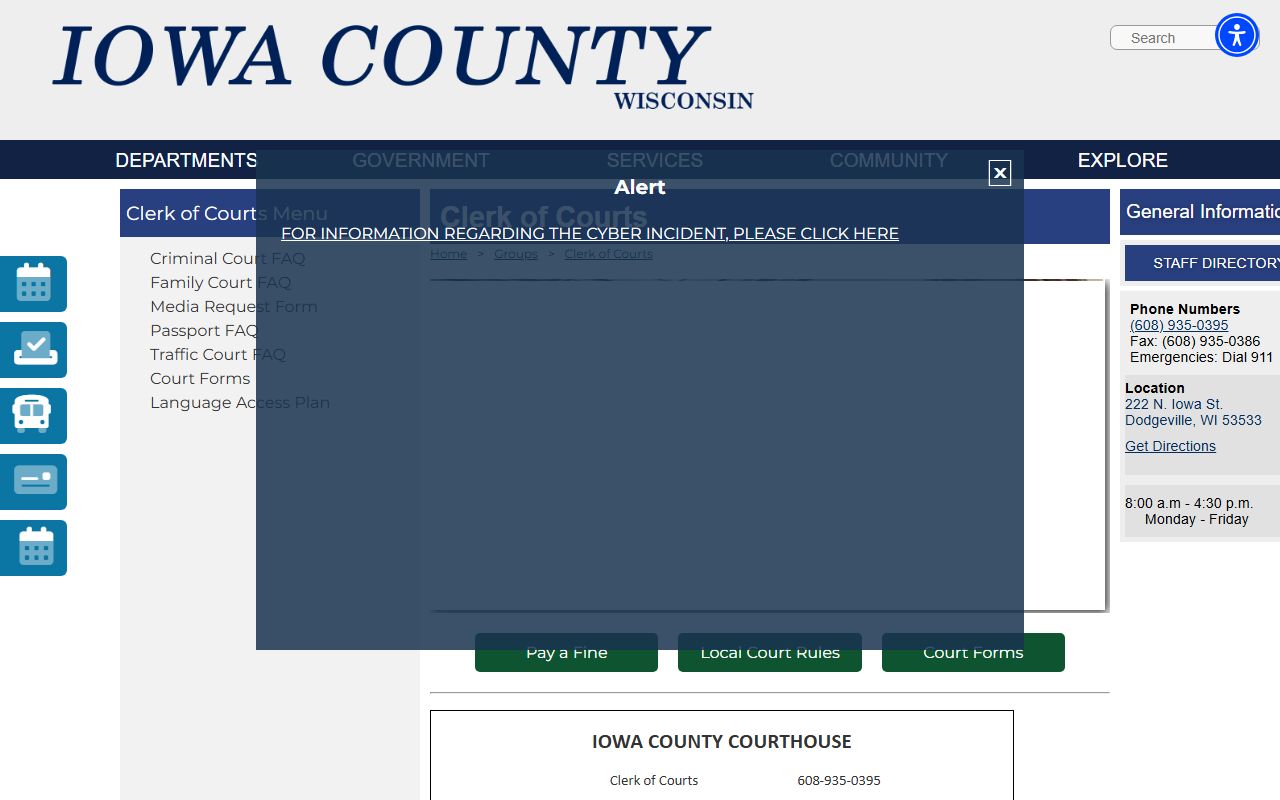
That page is the best visual reference when an unclaimed money search turns into a court record search.
Iowa County Unclaimed Money Forms
Some Iowa County claims need paperwork more than they need another search result. The clerk forms page is where the county keeps the forms that support court filings and related payment work, and it can be useful when the money trail intersects with a court obligation or a filing step. A clean form does not replace the treasurer's unclaimed funds portal, but it can keep a claimant from getting stuck before the claim reaches the right office.
Iowa County clerk of courts forms is the county source for the paperwork companion to a court-related money search.
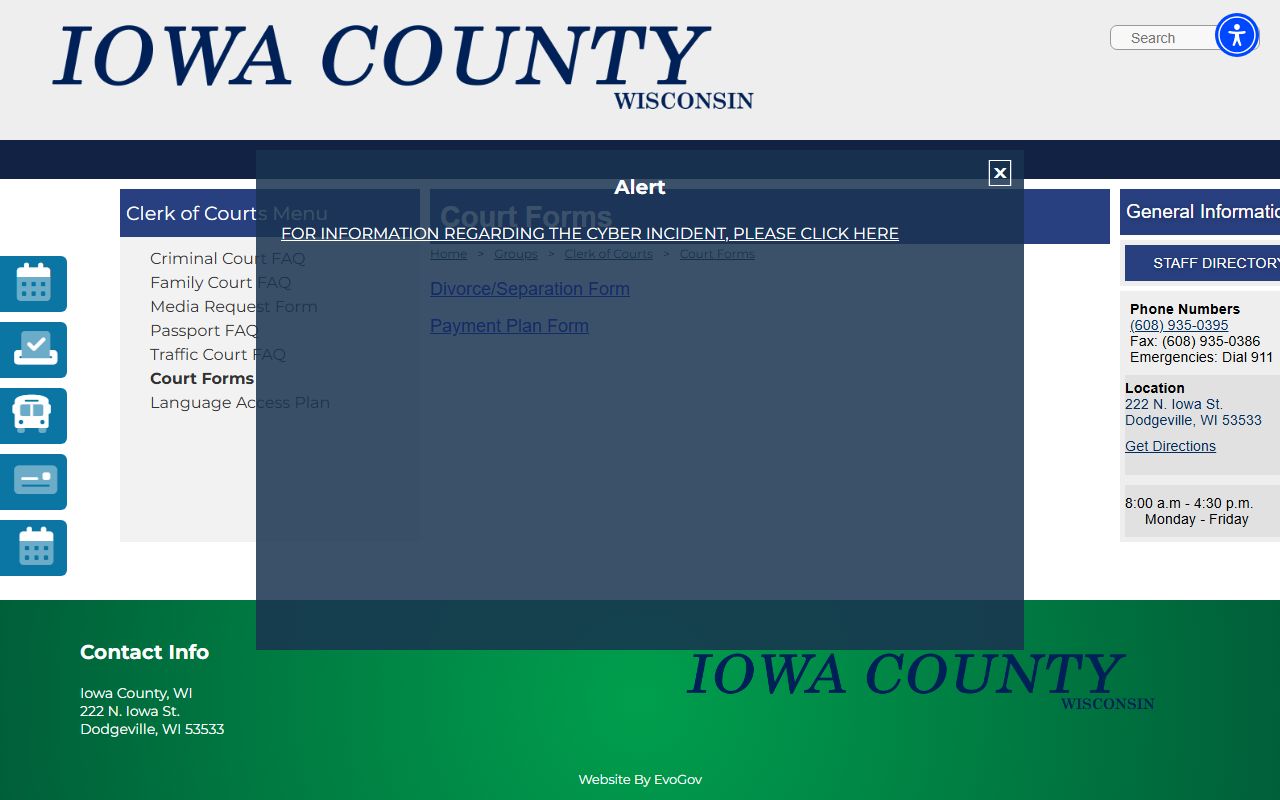
That page is useful when a court fee, filing, or payment issue needs the county's own form before the matter can move ahead.
Iowa County Unclaimed Money and Probate
The Iowa County Register in Probate is Kanndie Basting, and the office is in Room 2201 at 222 N. Iowa St., Dodgeville, WI 53533. The phone number is (608) 935-0347. The office provides guidance on whether probate is required and explains options such as transfer by affidavit for solely owned Wisconsin property under $50,000, summary settlement, summary assignment, and formal or informal probate. That makes probate a real part of the Iowa County Unclaimed Money search when the owner is deceased or when an heir needs to establish authority.
Probate is often the record that connects the claimant to the money. If an estate has not been closed, or if the asset is still tied to a will or a transfer by affidavit, the probate office can explain the next step. That is especially important when the county list includes a name that no longer matches the person who should receive the funds. The probate office is not just for estates with lots of assets. It also helps with the legal path for smaller solely owned property and summary procedures.
The probate page below is the official county source for estate and guardianship records that can support a claim.
Iowa County Register in Probate explains the estate and transfer options that can support an unclaimed money claim.
Wisconsin Unclaimed Money Search
Not every Iowa County search belongs to the county. The Wisconsin Department of Revenue handles statewide unclaimed property from banks, insurance companies, utilities, and other private holders. The state holds property indefinitely, so a claim can still work later if the county list does not match the amount you are chasing. That makes DOR the right fallback when the county treasurer, clerk, and probate records do not line up with the record in front of you.
The Wisconsin DOR unclaimed property home page is the statewide search entry point. How to claim property explains the filing path, and acceptable documents explains the proof DOR expects. The Wisconsin DOR FAQ explains why the state holds abandoned property and why there is no time limit to claim it. The statutes at Wis. Stat. 177.0501 and Wis. Stat. 177.0903 provide the notice and claim framework behind the state process.
Iowa County Unclaimed Money Tips
The best Iowa County approach is to follow the record chain. Start with the Treasurer portal because the county publishes the unclaimed funds lists there and points claimants to the office for instructions. Use the tax portal if the money began as a property tax or assessment issue. Check the Clerk of Courts if the money came from a fine or court file. Move to probate if the owner is deceased or if a transfer by affidavit or summary estate step is needed. Then check DOR if the source is statewide. That order keeps the claim with the right office.
Iowa County is a good example of why a county can have more than one path to the same search. The treasurer handles the list, the clerk handles court records and forms, and probate handles estate authority. Once the record type is clear, the claim usually becomes much easier to finish.
For Iowa County, the practical rule is simple: county treasurer first, county court or probate office second, and DOR last if the money is not local.