
Search Florence County Unclaimed Money
Florence County Unclaimed Money searches start best with the county treasurer and clerk of courts, because those offices hold the local money trail and the court records that can explain it. Florence County says the treasurer serves fairly, honestly, and in a timely manner, and the office also houses all town tax rolls since 1882. The clerk of courts office handles court records, court-ordered money, and public access to the record trail. If you only know that a check, tax amount, or court payment went missing, the county offices help you sort out the holder first so you do not send a claim to the wrong place.
Florence County Unclaimed Money and Treasurer
The Florence County Treasurer page is the best local starting point for an Unclaimed Money search because it shows the county office that keeps the tax and money trail. Donna Liebergen is the treasurer in the research set, and the office is at 501 Lake Ave., Florence, WI 54121, with a mailing address of PO Box 410, Florence, WI 54121. The office is open Monday through Friday from 8:30 a.m. to noon and 12:30 p.m. to 4:00 p.m., and the phone number is 715-528-3204. Those details matter when a resident wants a real contact instead of a directory listing.
The treasurer page is shown at Florence County Treasurer, which is the county source for tax rolls, property listing work, and the county money trail. Florence County says the office houses all town tax rolls since 1882, which tells you how deeply the local tax record runs. That history matters for Unclaimed Money because a missing payment can turn out to be a property record, a tax roll item, or an older county balance that was never claimed. The office is not just a place to pay. It is a place to identify the record.
Florence County's treasurer also acts as the Property Listing Office, which helps when a name, parcel, or town tax record is the only clue. If a resident has an old tax amount, a property listing question, or a county payment that never reached the owner, the treasurer office can help place it in the correct tax or property bucket. That is often the fastest way to tell whether the money is still local or whether the claim has to move to a different office.
Because the office keeps both tax and property context, it is the right filter for Florence County Unclaimed Money. The county has a long tax record history, and the treasurer page is the office that makes that history useful for a live search. If the money trail began with a county or town tax item, the treasurer is the office most likely to explain what happened next.
The treasurer page also helps residents who only know an old town, an old tax amount, or a payment date. Since Florence County says the office houses all town tax rolls since 1882, the treasurer can be the bridge between a very old tax clue and a present-day claim. That is valuable when the claimant has an address change or only a partial record.
For Florence County residents, the treasurer page is the local anchor. It tells you who handles the record, where the records live, and how the county wants you to begin before moving to the state database.
Florence County Unclaimed Money and Courts
The Clerk of Courts office is the second local office that matters when Florence County Unclaimed Money comes from a court record. Florence County says the office provides administrative support services for Florence County Circuit Court, record keeping for all court cases, collecting money on court-ordered obligations, and managing the jury system. The clerk also helps the public access the courts and its records, and the office is statutorily mandated to collect all fees, fines, and forfeitures for the judicial system. That makes the clerk a direct match for a payment tied to a case file.
The clerk page is shown at Florence County Clerk of Courts. Jessica McCoy is the clerk of circuit court in the research set, the phone number is 715-528-3205, the mailing address is P.O. Box 410, Florence, WI 54121, and the office hours are 8:30 a.m. to 4:00 p.m. The page also notes that Wisconsin now uses a single trial court system, which helps explain why the clerk keeps the court record rather than a separate county court office. That detail matters if the money began as a case payment, a fine, or a forfeiture.
If the record is court-related, the clerk is the place to start before calling the treasurer. A resident who remembers a traffic matter, a jury-related payment, or a court-ordered obligation can use the clerk page to confirm whether the money was part of the judicial record. That is important because court money and tax money often get confused when the claimant only remembers the amount and not the office.
Florence County's court page also shows why the office is useful for more than case files. The staff helps the public access courts and records, which means a resident can use the office to confirm status, look at the record trail, and match a payment to the case that created it. If the claim involves a fee, a fine, or a forfeiture, the clerk office is the local record keeper that can confirm what happened before the money reached the treasurer or another holder.
That separation matters. The treasurer handles the money trail. The clerk handles the court trail. Florence County Unclaimed Money searches are easier when those two pieces stay separate until the office is identified. If the record came from the court system, the clerk is the better first call.
Florence County Unclaimed Money Images
The Florence County Treasurer page at the official county source shows the office that keeps the tax rolls and the property listing path.
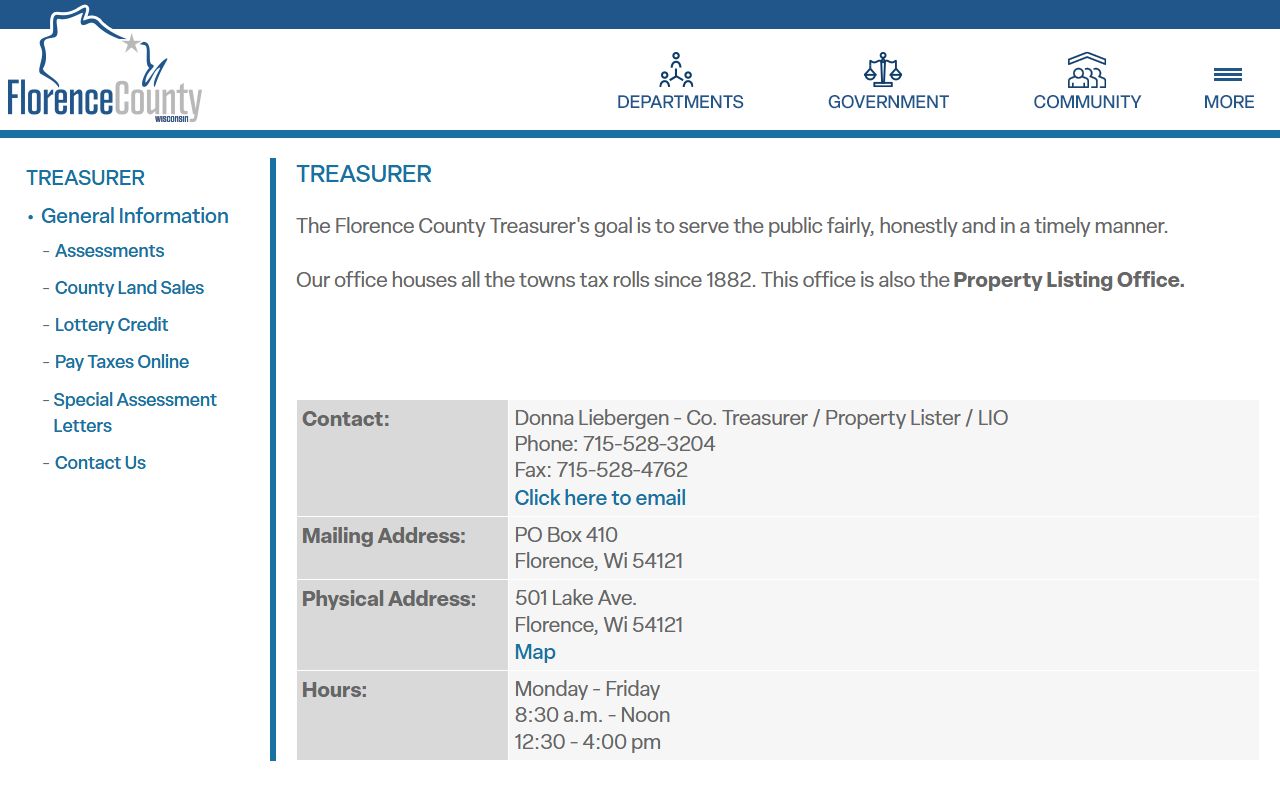
That office is the best first stop when the missing money looks like a tax roll item or a county payment that never cleared.
The Florence County Clerk of Courts page at the official county source shows the court records office that handles fees, fines, forfeitures, and public access.
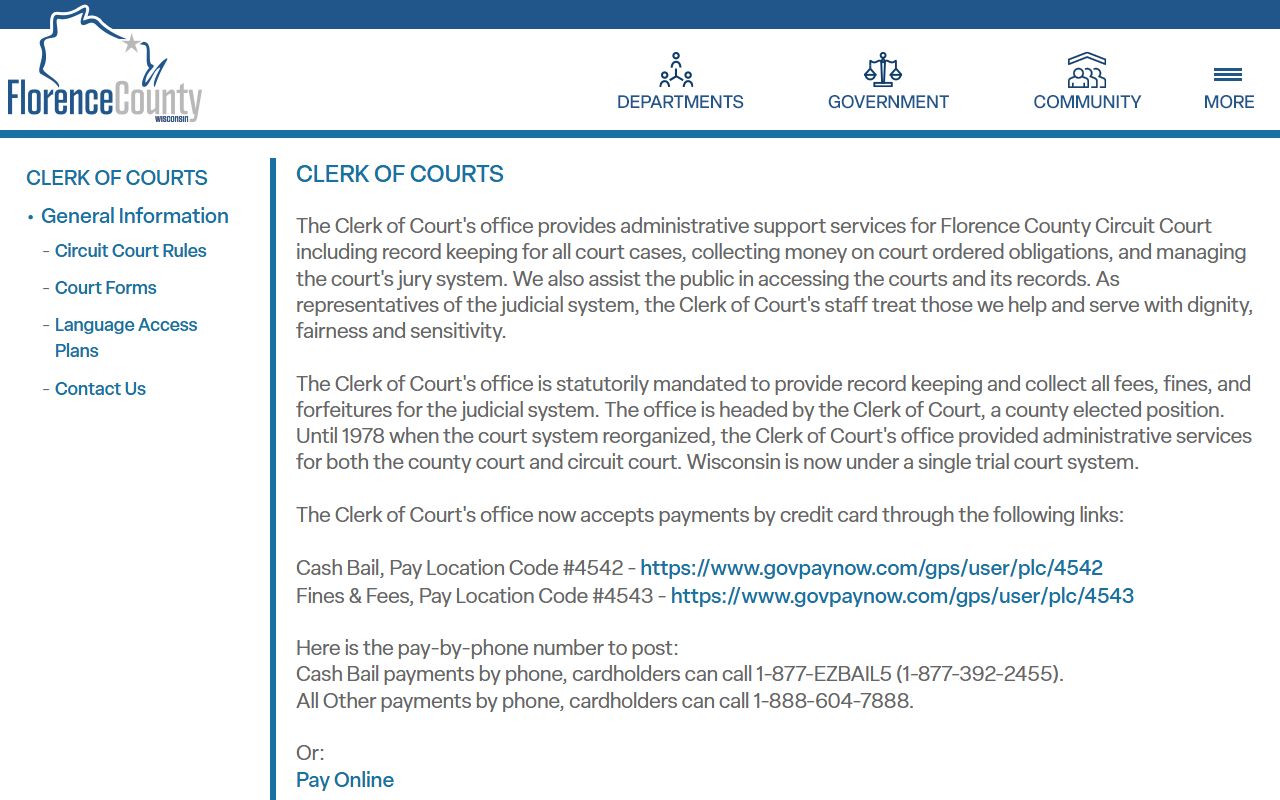
That page is useful when the record began in court and only later turned into a county money question.
Wisconsin Unclaimed Money Rules for Florence County
The Wisconsin Department of Revenue is the statewide fallback when Florence County does not hold the money. The DOR FAQ explains that unclaimed property is generally a financial asset with no owner activity for at least one year, and it confirms that the state keeps the property available until the rightful owner or heir claims it. That makes DOR the right backup when the treasurer and clerk pages do not show a local holder.
The state claim pages fill in the process. The DOR home page is the search entry point, the how-to-claim page explains the filing flow, the relationship types page explains who can claim, the acceptable documents page explains what proof can travel with the claim, and the after-you-file page explains what happens after submission. Those pages matter when a Florence County resident needs the statewide route instead of a local office.
Wisconsin law provides the legal frame. Wis. Stat. § 177.01 defines the key terms used in the unclaimed property system, Wis. Stat. § 177.0501 covers the holder's notice duty before property is reported, and Wis. Stat. § 177.0903 explains how the owner files a claim. Those links explain why the county offices want the record type and why the state wants proof tied to the claimant.
For Florence County residents, the practical sequence is simple. Start with the treasurer if the clue is a town tax roll item or property listing issue. Use the clerk of courts if the clue is a fee, fine, or court-ordered payment. Use DOR only when the county offices no longer hold the money. That keeps the search tied to the office that actually controls the record.
Note: Florence County searches work best when the office is matched to the record type first, then the DOR fallback is used only if the money has already left local custody.