
Dodge County Unclaimed Money Records
Dodge County Unclaimed Money searches usually begin with the Treasurer because that office collects postponed delinquent taxes, deposits and disburses county funds, and keeps foreclosure documents. That gives residents a clear first stop when a payment, refund, or dormant balance needs a home. Dodge County also separates court work and county clerk work, so the office that last handled the money matters. A fast search starts with the county holder, then moves to the claim form, clerk contact, or court record if the file points there. That keeps the search tied to the right office instead of guessing at the source.
Dodge County Treasurer
The Dodge County Treasurer is the county office that handles the core money trail. The office is at 127 East Oak Street, Juneau, WI 53039-1329, and the phone number is 920-386-3782. Kris Keith is the treasurer. Dodge County says the office collects postponed delinquent taxes, deposits and disburses county funds, and handles foreclosure documents. That makes the Treasurer the natural first stop when a resident is trying to understand whether a county amount is still held locally.
The treasurer role is important because it links payments, taxes, and county cash management in one place. If a check went missing, if a tax payment was posted late, or if a county amount was never claimed, the Treasurer page is the place that can help sort the record. The office also gives context for related tax and foreclosure history, which helps explain why the money may be sitting in a county file instead of a bank account or state record.
The Treasurer page below is the official Dodge County source for the office that handles county funds and tax history.
Dodge County Treasurer shows the office role, contact information, and county money trail that can help match a local unclaimed money entry.
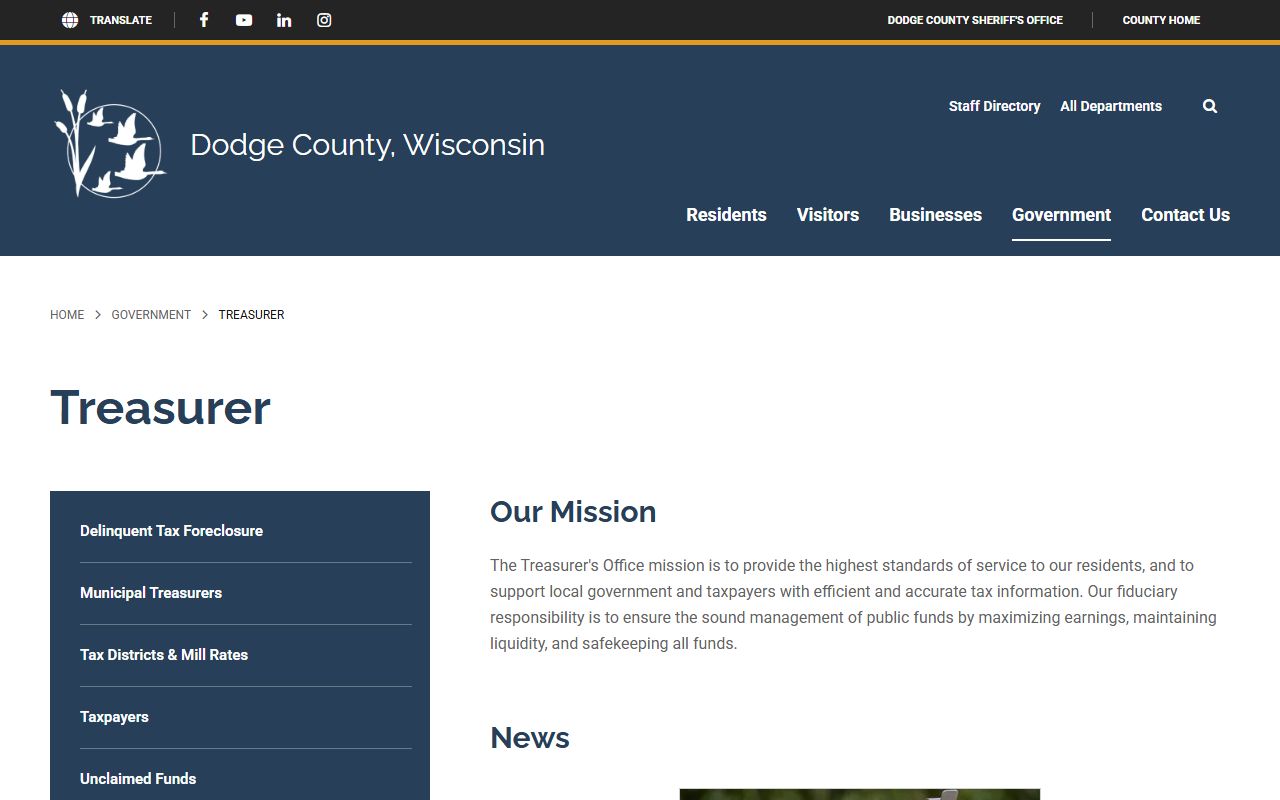
Use that office first when the funds are county-held, because the Treasurer is the record keeper that can connect the notice to the local payment history.
Dodge County Unclaimed Funds
The county's unclaimed funds page is the practical claim path when Dodge County is holding the money. The Dodge County Unclaimed Funds page says claimants need the official claim form, a notarized signature, and a photo ID. The county also notes that the County Clerk can provide notary services, and the clerk's phone number is 920-386-3600. That gives residents a clear next step when the claim packet still needs notarization or identity verification.
The unclaimed funds page is useful because it keeps the claim process in one place. A claimant can see what the county wants before showing up at the office. That matters when the amount is older or when the claimant is working from a publication notice. Dodge County wants the form to match the claim and the identity to match the file. The clearer the paper trail, the smoother the review.
The county unclaimed funds page below is the best local claim reference because it lists the form, the notary requirement, and the office that can help with the packet.
Dodge County Unclaimed Funds explains the county claim steps and the notarized form requirement for local money.

The county homepage is a simple backstop when you need to confirm the main county entry points before you start the claim.
Keep these items ready before you file:
- The exact name shown in the county notice
- The amount listed by Dodge County
- Photo identification that matches the claimant
- A notarized claim form for the money you are asking for
Those basics help the county confirm the claim quickly and reduce avoidable back-and-forth.
Dodge County Court Records
Some Dodge County Unclaimed Money questions are court questions first. The Dodge County Courts page covers case information, official court records, family court, and child support. That matters because court fees and payments can look like a missing county amount until the case file shows where the money belongs. If the record came from a court obligation, the courts page is the right place to start before you treat it like a treasurer-held balance.
The court page gives a separate track from the Treasurer's office. That split matters because a family file, a child support record, or another case-related obligation follows its own path. If the money is tied to a court case, the court record can explain why it stayed open or why it was not claimed. That keeps a Dodge County search from mixing court money with tax money.
The courts page below is the official county source for case information and court records.
Dodge County Courts gives the court context that can sit behind a county money claim.
Dodge County Clerk
The Dodge County Clerk is Danielle Van Egtern, and the clerk phone number is 920-386-3600. That office matters because the county says notary services are available through the clerk, which can help when a claim form needs to be signed and verified. The clerk office is not the treasurer, but it is part of the county claim path when the paperwork still needs a county notary or general county contact.
For residents, the clerk office can remove a small but important obstacle. If the claim form is ready but not notarized, the county clerk is the place that can help finish that step. That is useful when the unclaimed funds page calls for a notarized signature and the claimant is trying to keep everything in one county trip. The clerk contact also gives you a direct county number when you need to ask which office should see the document next.
Use the clerk page below when the claim needs county notary support or a county contact point.
Dodge County Clerk gives the clerk contact that can support the county unclaimed funds filing process.
Dodge County Unclaimed Money Images
Dodge County main site is a broad county entry point that can help confirm the county's home context before you move into the Treasurer or court office.
That homepage works as a simple county front door when the notice or payment record still needs a home office.
Dodge County Treasurer is the office that handles county funds, postponed delinquent taxes, and foreclosure documents.
That page is the best visual guide when a county money record begins with a tax or disbursement trail.
Dodge County main site is another county home context that can help when you need the county's alternate web address for reference.
That image gives another county entry point when you are checking the main site before moving deeper into the records.
Wisconsin Unclaimed Money Search
Not every Dodge County search belongs to the county. The Wisconsin Department of Revenue handles statewide unclaimed property from banks, insurance companies, utilities, and other private holders. The state keeps property indefinitely, so a claim can still work later even if the county no longer has the record. That is why Dodge County residents should check DOR whenever the source looks private or when the county offices do not match the amount in front of them.
Start with the Wisconsin DOR unclaimed property home page if the county record does not fit. If you need the filing path, how to claim property explains the steps, and acceptable documents explains the proof DOR expects. The Wisconsin DOR FAQ also helps explain why state-held property is handled differently from local county money.
If Dodge County does not hold the money, DOR is the next reasonable place to look. That keeps the search matched to the office that actually controls the property.
Dodge County Unclaimed Money Tips
The safest Dodge County approach is to follow the record chain. Start with the Treasurer for postponed delinquent taxes, disbursements, and foreclosure documents. Move to the County Clerk if the claim needs notarization or a county contact. Check the courts page if the balance came from a case file, family matter, or child support record. Then check DOR if the source is statewide. That order keeps the claim in the right office from the beginning.
Dodge County's separate offices help because each one covers a different record type. The Treasurer handles county money. The clerk supports the paperwork side, including notary access. The courts page handles case records and family or support matters. Once the right record is identified, the claim path becomes much easier.
For Dodge County residents, the practical rule is simple: match the office to the source, then match the amount to the file. That usually gets the search moving in the right direction without extra detours.