
Columbia County Unclaimed Money Search
Columbia County Unclaimed Money searches usually begin with the county treasurer because that office handles tax payments, delinquent tax work, unclaimed property, and land sales. The same office also gives residents the online tax path they need to pay real estate taxes electronically. That makes the treasurer the best first stop when a payment, refund, or foreclosure-related record does not line up. If the money is still held by Columbia County, the county office can usually tell you that before you move to the state level.
Columbia County Unclaimed Money and Treasurer
Columbia County Treasurer is the county office that keeps the tax and money trail in order. The treasurer's home page points residents to pay taxes, unclaimed property, land sales, and foreclosure information. That matters because a missing payment or county balance often starts with a tax notice or a change in the parcel record. The office is built to answer that kind of question first.
The county Treasurer is at 112 E. Edgewater St., Portage, WI 53901, with a mailing address of P.O. Box 198, Portage, WI 53901. The phone number is 608-742-9613, and the email address is treasurer@columbiacountywi.gov. Those contact points give residents a direct way to verify a balance or ask whether a payment posted to the right year.
The treasurer page also shows that Columbia County uses the office for tax payment information and for unclaimed property. That is useful because it ties county revenue, delinquent tax, and possible unclaimed money into one source. If you are trying to figure out whether the county still has the funds, the treasurer is the first office to ask.
That local step matters. It lets you sort a real county-held balance from a statewide property item before you file the wrong kind of claim. A clean county review often saves time and reduces backtracking later.
Columbia County Unclaimed Money Images
Columbia County Treasurer is the office that anchors the local tax and unclaimed property trail.
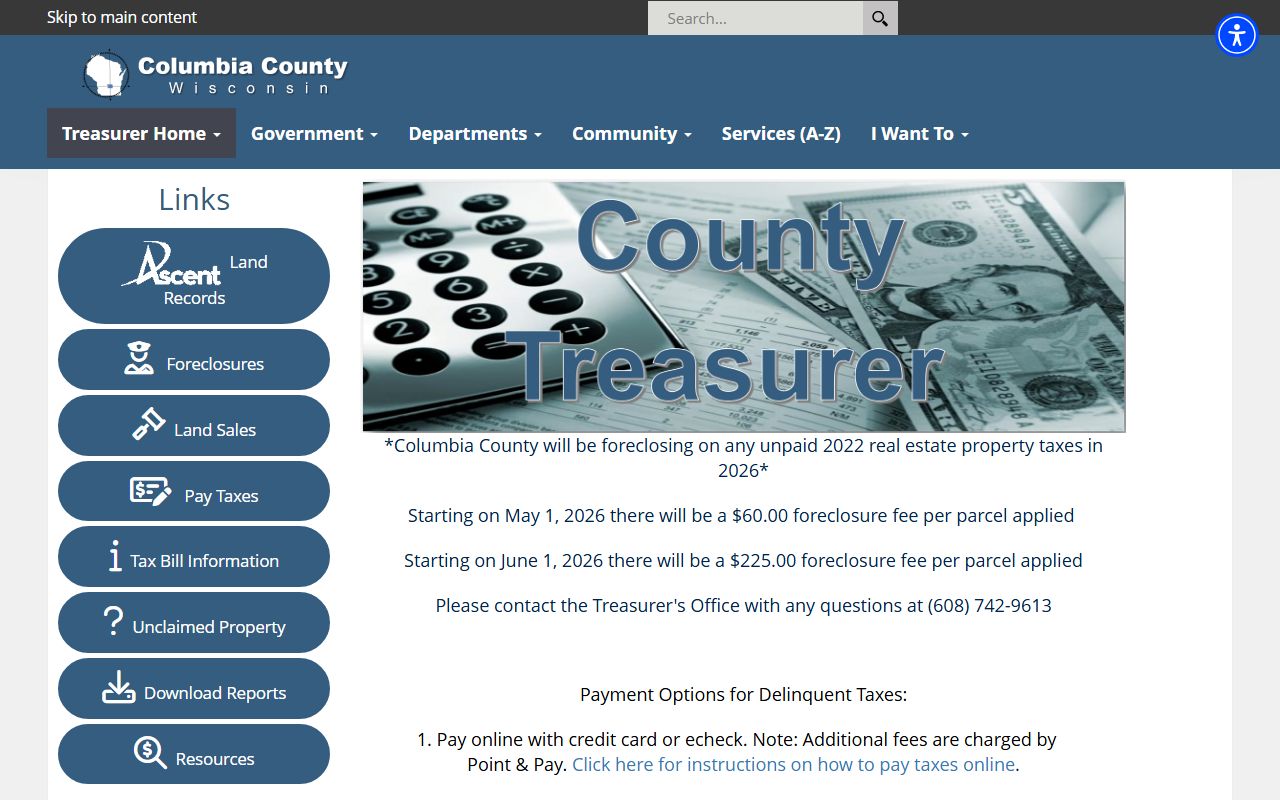
That image is the right local start because it points directly to the county office that keeps the money and tax record together.
Columbia County pay taxes electronically is the official page for online real estate tax payment instructions.
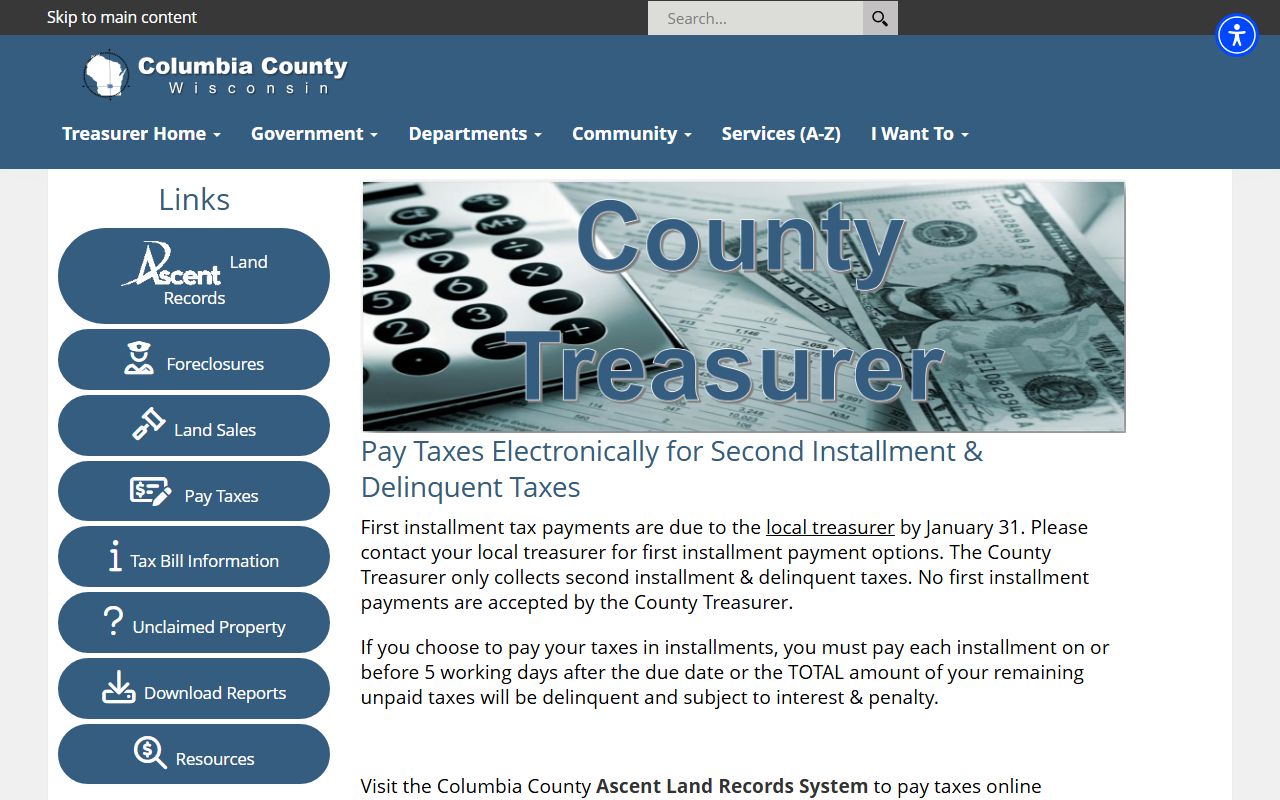
That image fits the search because payment instructions are often the first clue that a balance was paid, missed, or posted to the wrong place.
Columbia County land sales is the county page for tax delinquent foreclosure property sales.
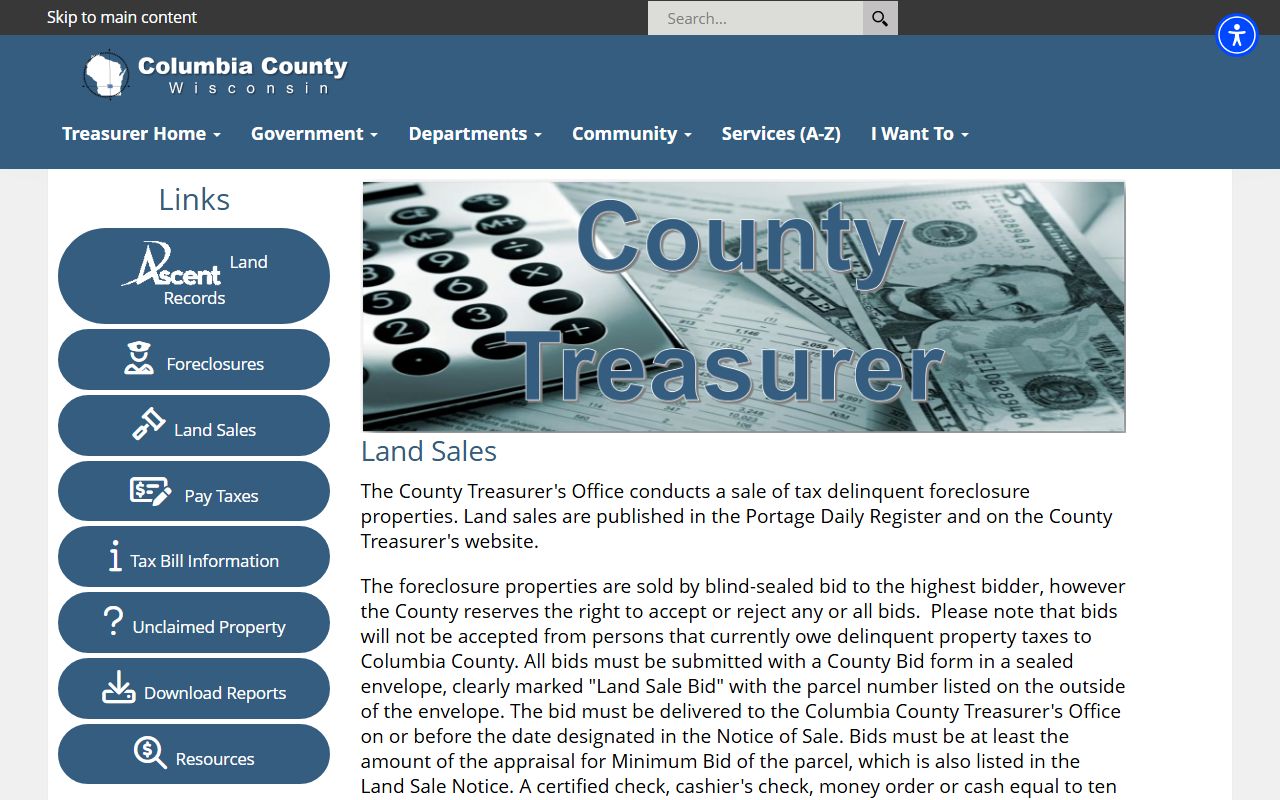
That image helps when a balance is tied to delinquent tax foreclosure work rather than to a simple refund or check issue.
Columbia County Land Sales
Land sales are a major clue in Columbia County Unclaimed Money searches because the treasurer uses them for tax delinquent foreclosure property. That means a balance may be tied to a parcel that moved through the foreclosure process instead of a standard payment issue. If a property has a tax trail that went delinquent, the land sale page can show where the county put the record.
The land sales page explains that bids must be delivered to the treasurer's office by the date named in the notice of sale. It also says the county can reject bids, requires earnest money with the bid, and issues a quitclaim deed only after full payment. Those details matter because they show the office is managing both the sale process and the record of the property itself.
For an owner or heir, the important part is the record trail. A land sale can explain why a tax balance changed, why a parcel moved into foreclosure, or why money was still sitting in county records. If the county says the issue belongs to a foreclosure file, the treasurer remains the right office to check first.
The land sale page is also helpful because it keeps the search tied to an official county process, not to a guess. That makes it easier to tell whether the money is still at the county level or whether the record has already moved into a different custodian's hands.
Columbia County Court Records
Columbia County Clerk of Circuit Court is the office to use when the balance comes from a court record instead of a tax bill. The clerk is the official custodian of court case records, manages court income and expenses, handles judgment and lien docketing, and supports records access and court administration. That is why court money, fees, and file-related balances often begin there.
The clerk of courts page also points to pay fees and fines, traffic citations, forms, and self-help resources. Those tools matter because a case can generate a financial record long after the original filing. If the money you are looking for is tied to a docket, a judgment, or a fee payment, the clerk can help explain whether the record is still local.
Columbia County Register in Probate is the other office that can localize a money trail. The office handles probate matters, and the probate page explains that claims against an estate are filed there on the proper form with the required fee. The office is at 400 DeWitt Street, Portage, WI 53901, and the phone number listed on the email contact page is 608-742-9636.
Probate records are especially important when the money is connected to an estate, a will, or another family file. A balance may not look like a tax issue at all once the estate record is checked. In that case, the register in probate tells you whether the money belongs in the county probate file before you move to a broader claim search.
Columbia County Tax Payment Trail
The tax payment page is the practical starting point when a Columbia County Unclaimed Money question began with a tax bill. It explains how to pay real estate taxes electronically, which matters if you are trying to confirm whether a payment posted or whether it was sent to the right place. An online payment trail is often the fastest way to tell whether the record is current or delinquent.
Columbia County's treasurer page and payment page work together. One tells you where the county holds the record. The other tells you how the county expects the payment to be made. If a payment was late, if the parcel changed, or if the tax bill was tied to the wrong owner, the payment page can help you narrow the issue before you call.
That matters because a tax payment issue can turn into an unclaimed money search in a few different ways. A payment may have been recorded under the wrong year. A check may have been issued but never cashed. A foreclosure balance may have changed the status of the parcel. The county payment trail is the best place to separate those possibilities.
For Columbia County residents, the county tax records should come first. If the treasurer says the money is still local, keep the claim there. If the county says the balance is no longer with them, then the state search is the next step.
Wisconsin Unclaimed Money Search Help
The Wisconsin Department of Revenue is the statewide fallback when Columbia County Unclaimed Money is not held by the county. DOR is the right place to check when the treasurer, clerk, or probate office says the record is no longer local. That keeps the search from drifting into the wrong office and gives you a clean path for the next step.
The DOR unclaimed property home page is the entry point for a state search. The Wisconsin DOR unclaimed property FAQ is the fastest way to understand the state's custody role. If you find a match, how to claim property explains the filing steps, and relationship types and documents needed and acceptable documents explain the proof the state expects.
For Columbia County residents, the cleanest order is county first and state second. Start with the treasurer for tax, foreclosure, or county money questions. Use the clerk of courts when the balance is case-related. Use register in probate when the record follows an estate. Move to DOR only after those county offices say the money is not local. That order keeps the search tied to the office that actually controls the record.
If the state search also comes back empty, the issue may still be a parcel mismatch or a posting delay. In that case, the county office is still the best place to confirm whether the record is open, closed, or attached to a different year.