
Clark County Unclaimed Money Records
Clark County Unclaimed Money searches usually begin with the Treasurer because that office collects county funds, builds the tax bills and tax rolls, and keeps the billing history that often explains where a balance went. Clark County also has a separate Clerk of Courts and Register in Probate, so the record type matters. A court fine, a probate fee, or a tax payment is not handled the same way. The best search starts with the office that last held the money, then moves to the court or probate record if the county file points there. That keeps the claim tied to the right office from the start.
Clark County Unclaimed Money and County Site
The Clark County official website is a useful county-level entry point because it connects residents to the offices that actually handle county money. The county site itself is the best place to confirm the Treasurer, Clerk of Courts, and Register in Probate contacts before you decide which record type you have. That is especially important in Clark County, where money can sit in tax records, court financial management, or probate files. The homepage gives the county context before you narrow the search to the right office.
Clark County official website is the county homepage that helps you reach the office that last handled the money.
That homepage is the county front door when you need to sort out which office should own the search next.
Clark County Unclaimed Money and Treasurer
The Clark County Treasurer is the main county office for money questions. The office is at 517 Court St Room 302, Neillsville, WI 54456, and delinquent tax payments need to be paid in person or by mail there. The Treasurer is also the Real Property Lister, which means the office handles county funds, tax bills, tax rolls, and the parcel records that support them. The research also says the office calculates mill rates for all 46 municipalities, collects delinquent and current real estate taxes, and answers questions about taxes, assessed values, fair market values, and lottery credit.
That much responsibility matters for a Clark County Unclaimed Money search. The same office posts monthly and quarterly reports for sales tax, court fines, transfer fees, probate fees, and related money. It also keeps about 33,000 parcel listings and handles the tax deed procedure, including tax certificates, the redemption notice, the title search, lien-holder notice, and the eventual sale of the property. If a balance came from county money, the Treasurer page is where the history lives.
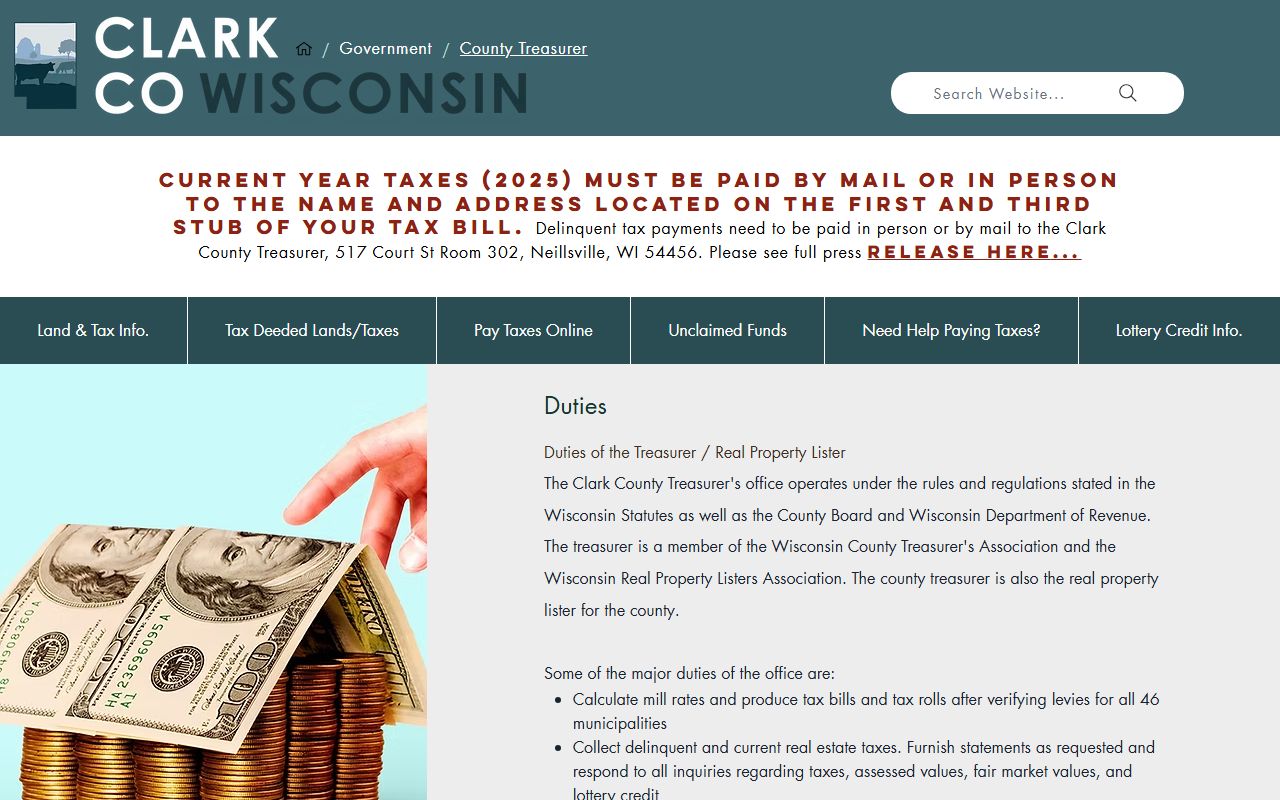
The Treasurer page below is the official county source for the office that handles county funds and tax history.
Clark County Treasurer shows the office role and tax record trail that can help match a local unclaimed money entry.
Use the county office that actually tracks the money trail, because the Treasurer is the place that connects the notice to the local tax record.
Clark County Unclaimed Money and Court Records
The Clark County Clerk of Courts is the office for court records, collections, and court financial management. The mission is to create, maintain, dispose of, and preserve the written record of proceedings in the circuit court system. The office also handles enforcement of court-ordered financial obligations, jury management, and guidance on small claims. The listed phone number is (715) 743-5181, and the office is in Room 405 at 517 Court Street in Neillsville.
That office matters because court-related money is not the same as county tax money. The clerk handles appeals, civil, criminal, family, forfeitures, incarcerated persons, small claims, and traffic matters. If a payment was tied to a court order or court obligation, the clerk file can show whether the money was already processed, still open, or sent to the wrong place. The Clark County Circuit Court page adds the broader public and legal context that surrounds those records.
The clerk page below is the official source for the court record and court money side of the county search.
Clark County Clerk of Courts explains the court records and obligations that can sit behind a county money claim.
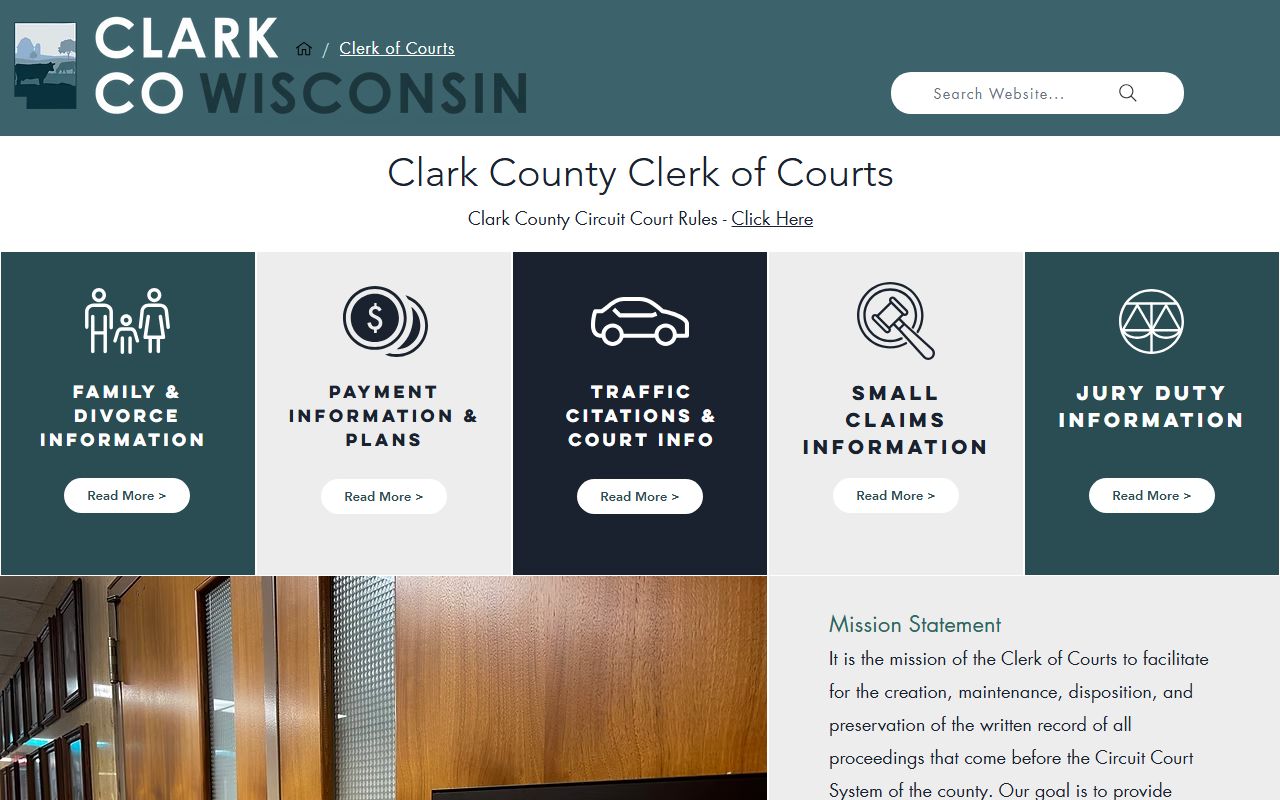
That page is the right county reference when the search turns into a case file, a fine, or another court obligation.
Clark County Unclaimed Money and Probate
The Clark County Register in Probate is located at 517 Court Street Room 403, Neillsville, WI 54456, and the phone number is (715) 743-5172. The office handles probate of wills, formal and informal probate, adult and minor guardianships, mental cases, JIPS and CHIPS, juvenile restitution, adoptions, and TPRs. That is important in a Clark County Unclaimed Money search because an heir, guardian, or personal representative may need probate records to show authority before a county amount can be released.
Probate is often the missing record. A deceased owner, a guardianship, or a juvenile restitution matter can all change who has the right to claim the money. The probate office helps show the legal path. If the record is tied to a will, the office can confirm the probate route. If the matter involves juvenile restitution or guardianship, the office can show how the money should be treated. That makes probate a real part of the county money trail, not just a side file.
The probate page below is the official source for the estate and guardianship records that can support a claim.
Clark County Register in Probate is the county source for probate, guardianship, and juvenile records that can support an unclaimed money claim.
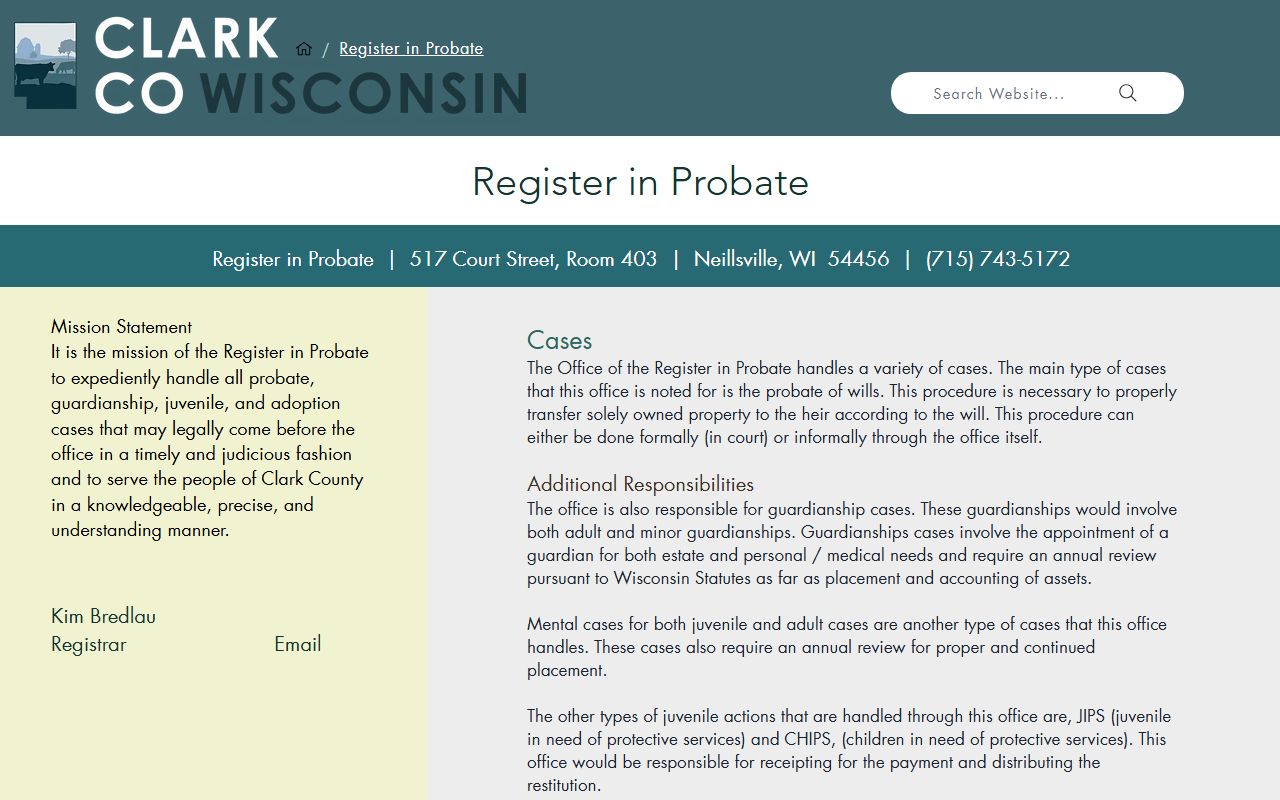
That page is the best county reference when the claim depends on a will, a guardianship, or another probate file.
Clark County Unclaimed Money Documents
When a Clark County Unclaimed Money search moves into DOR, the document rules matter. The state says acceptable documents can include government identification, proof of current address, and proof of the address tied to the property. It also uses relationship types to sort owners, heirs, guardians, and personal representatives. That gives the claim a clear path. The more closely the proof matches the name on the notice and the property trail, the easier the review should be.
The state process is also supported by Wisconsin statutes. Wis. Stat. 177.0501 covers notice to the apparent owner, and Wis. Stat. 177.0903 covers owner claims. Those rules help explain why county tax records, court obligations, and probate files can lead to different claim paths. They are related, but they are not the same record.
Use the DOR pages below when you need the statewide claim path after the county offices have been checked.
Wisconsin DOR unclaimed property home page is the statewide search entry point.
How to claim property explains the filing steps after a match is found.
Acceptable documents and relationship types explain proof and claimant status.
Clark County Unclaimed Money Tips
The safest Clark County approach is to work the offices in order. Start with the Treasurer if the balance looks like tax money, a county disbursement, or a tax deed issue. Move to the Clerk of Courts if the money came from a case file or court obligation. Check probate if the owner is deceased or if an heir or guardian needs to act. Then use DOR if the money is statewide rather than county-held. That keeps the search tied to the office that actually controls the record.
Clark County is a good example of why record type matters. The Treasurer handles county funds and tax history. The clerk handles court records and collections. Probate handles estates, guardianships, and juvenile matters. Once the right office is identified, the claim usually gets much easier to complete.
For Clark County, the practical rule is simple: match the office to the source, then match the amount to the file. That is the most reliable way to move an unclaimed money search forward without extra detours.