
Calumet County Unclaimed Money Records
Calumet County Unclaimed Money usually starts with the county treasurer, a court file, or a probate record, because those are the county offices that most often hold money-related records. The treasurer handles delinquent and postponed taxes, the circuit court clerk keeps case records, and the probate clerk manages estate and guardianship files. That means a resident who only knows that a check, tax payment, or court balance went missing can still narrow the search by office. Once the holder is identified, the rest of the claim is usually proof, timing, and the right form rather than a broad county-wide search.
Calumet County Treasurer and Taxes
The Calumet County Treasurer page is the most useful tax-side starting point because the office receives delinquent and postponed real estate taxes, including the first installment for the City of New Holstein. The page also says the treasurer settles tax rolls with the towns, villages, cities, vocational districts, and school districts; receipts county general revenue; disburses county payments and accounts payable checks; sends delinquent notices; and processes properties eligible for tax foreclosure. That is a wide set of duties, but it is exactly why the treasurer page matters for a county money search. If the issue started as a tax payment, the treasurer likely holds the trail.
The treasurer page is shown at Calumet County Treasurer. It is the office to use when the money may be tied to a real estate bill, a county check, or a delinquent tax notice. The page also shows that the Real Property Lister updates billing information and tax rolls after property transfers are recorded. That detail is important because an address change or ownership change can explain why a bill, refund, or county payment did not reach the right person.
The county's tax records are easier to work with when you can search the parcel itself. The Ascent portal at Calumet County land records search gives public access to the parcel trail and the tax-bill side of the record. If a claim begins with a parcel number, a tax bill, or a city installment that later moved to the county, the portal helps connect the payment to the property before the record becomes an unclaimed money question.
That pairing is useful because county money and tax records often overlap. A delayed payment, a wrong billing address, or a foreclosure notice can create the same kind of missing-money question that unclaimed funds records create. The treasurer page and the land records portal let Calumet residents check the local office first and keep the search grounded in the actual tax trail.
Calumet County Court Records
The Clerk of Circuit Court is the next local office to check when Calumet County Unclaimed Money is tied to a case, a fee, or a court payment. The clerk page says the office maintains and processes records for family, civil, traffic, criminal, passport, and jury matters. That matters because a balance can begin in a court file long before it becomes a county money question. If the clue is a ticket, a filing fee, a jury payment, or another court-related record, the clerk is the right office to identify the holder.
The clerk page is shown at Calumet County Clerk of Circuit Court. The office is at 206 Court Street in Chilton, and the page lists the clerk as Kayla Bembenek. The contact information and case categories make it clear that this office is not just for filing paperwork. It is the record-keeper for the full range of circuit-court matters, which is exactly why it can help when a payment seems to have disappeared into a case file.
The circuit court page adds the rest of the court picture. Calumet County's circuit court consists of two branches and includes court commissioners who handle criminal, traffic, small claims, and family court matters. The page also lists the court address as 206 Court Street, Chilton, WI 53014. That detail matters because a resident who only remembers the judge, a case type, or a hearing date can use the court page to confirm the exact office before asking about money that may have been held for the case.
When court money is the issue, the clerk and the circuit court work together. The clerk keeps the record. The court handles the matter. A resident who understands that split can move faster, because the claim can be matched to the case type before any county money request is filed.
Calumet County Probate Records
Probate and juvenile records are the other major local clue for Calumet County Unclaimed Money. The Register in Probate / Juvenile Clerk page says the office assists with estate proceedings, trusts, guardianships, conservatorships, protective placements, mental, alcohol and drug abuse commitments, and juvenile and adult adoptions. That is a strong reminder that county money can be tied to an estate or family matter rather than a tax bill. If the claimant is an heir, a personal representative, or someone with authority over an estate, the probate file may be the key to the money trail.
The probate page is shown at Calumet County Register in Probate / Juvenile Clerk. The office helps manage the records that often explain who has authority to claim county-held funds. That matters because estate money, trust money, and guardianship money all need the right person attached to the file before anything can be released. The probate office is also the right place when a juvenile record or commitment matter created the paper trail behind a payment.
For residents who need the broader court context, the circuit court page and the probate page fit together. One keeps the active court record, and the other keeps the estate or juvenile record that may explain who should receive the money. If the claimant is not the person named on the original balance, those records are what make the next step possible.
That is why probate matters in a county unclaimed money search. A file that looks like a simple payment can become a representative claim once the court record is checked. The probate office gives Calumet residents the record trail that a treasurer page alone cannot provide.
Calumet County Unclaimed Money Images
The Calumet County home page at the county source gives the general county entry point before the search moves into tax, court, or probate records.
That page is useful when you need the county's general contact path before narrowing the money trail to a specific office.
The Calumet County Treasurer page at the treasurer source shows the office that handles tax receipts, revenue, and foreclosure work.
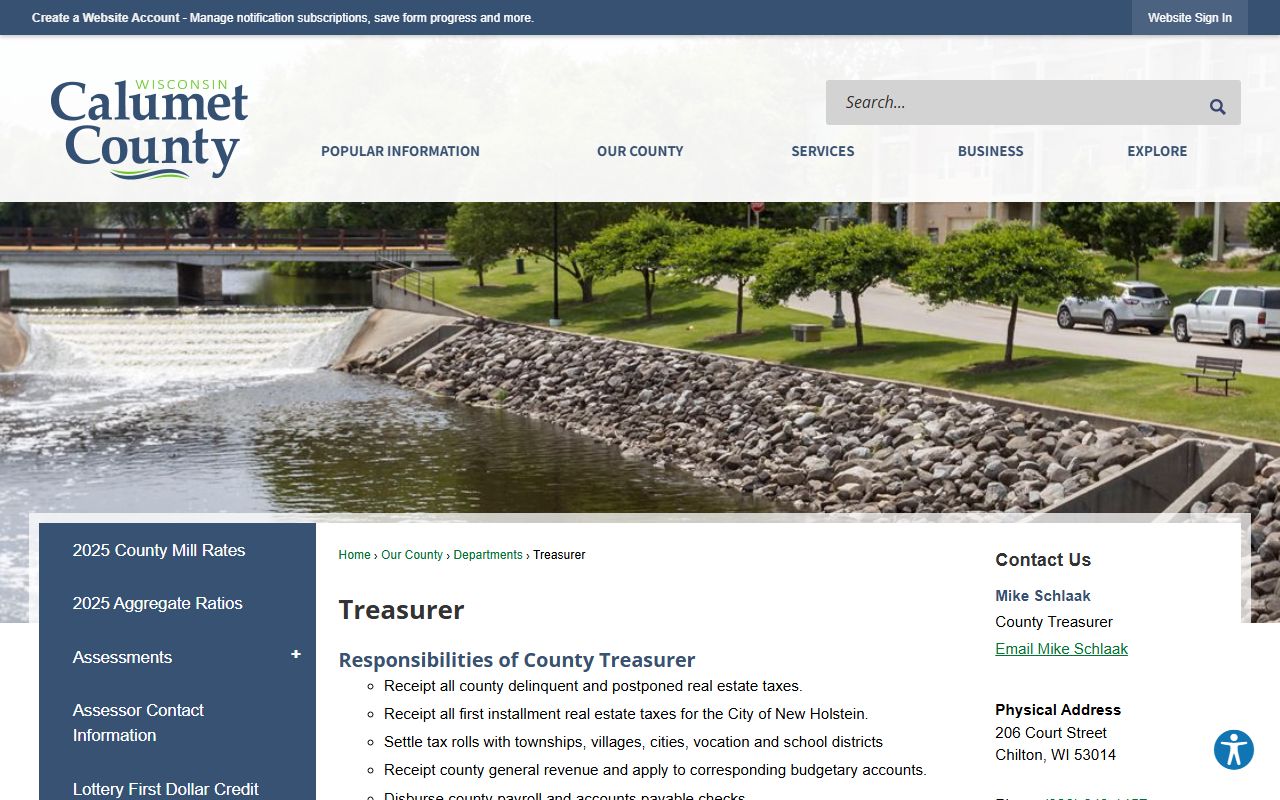
That page is the clearest visual guide when the money looks tax-related or tied to a county payment.
The Calumet County Clerk of Circuit Court page at the clerk source shows the office that maintains family, civil, traffic, criminal, passport, and jury records.
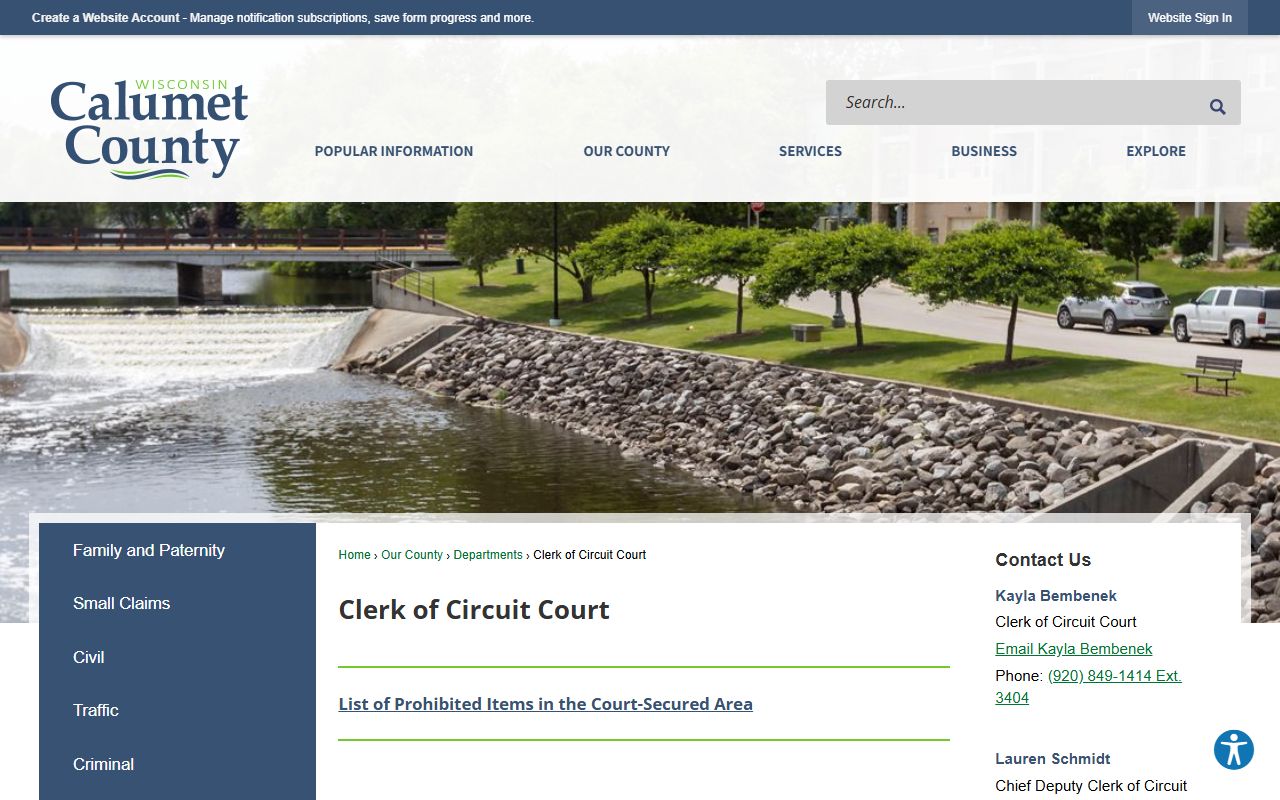
That page is useful when the record starts with a case file and only later turns into a money question.
Wisconsin Unclaimed Money Rules for Calumet County
The Wisconsin Department of Revenue is the statewide fallback when Calumet County does not hold the money. The DOR FAQ explains that unclaimed property is generally a financial asset with no owner activity for at least one year, and it confirms that the state keeps the property available until the rightful owner or heir claims it. That makes DOR the right backup when the money is not in the treasurer's office, the circuit court, or the probate file.
The state claim pages fill in the details. The DOR home page is the search entry point, the how-to-claim page explains the filing flow, the relationship types page shows who can claim, and the acceptable documents page shows what proof can travel with the file. Those pages matter when the claimant is an heir, a guardian, or a representative rather than the person named on the original check.
The legal structure is in the statutes. Wis. Stat. § 177.01 defines the key terms used in the unclaimed property system, Wis. Stat. § 177.0501 covers the holder's notice duty before property is reported, and Wis. Stat. § 177.0903 explains how an owner files a claim. The DOR after-you-file page then explains what happens after submission and why the office may ask for more information.
For Calumet County residents, the search order is straightforward. Start with the treasurer if the balance looks tax-related. Use the circuit court clerk if the money came from a case file or court payment. Use the probate office if the claim points to an estate or guardianship record. Use DOR if the local offices do not hold the money. That keeps the search tied to the office that actually controls the record.
Note: Calumet County searches work best when the office is matched to the record type first, then the DOR fallback is used only if the money is already outside local custody.