
Brown County Unclaimed Money Records
Brown County unclaimed money usually starts with the County Treasurer because that office publishes the list, keeps the claim form, and controls the local county-held funds people actually need to recover. If you find your name on a Brown County notice, the key is to match the amount, confirm the holding office, and use the county process that fits the record. The same treasurer's office also keeps tax and finance records, so it is a practical starting point for county money, court-related payments, and older local checks that were never claimed. When the source is not obvious, the county pages and the state DOR system help narrow it down fast.
Brown County Unclaimed Money Search
The Brown County Treasurer's general information page is the right place to start because it explains what the office does and when it is open to the public. Brown County says the Treasurer provides orderly collection, disbursement, and recording of county money, keeps records of taxes and safekeeping functions, and maintains records tied to general property taxes, bail, fines, forfeitures, and other county funds. That makes the office the natural first stop when a Brown County Unclaimed Money notice shows up in the mail or in the annual publication, and it fits the local notice process in Wis. Stat. 59.66.
The office hours matter if you want to walk in and review the records yourself. Brown County lists public hours as 7:30 AM to 5:00 PM Monday through Thursday and 7:30 AM to 11:30 AM on Friday. Written public records requests can be sent to 305 E. Walnut Street, Green Bay, WI 54301, or by email to bc_treasurer@browncountywi.gov. The Treasurer also notes that records available include property tax records, assessments, owner information, tax foreclosures, unclaimed funds, finance records, and deposit records, which gives residents several ways to trace where a payment ended up.
The general information page below is the best visual starting point because it is the official Brown County source for the office that records and disburses county money.
The Brown County Treasurer general information page shows the office role, public hours, and record types that can help you match a local unclaimed money entry to the right county file.
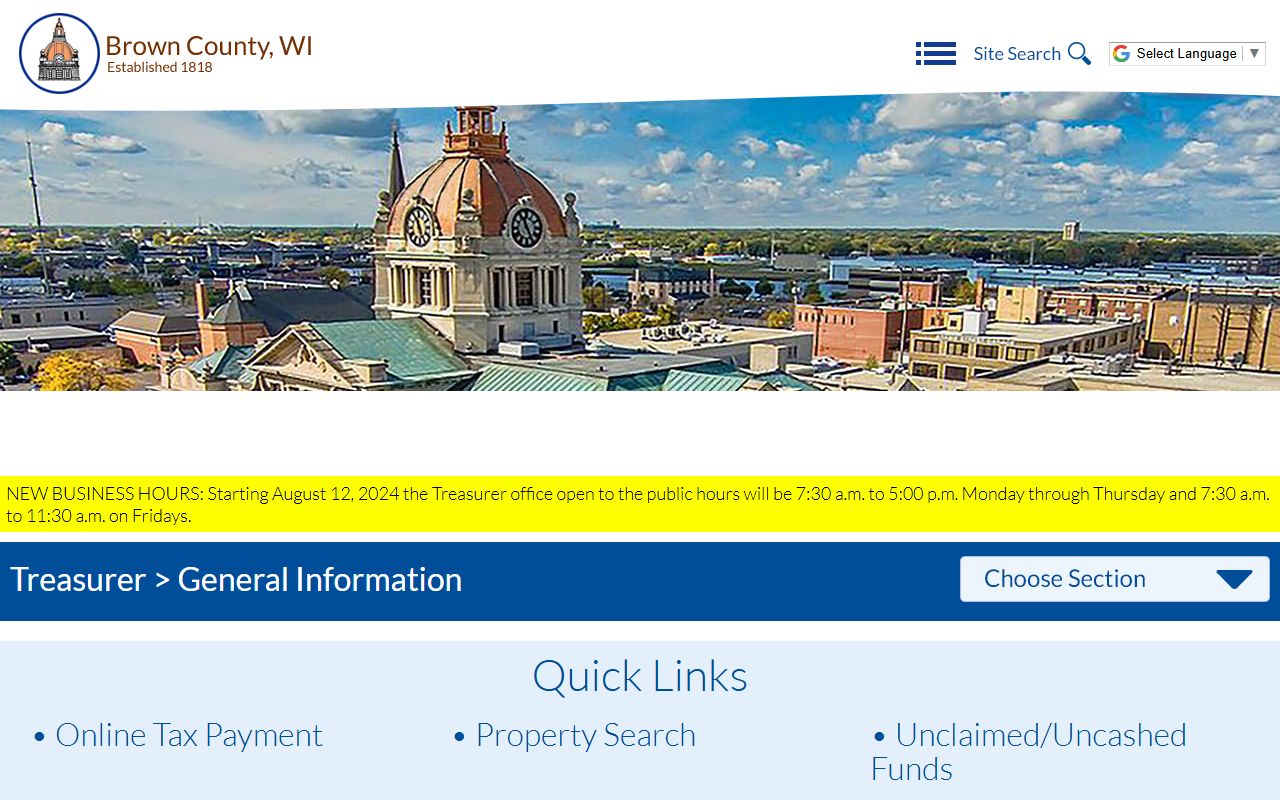
Use that office first when the funds are county-held, because the Treasurer is the custodian that publishes the notice and keeps the underlying county record trail.
Claim Brown County Unclaimed Money
Brown County keeps a dedicated Unclaimed and Uncashed Funds list, and the county claim process is intentionally specific. The Treasurer says claimants should complete the claim form, visit the office during business hours, and bring photo identification such as a driver's license, passport, or state ID card. Claims of $100 or more require a notarized signature, and Brown County says notary services are available in the office. That matters because a complete claim packet is faster to review than a loose request that still needs verification.
If you are walking in, start with the official Brown County page and the claim form from the Treasurer's office. If you are mailing the paperwork, make sure the form is signed, notarized when required, and tied to the exact amount listed in the publication. The county emphasizes a separate claim for each item, which means you should not combine different amounts into one broad request if the publication lists them separately.
The county's unclaimed funds page below is the cleanest source for the claim rules because it lists the office steps, ID expectations, and notarization threshold in one place.
Brown County unclaimed and uncashed funds page explains how to claim county-held money, what identification to bring, and when a notarized signature is required.
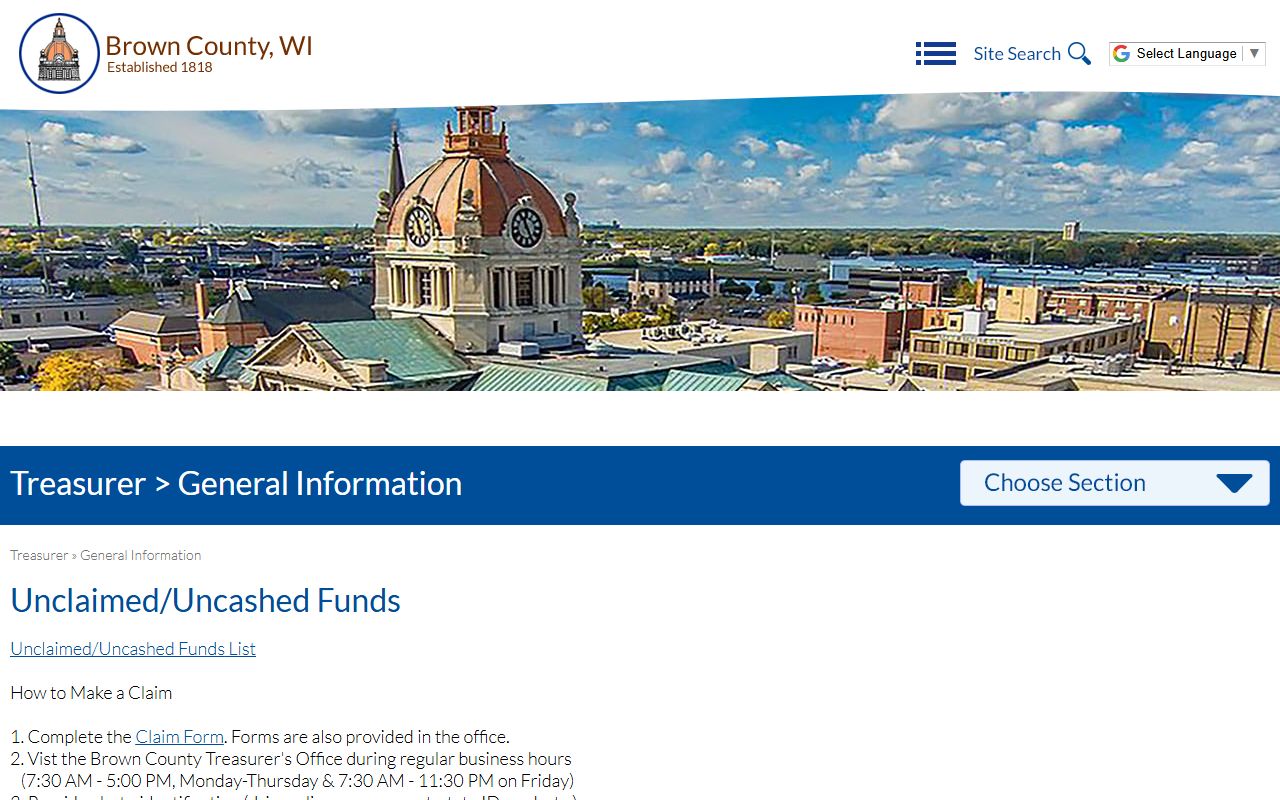
The page is especially useful if the notice is older, because it tells you what Brown County expects before it releases the money and what happens if the office needs more information.
To keep the claim moving, bring the items Brown County is most likely to check:
- The county claim form for the exact amount listed
- Photo identification that matches the claimant name
- A notarized signature if the claim is $100 or more
- Copies of anything that helps prove you are the owner or representative
Those basics line up with the county's instructions and reduce delays when the office reviews the packet.
Brown County Court Records
Some Brown County Unclaimed Money claims are easier to understand once you look at the county court side. Brown County Circuit Court handles court records, fines, fees, and forfeitures, and it manages all court case types including traffic, criminal, civil, and family matters. If the money came from a court fee, a restitution-related payment, or another case-linked record, the court file can help show where the payment started before it reached the Treasurer.
The court is also useful when a claim involves an estate or a deceased owner. The Brown County Register in Probate assists the circuit courts and the public with estates, wills filed for safekeeping, trusts, guardianships, protective placements, and open-records assistance. That makes it a helpful office when a Brown County unclaimed funds notice belongs to an heir claim, a personal representative, or a probate matter rather than a simple individual refund. Brown County's court structure gives you a second record trail when the Treasurer's list alone is not enough.
The Brown County Circuit Court page below is the official source for court hours and the broader court structure that sometimes sits behind local unclaimed money entries.
Brown County Circuit Court general information is useful when a county claim is tied to court fees, forfeitures, or a probate record that helps identify the owner or heir.
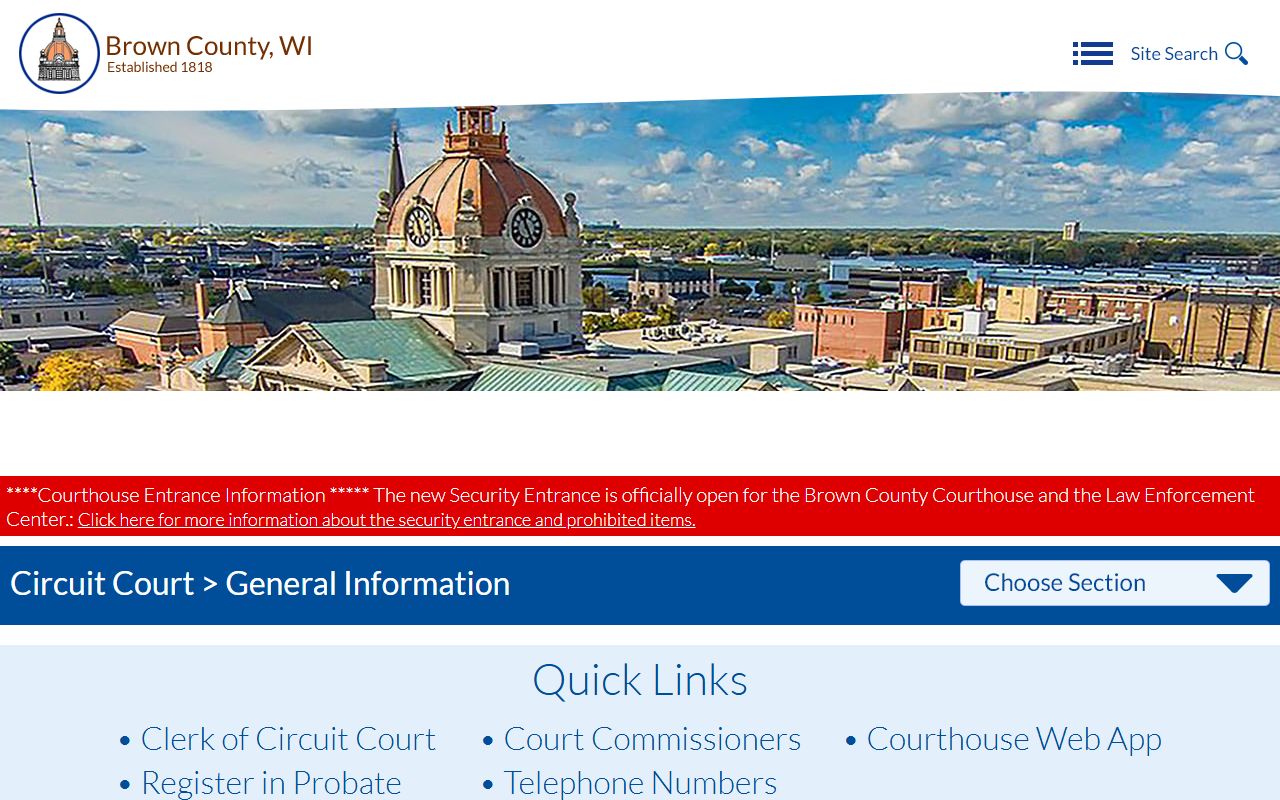
If the money looks court-related, Brown County's circuit court and probate offices are the places that can help you connect the claim to the right case file or estate record.
Brown County Records and Taxes
Brown County also gives residents a broader records trail through the Treasurer's office. Written public records requests can be sent to the office in Green Bay, and the county says it can respond to simple requests within ten business days. Black-and-white photocopies are listed at twenty-five cents per 8 1/2 by 11 page, and location costs over fifty dollars may require prepayment. Those details matter if you need a copy of a list entry, an address record, or another document that helps prove a Brown County Unclaimed Money claim.
The treasurer's responsibilities also include property tax records, tax rate information, tax foreclosures, and deposit records. That means the office is often the best place to separate a true unclaimed funds notice from a delinquent tax issue or a foreclosure record. If the paperwork points to taxes instead of unclaimed money, the Treasurer's records can still help you see whether the amount was a tax payment, a refund, or some other county-held transaction that needs a different response.
Brown County's records menu is broad enough that one office can answer a lot of local money questions, but it is still important to match the request to the record type. A tax record, a court fee, and an unclaimed funds notice are related, yet each one moves through a different part of the county system. Brown County's public pages are built to let you sort that out before you file a claim or request copies.
Wisconsin Unclaimed Money Search
Not every Brown County search belongs to the county. The Wisconsin Department of Revenue handles statewide unclaimed property from banks, insurance companies, utilities, and other business holders. The DOR says the search is free, the state holds property indefinitely, and there is no time limit to claim your money. That is why Brown County residents should check the state database whenever the source is not clearly county-held or court-held. The state search is especially important when the record looks like a financial account, dividend, refund, or uncashed benefit from a private holder.
The DOR claim process asks you to search for the property, choose the correct relationship type, and submit the documents that prove your identity or authority. The state guidance at the Wisconsin DOR unclaimed property home page, the claim instructions, the FAQ page, and the acceptable documents page explains what the owner, heir, or representative should submit. If you want the legal framework behind the claim process, Wis. Stat. 177.0903 governs owner claims, and Wis. Stat. 177.0501 explains notice to the apparent owner. Brown County local funds are handled separately under county procedures and Wisconsin's local-government unclaimed funds rules, so the county list and the state list should both be checked when the source is unclear.
Brown County Unclaimed Money Tips
The safest Brown County approach is to start with the publication, confirm the name and amount, and then match the record to the right office. If the Brown County Treasurer holds the money, use the county form and identification rules. If the source is court-related, check the circuit court or probate trail. If the source is a private holder, move to the Wisconsin DOR database and follow the state claim instructions. That order keeps you from sending the wrong claim to the wrong office.
Brown County's annual and cumulative publications also help because they show whether a name is still outstanding or already claimed. The county notes that the list is updated periodically and does not reflect claims after publication, so a name on the page is a starting point, not a final status report. For that reason, it is smart to save the publication date and the amount before you contact the office.
For Brown County residents, the practical rule is simple: county-held funds stay with the county treasurer, court records can add missing context, and statewide unclaimed property belongs in the DOR system. Once you know which record bucket the money fits into, Brown County's process is straightforward and the claim steps are manageable.