
La Crosse Unclaimed Money Records
La Crosse Unclaimed Money searches often begin with city departments named in the county notice and end with the county office that actually takes possession if nobody proves ownership in time. That makes this city a good example of why local records matter. The city finance department, city police department, county clerk of courts, county sheriff, and county finance office can all show up in the same notice. If you know the address, the department, or the amount, the city-side clue can save a lot of time. Once the office is identified, the rest of the claim usually becomes a paperwork and timing question.
La Crosse Unclaimed Money and City Departments
The county notice is the best local guide to the city departments that hold money in La Crosse. The official La Crosse County unclaimed funds notice says the county publishes its list under Section 59.66 Wis. Stats. It also says owners have 180 days after the last publication to call for and prove ownership before the County Treasurer takes possession. That deadline matters because city funds do not sit forever once the notice is out.
The notice also names the city offices that may hold money. City of La Crosse funds can be claimed by contacting the City Finance Department at 400 La Crosse Street, La Crosse WI 54601. The City of La Crosse Police Department also maintains unclaimed funds, and the notice gives the police line as 608-789-7245. Those details matter because city residents sometimes assume the county is the only place to look, when the notice is actually pointing them back to a city office first.
The county notice is shown at the official county unclaimed funds notice, which is the clearest source for the city departments listed in the claim cycle.
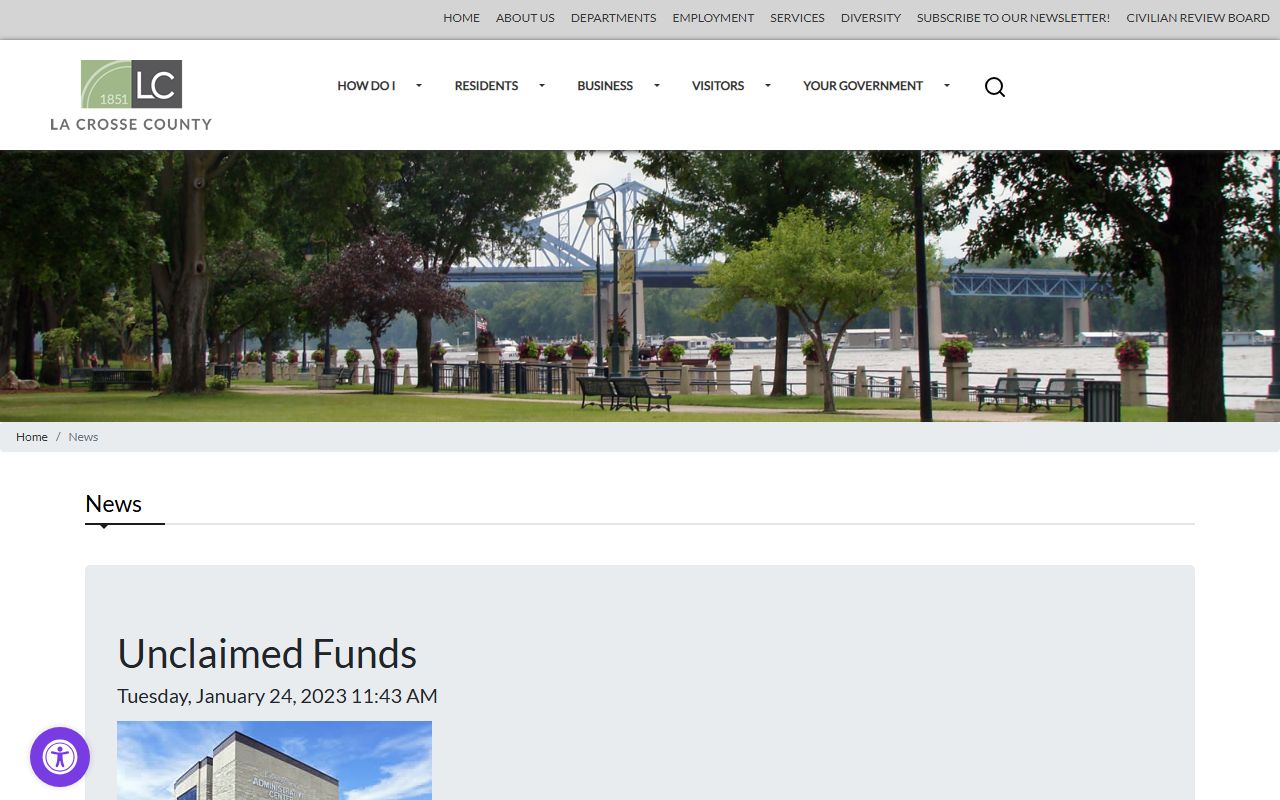
That notice page is where city residents can see the department names, the 180-day window, and the notice language that controls the claim.
La Crosse residents should treat the notice as a map, not just a publication. It lists names, addresses, cities, states, zip codes, and dollar amounts, and it includes both small balances and much larger ones. Some entries are for individuals and some are for businesses, and some former residents now live out of state. That detail makes the notice useful even before anyone contacts a city office.
Because the city and county records are intertwined here, the notice is what keeps the search focused. If the money came from city finance or police, the city office may still be the best contact. If it came from a county office, the clerk of courts, sheriff, or county finance department may be the right one. Either way, the county notice tells you which department is holding the money and how long the owner has to act.
How City and County Claims Work
The county notice gives La Crosse residents a simple rule: prove ownership within 180 days after the last publication or lose the local claim window. After that, the County Treasurer takes possession and the notice says no action may be maintained against the Treasurer for the money. That is why the timing matters just as much as the department name. The city may still have had the money first, but the county notice is what governs the last chance to claim it locally.
The city departments named in the notice are not theoretical. The City Finance Department handles city funds, and the City Police Department also maintains unclaimed funds at 400 La Crosse Street. The city-side claim path therefore starts with the department that actually held the money. The county notice tells residents where to go, but the department name tells them which desk to call or visit first.
For a resident trying to match a bill, a refund, or a found item to the right office, this is where the city and county stories merge. A city balance can sit in finance or police records before the county notice is published. If nobody claims it on time, the county takes possession under the statute. That is why the notice is the centerpiece of the La Crosse process. It captures both the local office and the deadline in one place.
The statewide fallback is shown on the Wisconsin Department of Revenue Unclaimed Property home page, which is where La Crosse residents go when the city or county office no longer has the funds.
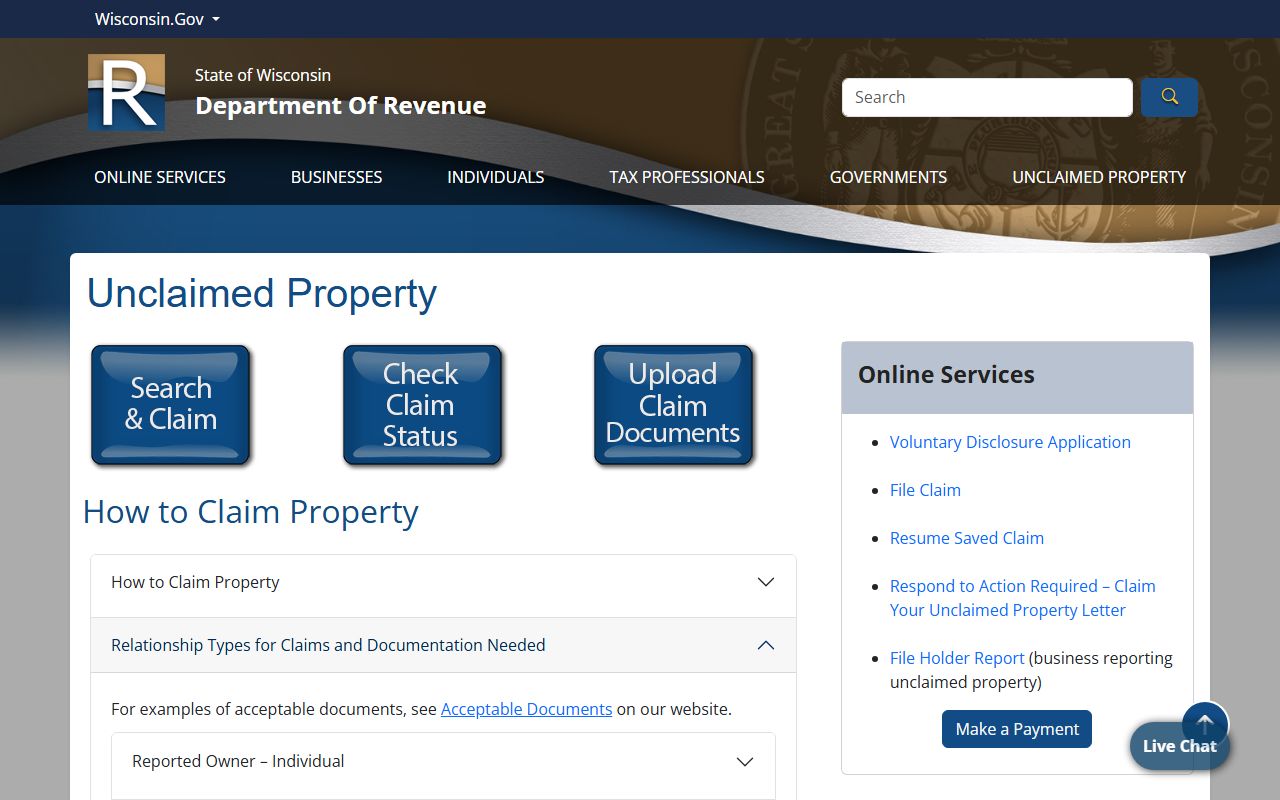
That DOR image is the city resident's statewide fallback when the local office does not hold the money.
City residents should also keep the amounts in mind. The notice includes entries that can be small, but it also includes larger balances, which means there is no single pattern for what gets listed. That is useful because it shows the process is about the legal custody of the money, not the size of the check. If the money is listed, the notice expects the owner to prove ownership during the open window.
That is also why the city page should not be read as a generic tax or billing page. It is a claim path tied to the actual offices that held the money. The city finance and police departments are part of that path, but the county notice is what sets the deadline and the transfer point.
County Records and Local Timing
The county side adds the rest of the record trail. The county notice says funds are held by various departments including the clerk of courts, sheriff's department, and finance department. Contact numbers in the research set include the County Clerk of Courts at 608-785-9590, the County Sheriff's Department at 608-785-9629, and the County Finance Department at 608-785-9580. Those are the numbers residents use when the notice points to a county office rather than a city one.
That county detail matters because the local notice is not limited to one type of money. Court-related unclaimed funds can sit with the clerk of courts, while other balances may be tied to the sheriff or finance departments. If the owner can identify the office, the claim is faster. If the office is not clear, the county notice gives a list of the departments holding the funds so the resident can call the right one.
For broader county records, the La Crosse County treasurer and court pages are still useful even when the live site is harder to reach. The county treasurer page and court page are the official places to check when the money is tied to county custody or to court-side records. The county notice, the department phone numbers, and the official treasurer and court URLs together give residents enough to get from a name on the list to the office that can release the funds.
That means city residents should not stop at the city office if the notice points elsewhere. A city fund may begin at finance or police, but the county notice can still place the last claim deadline on the county side. If the money is in a court or sheriff file, the city office will not be the final step. The county page keeps those offices in order so the resident does not waste time at the wrong counter.
Residents also benefit from the way the notice groups the money. It is clear that both individuals and businesses can appear, and that some entries belong to former residents who are now out of state. That tells city claimants to keep their documents current and their mailing address accurate. The county office cannot issue a clean replacement check if the claim does not match the notice or the person making it.
Wisconsin Unclaimed Money Rules for La Crosse
When the county notice is not enough, the Wisconsin Department of Revenue gives the statewide fallback. The DOR Unclaimed Property home page is the search entry point, and the FAQ explains how unclaimed property works at the state level. DOR treats the property as abandoned after the applicable dormancy period and keeps it available for the rightful owner to claim. That makes it the right path when the county notice does not lead to a local office.
The claim pages are important because they explain how to move from search to proof. The DOR how-to-claim page shows the basic claim steps, and the relationship types page explains who can claim as the owner, heir, guardian, or personal representative. The acceptable documents page shows the identity and address proof that can travel with the claim. Those pages are useful when the county notice runs out and the state file becomes the next step.
The statutes give the same process legal structure. Wis. Stat. § 177.01 defines the key terms, Wis. Stat. § 177.0501 explains the holder's notice duty before property is reported, and Wis. Stat. § 177.0903 explains the owner claim process. Those statutes are the legal reason city and county offices can point residents to the right claim path without mixing up custody and ownership.
After a claim is filed, the DOR after-you-file page explains what happens next. The state can take time to review the file, and it may request more information if the documents do not fully answer the ownership question. That is normal. The important part is to keep the claim tied to the city, county, or state office that actually has the money.
For La Crosse residents, the statewide rule is simple. Use the city or county notice first, because that notice gives the department and the deadline. If the local office does not hold the funds, then go to DOR and match the claim to the state property record. That sequence keeps the search practical and prevents a resident from filing the wrong request in the wrong place.
Note: La Crosse's county notice and city departments are the key local leads, but DOR is the backup when the money has already moved into the statewide system.