
Brookfield Unclaimed Money Records
Brookfield Unclaimed Money searches often begin with city payments and then move into the municipal court or county claim process, depending on where the money was last held. The city payments page covers several common payment types, the municipal court FAQ explains how city citations are handled, and Waukesha County publishes the unclaimed funds process for local claimants. That gives Brookfield residents a clear path from a city bill or ticket to the office that can release the funds. The record trail is usually easier once the office is identified, because the city, county, and state roles are not the same.
Brookfield Unclaimed Money and City Payments
The Brookfield payments page is the clearest city starting point because it shows where residents can pay in person and how online payments work for court, recreation, real estate tax, and utility bills. In-person payments accept cash or check, while online payments for court and recreation accept Visa, Mastercard, and Discover. Real estate tax bills can be paid online through the Waukesha County system, and utility bills can be paid through PSN Payment Service Network. That mix tells a Brookfield resident where the city line ends and the county or vendor line begins.
Municipal Court questions should be directed to 262-796-6660, and court fines for traffic and municipal citations are accepted at the Police Department in the Public Safety Building. The City Clerk handles dog licenses, recycling bins, and cigarette and alcohol-related licenses. That makes the city office important for more than one kind of record. A resident who only remembers a payment, a permit, or a citation can often use the city payments page to sort out the office before moving to the county claim step.
The city payments page is shown at Brookfield city payments, which is the best local entry point when the record starts with a bill, a ticket, or another city-side payment.
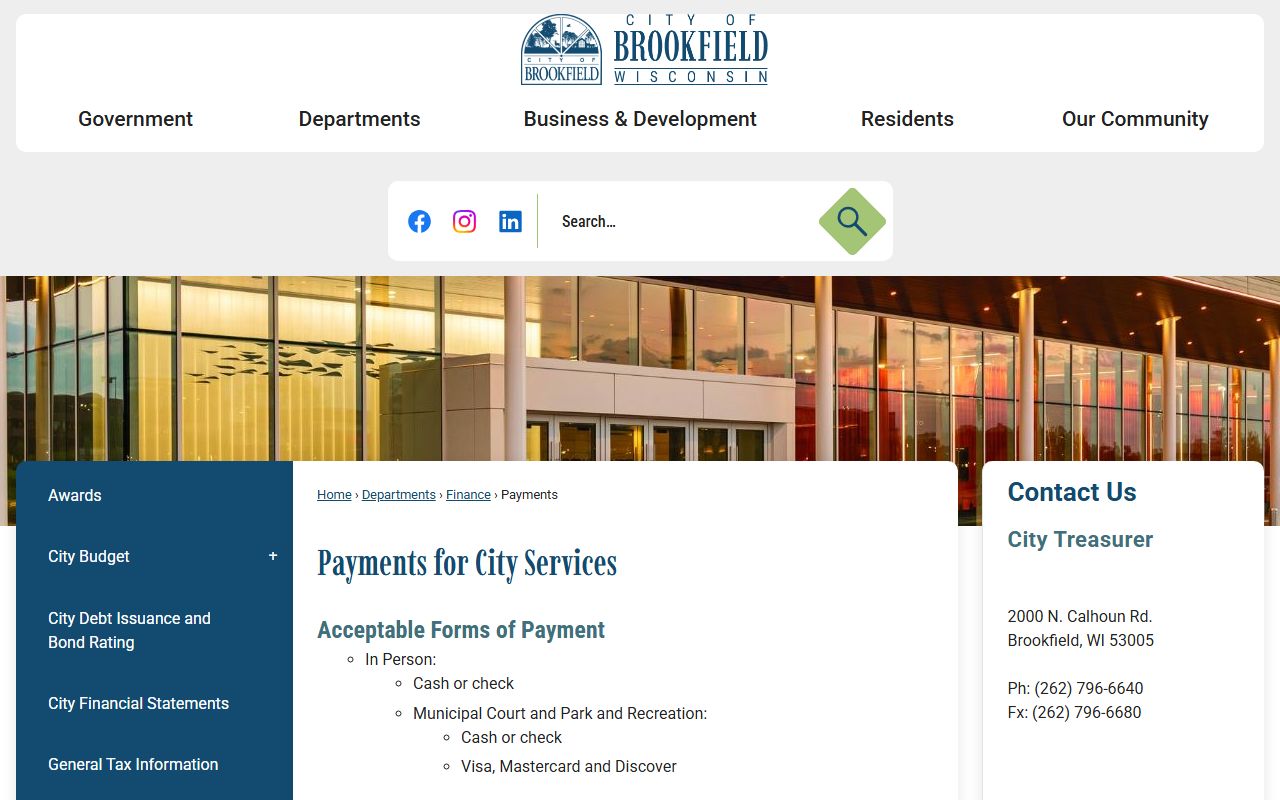
That page is useful because it shows the city payment routes before the claim ever becomes a county matter. It gives Brookfield residents a place to confirm where a check or fee was handled.
Brookfield residents should also keep the city clerk contact in mind. If the money originated in a license or city service record, the clerk may be the easiest office to call before the claim moves to Waukesha County. The city page is not the final answer for every search, but it is the best first filter.
Brookfield Municipal Court Records
The municipal court FAQ is the next local guide when Brookfield Unclaimed Money is tied to a ticket, hearing, or city citation. The court is a civil court, not a criminal court of record, and there are no jury trials. Check-in begins at 5:00 PM, and all trials are heard before the Judge. That matters because a resident looking for a payment or fine should know the city court process before assuming the money belongs with the county.
The FAQ also notes that payments can be made online, by mail, or dropped off at the Police Department at 2100 N. Calhoun Rd. If a suspension occurred from a Brookfield ticket, paying in full at the Police Department is required. Those details make the municipal court a practical office to check when a city citation, a traffic fine, or a court payment is the source of the missing money. The court and the police department work together on the payment trail.
The municipal court FAQ is shown at Brookfield Municipal Court FAQ, which is the best place to confirm court rules, check-in timing, and payment handling for local tickets.
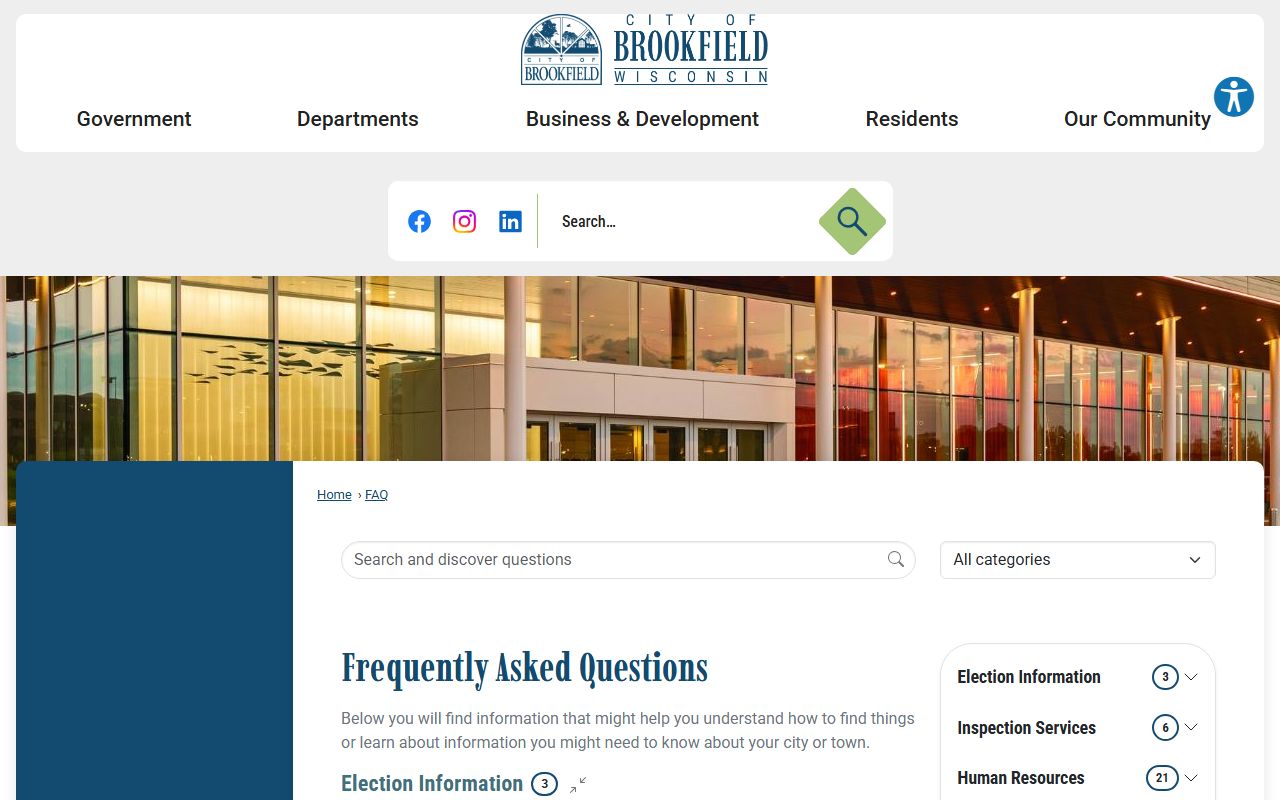
That page is useful because it gives the city court route in plain language. If the money started as a city citation or a court payment, the FAQ is where the resident can verify the office and the process.
Brookfield residents who remember a ticket but not the exact amount can still use the FAQ to narrow the office. The police department, municipal court, and city payments page each cover a different part of the same local payment trail. That keeps the search focused and reduces wasted calls.
The court page also helps separate a live court payment from a dormant money claim. If the ticket is still active, the municipal court is the right office. If the money has already moved into county custody, the county claim process takes over.
That distinction matters because Brookfield residents can otherwise spend too long on the wrong office. The FAQ shows when the city still has control and when the search should move on.
Waukesha County Claim Process for Brookfield
When the city office no longer holds the money, Brookfield residents use the Waukesha County unclaimed funds process. The county says unclaimed funds are reported by municipal treasurers and county departments, and the county treasurer posts public notice under Wis. Stat. 59.66. The county also provides an online Unclaimed Funds App. That app is the search tool for residents who need to see whether a name, amount, or case number is already on the county list.
If there is a match, the county requires a notarized Affidavit of Ownership and Indemnity Agreement. The affidavit must include the case number, dollar amount, claimant name, address, and phone number. A copy of the claimant's driver's license or picture ID is required, and business claims require a business card copy. Claims go to the Waukesha County Treasurer at 515 W Moreland Blvd, Room 148, Waukesha, WI 53188. The county says processing takes about 30 days, and the check is mailed to the address listed on the affidavit.
The county page is important for Brookfield residents because it shows the local claim file in a way the city payments page does not. It is the office that turns a search result into a verified claim. That means the county is not just a backup. It is the place where the county-held balance is actually released once the proof is complete.
Waukesha County Unclaimed Funds is the page Brookfield residents should use once the county appears to be the holder. It is also the right place to confirm whether the claim has to be notarized before it is mailed or dropped off.
The county process is straightforward, but it still depends on the case number and the exact amount. If either one is wrong, the claim can slow down. That is why the county page asks for more than a name match. It asks for proof that ties the claimant to the original check.
Brookfield residents can also use the county page to distinguish a city payment issue from a county custody issue. If the city payments page points to the police department or the clerk, the county may still be the last stop once the local record has gone dormant. The county app is the bridge.
That bridge matters because it keeps the city search from ending too soon. If the money is no longer at the city level, the county form and app are the next practical step.
The county office also keeps the mailing address the same as the claim office, which makes it easier to submit the paperwork without guessing about where it belongs.
For Brookfield residents, the county route is often the one that closes the loop after a city ticket or payment clue has been identified. It is the official local claim path.
The state image below is a fallback reference for the county and city path because the DOR claim pages explain what happens once the local offices no longer hold the money.
Wisconsin DOR Unclaimed Property home page is the statewide backup when the county app does not resolve the Brookfield record.
Wisconsin Unclaimed Money Rules for Brookfield
The Wisconsin Department of Revenue sets the statewide rules that sit behind the local Brookfield process. The DOR FAQ explains that unclaimed property is generally a financial asset with no owner activity for at least one year, and it confirms that the state holds the property until the rightful owner or heir claims it. That makes DOR the correct fallback when a bank, insurer, utility, or other statewide holder has already remitted the money to the state.
The DOR claim pages show how to move from search to proof. The how-to-claim page explains the filing flow, the relationship types page explains whether the claimant is the owner, heir, guardian, or personal representative, and the acceptable documents page shows the proof that can travel with the file. That matters when the city and county offices have already done their part and the resident needs the state system to finish the search.
Wisconsin statutes give the process its legal frame. Wis. Stat. § 177.01 defines the key terms, Wis. Stat. § 177.0501 covers the holder's notice duty before property is reported, and Wis. Stat. § 177.0903 explains how an owner files a claim. The DOR after-you-file page then explains what happens after submission and why additional proof may be requested.
For Brookfield residents, the sequence is simple. Start with the city payments page if the issue began with a city bill, citation, or license. Move to the municipal court FAQ when a ticket or court fine is involved. Use Waukesha County when the funds have entered the county unclaimed funds process. If none of those offices still holds the money, DOR is the final official path.
Note: Brookfield residents get the fastest result when the office matches the record first, because city payments, municipal court files, county claims, and state property each use a different route.